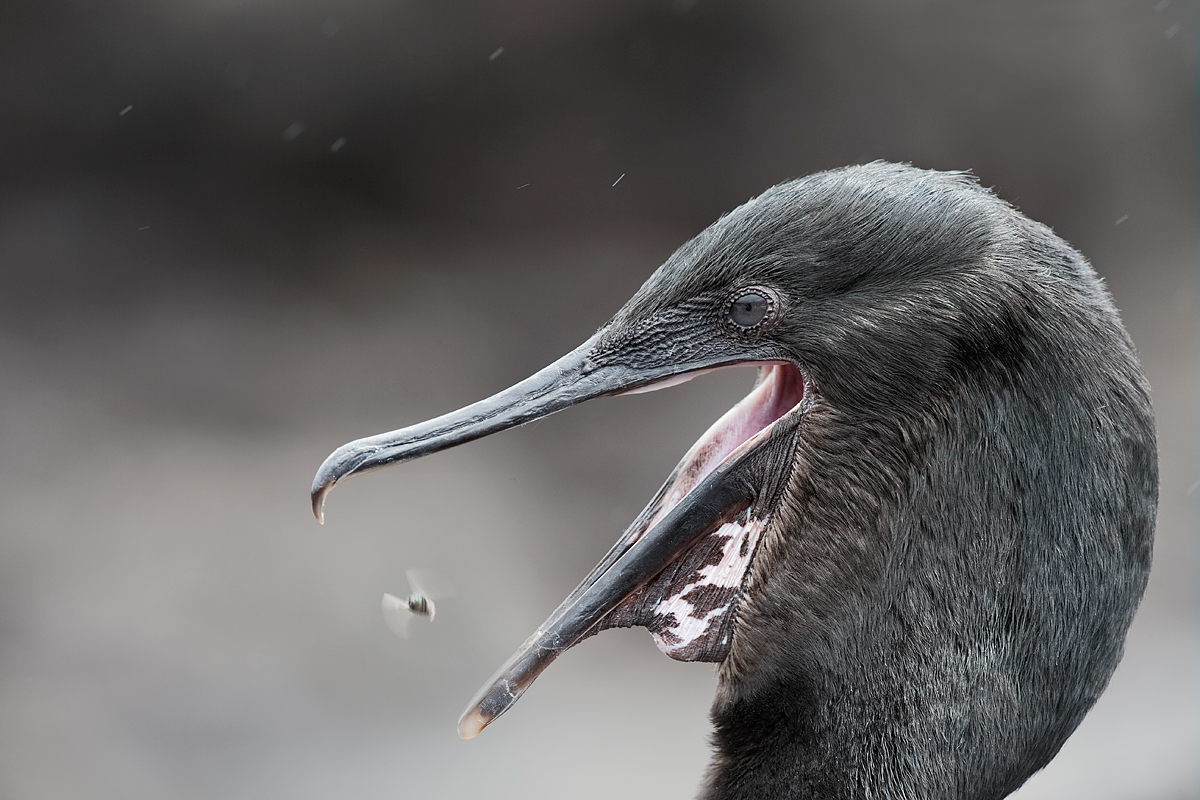
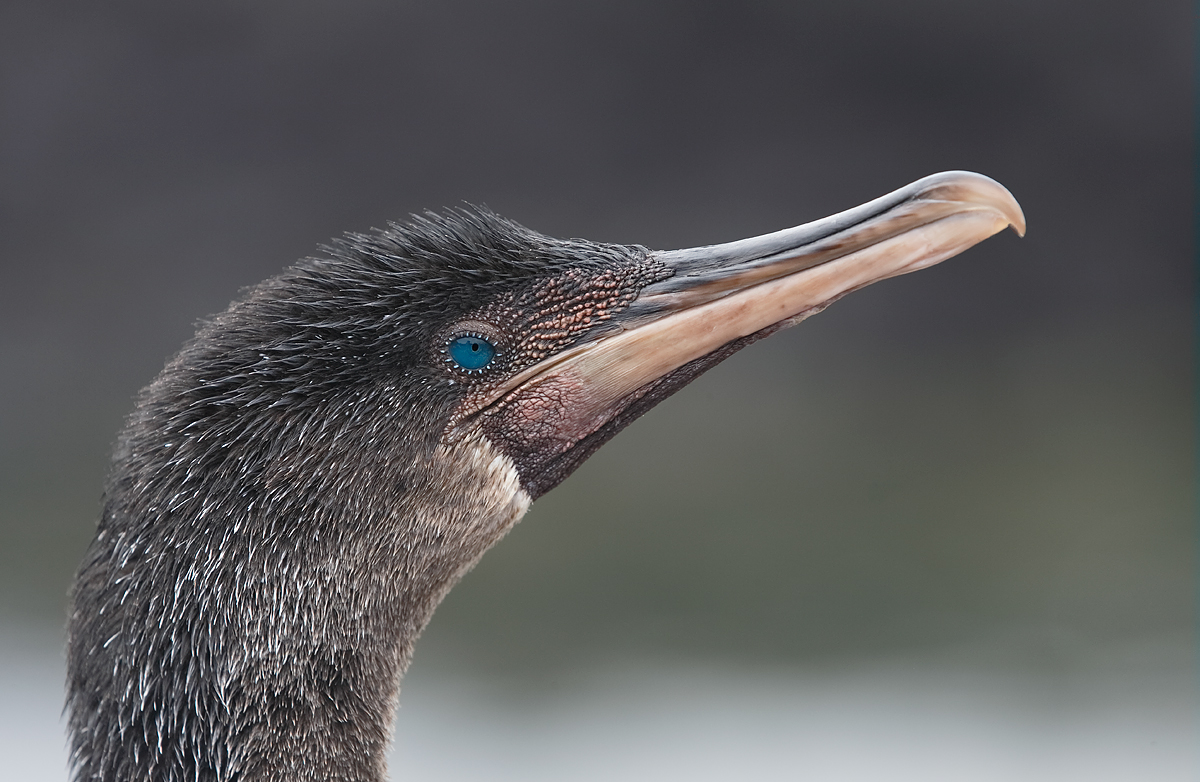
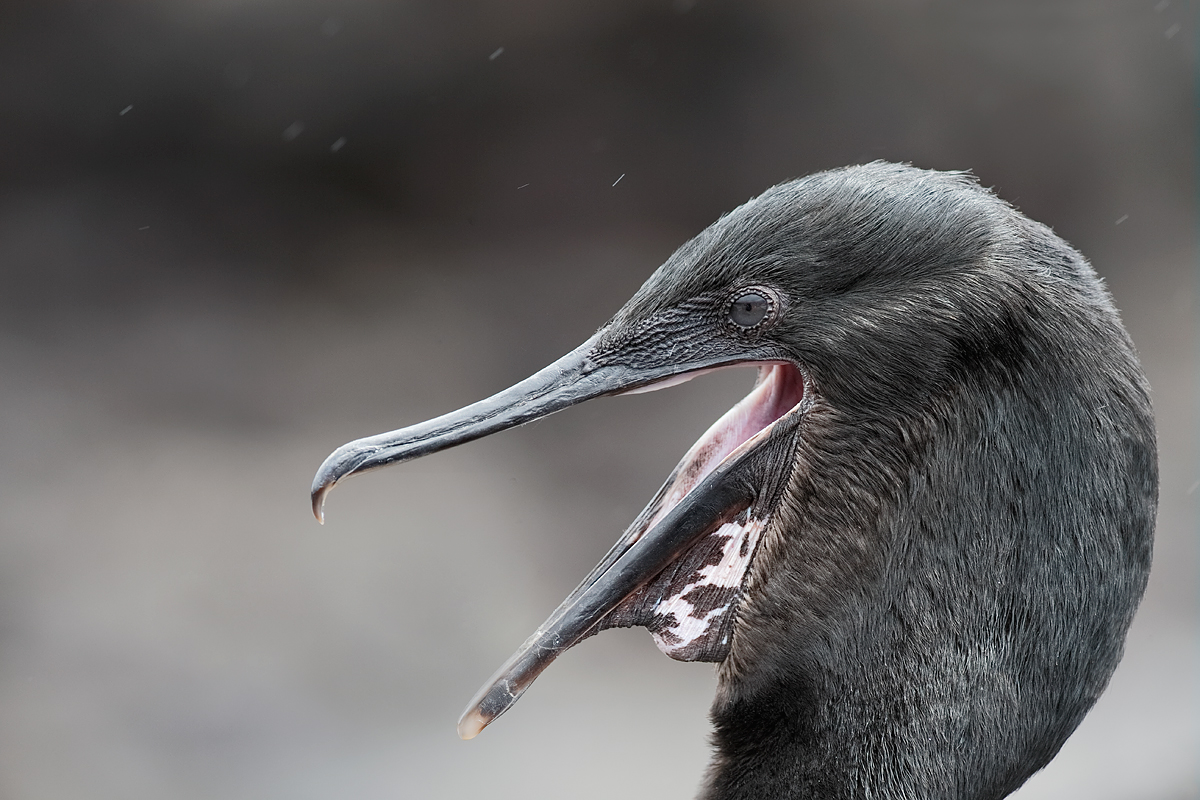
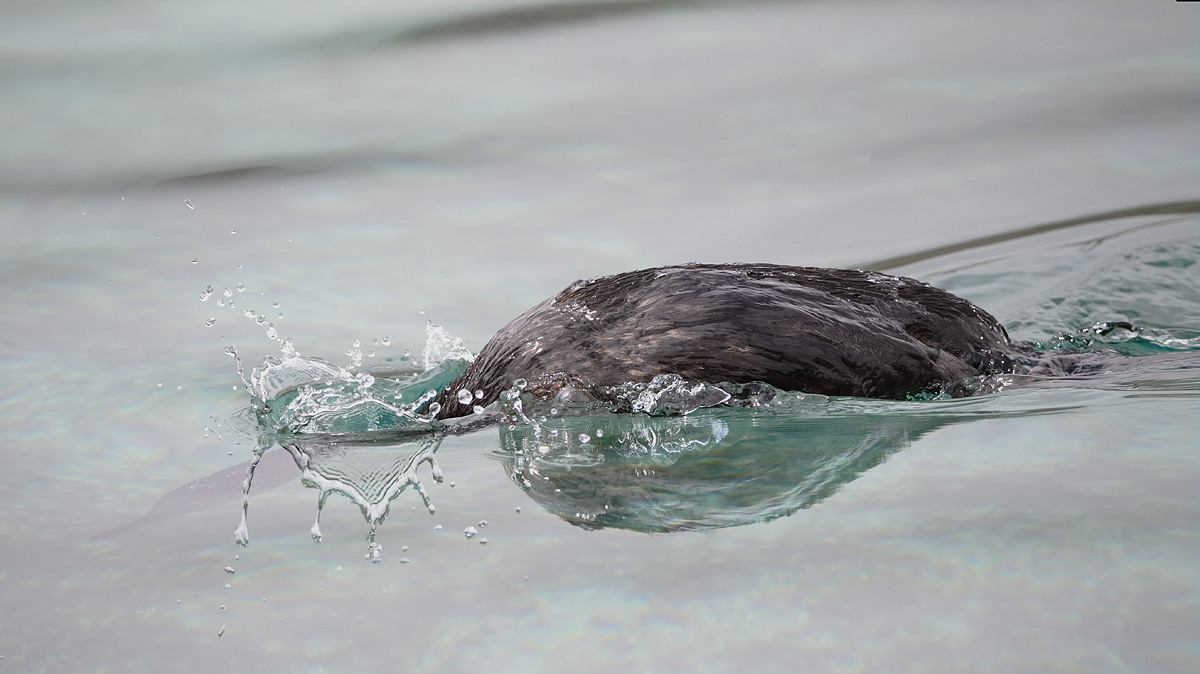
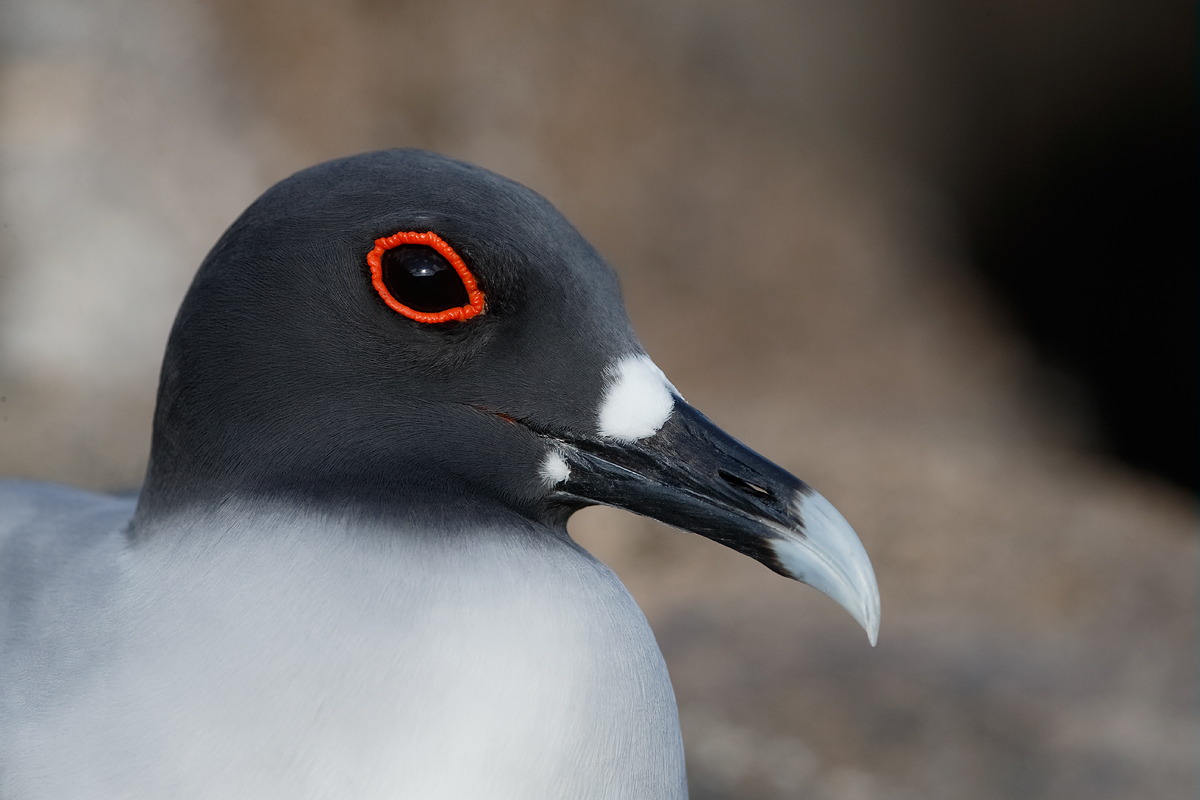
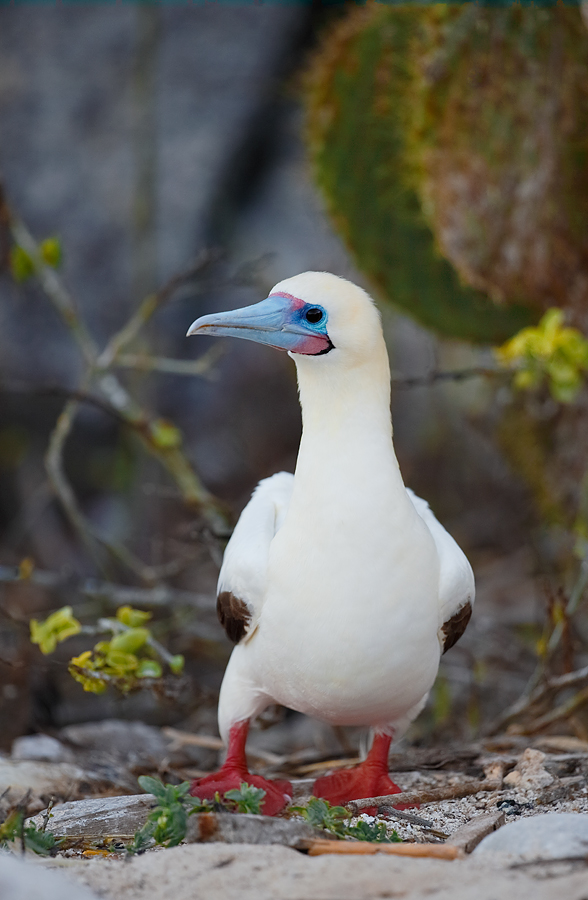
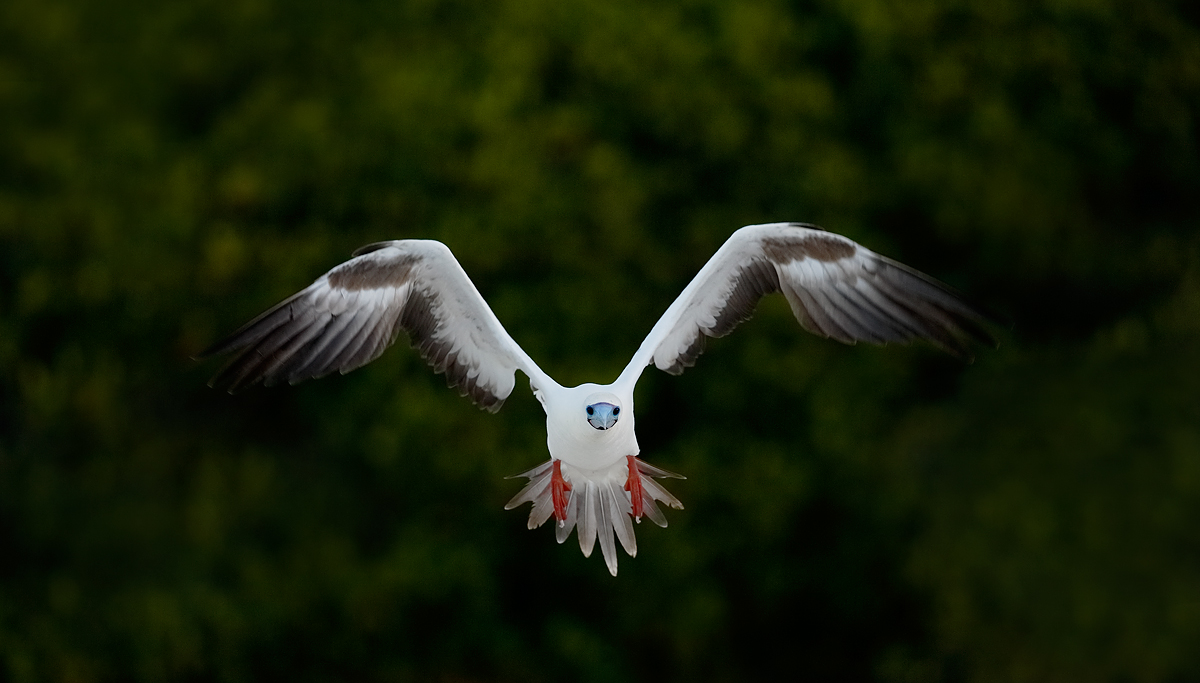
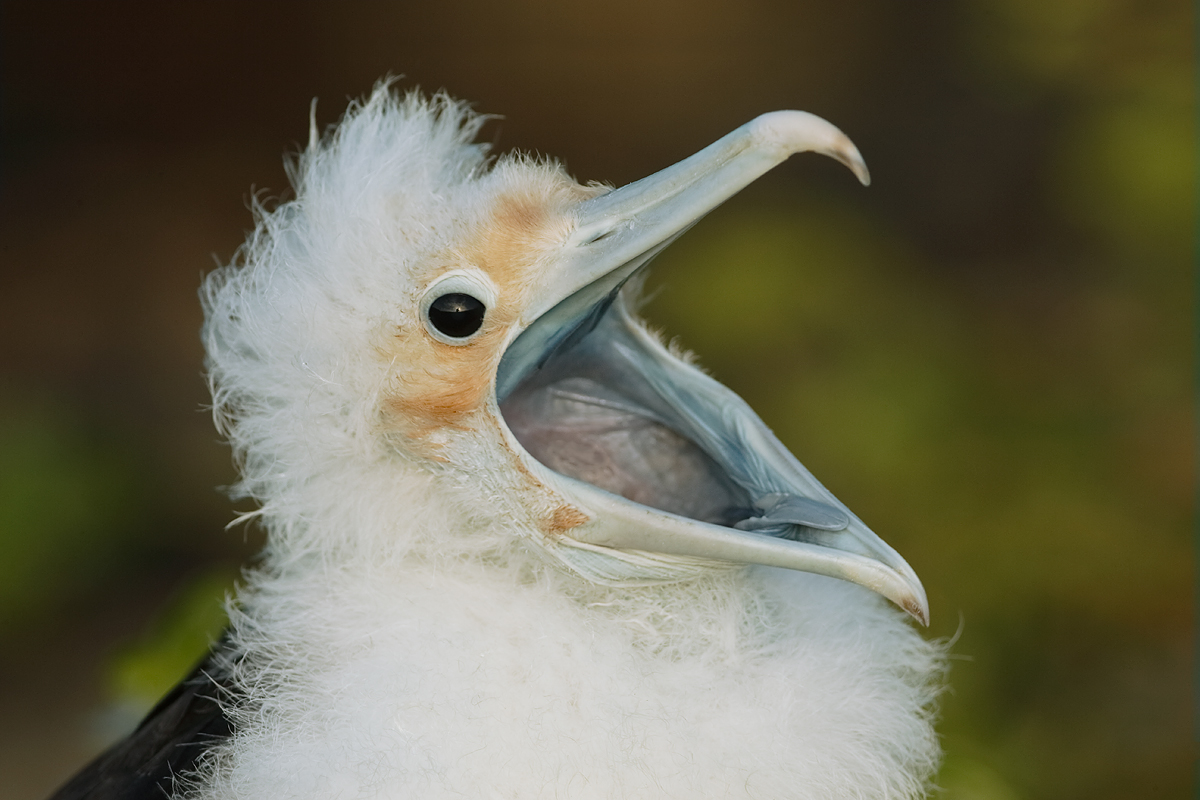
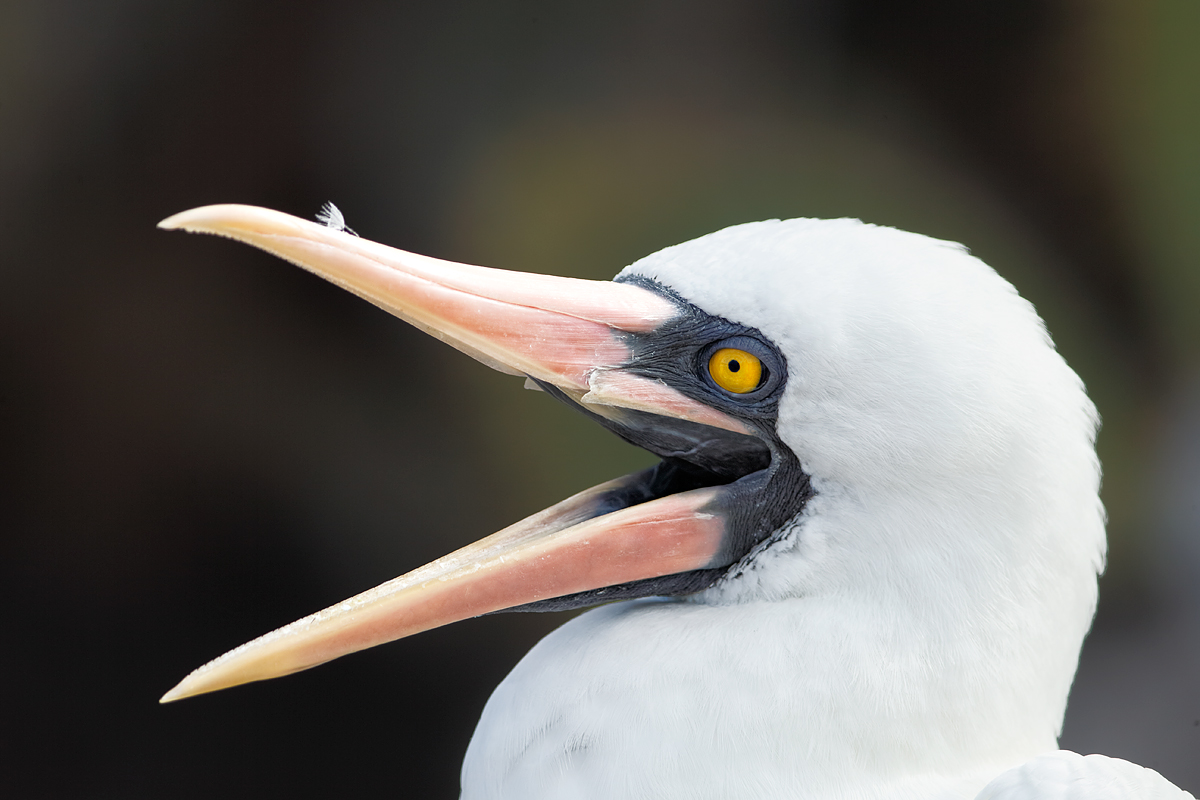
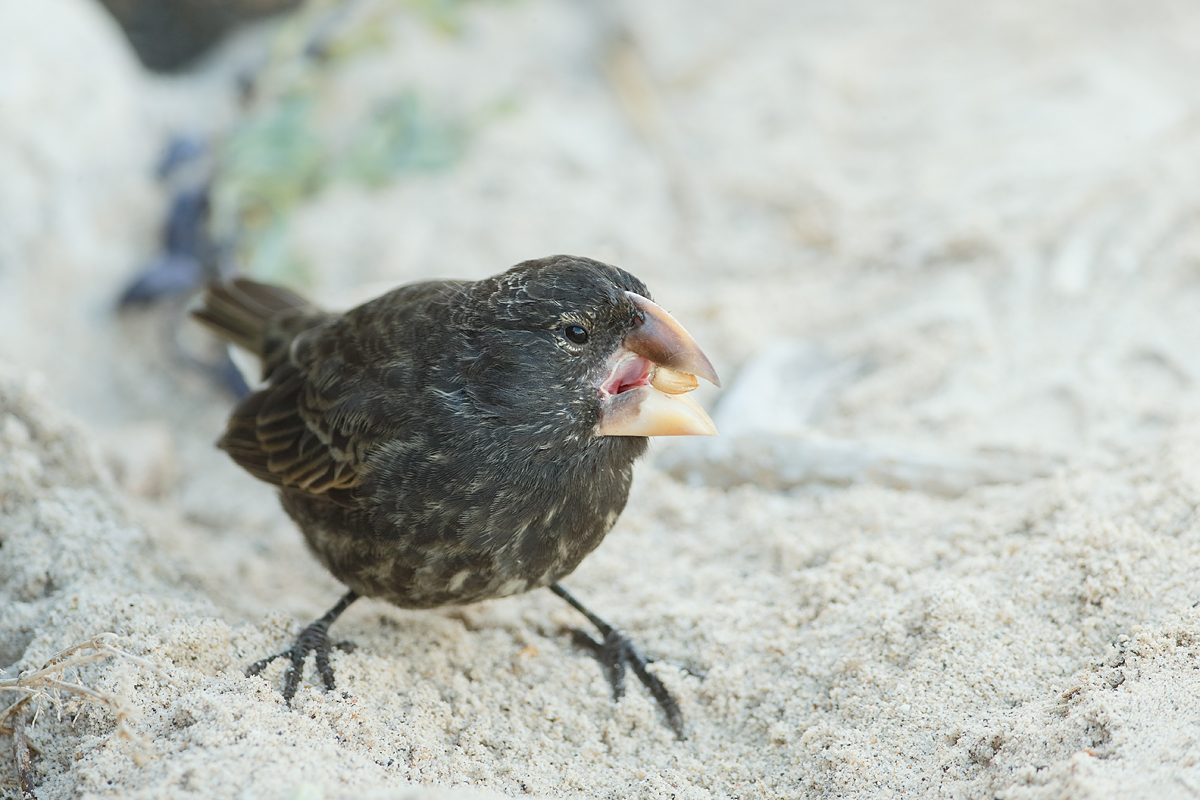
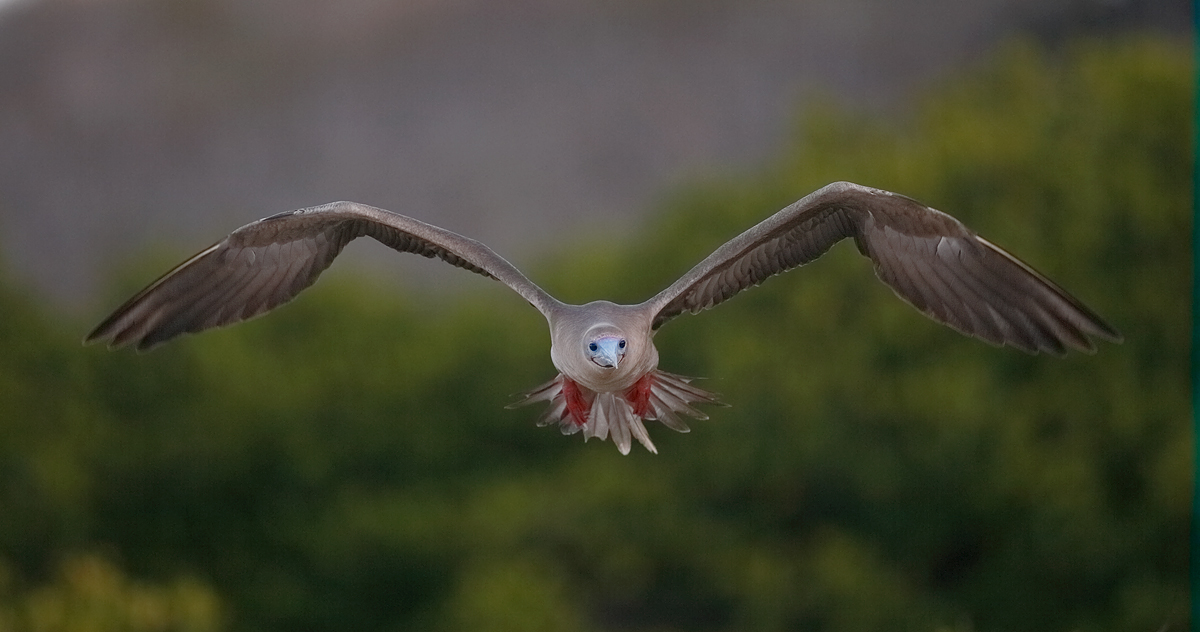
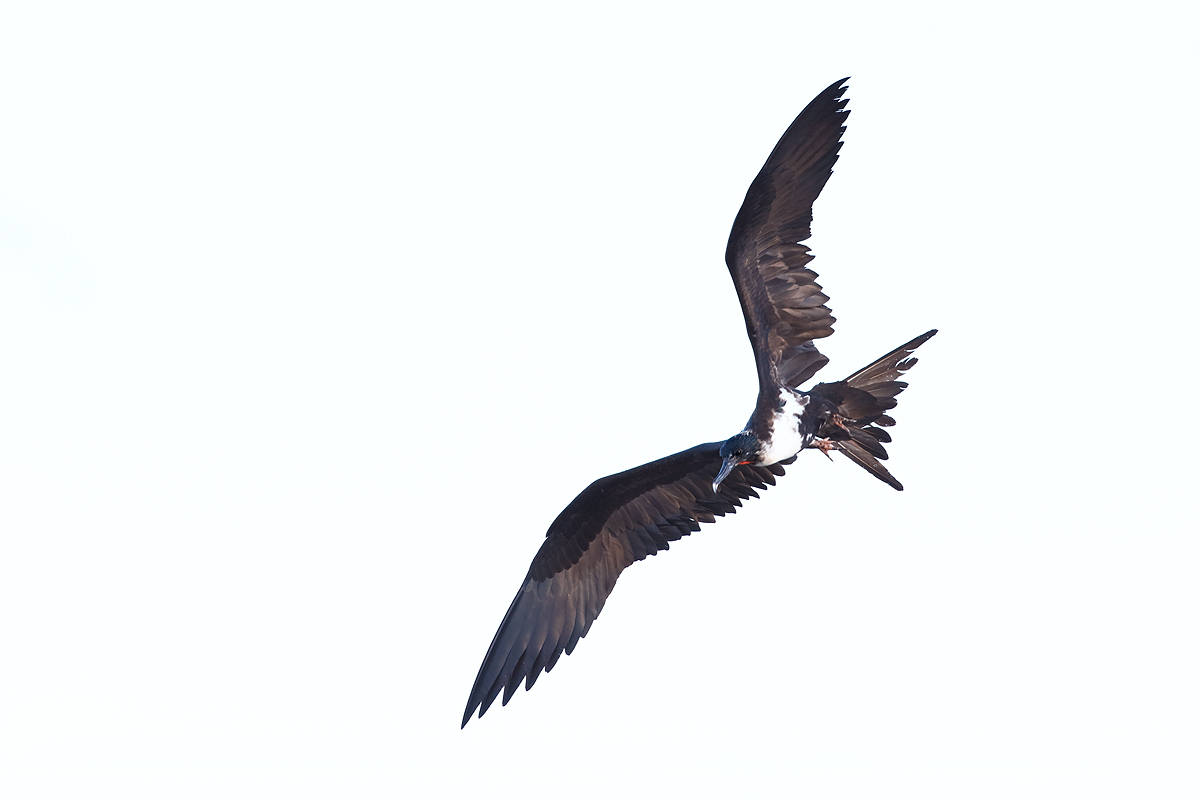
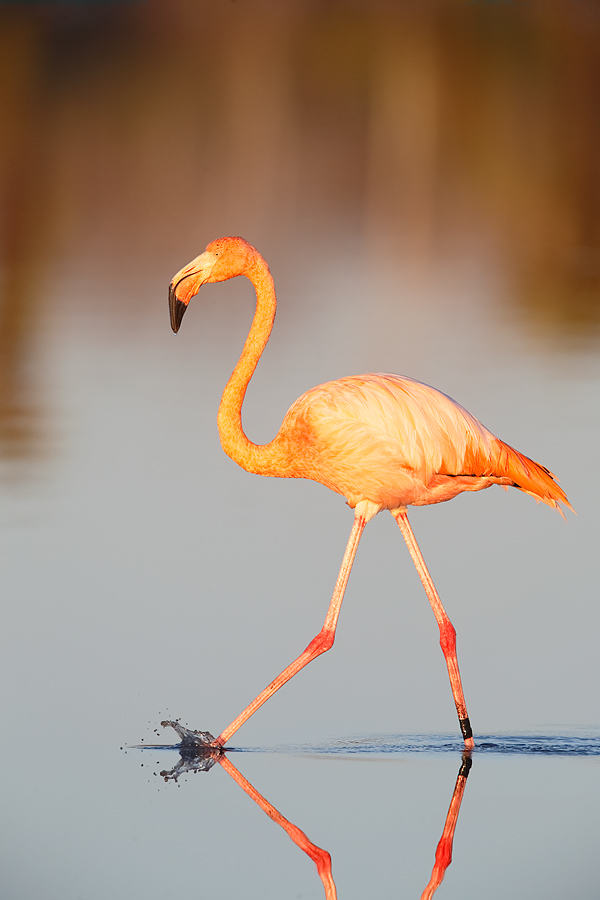
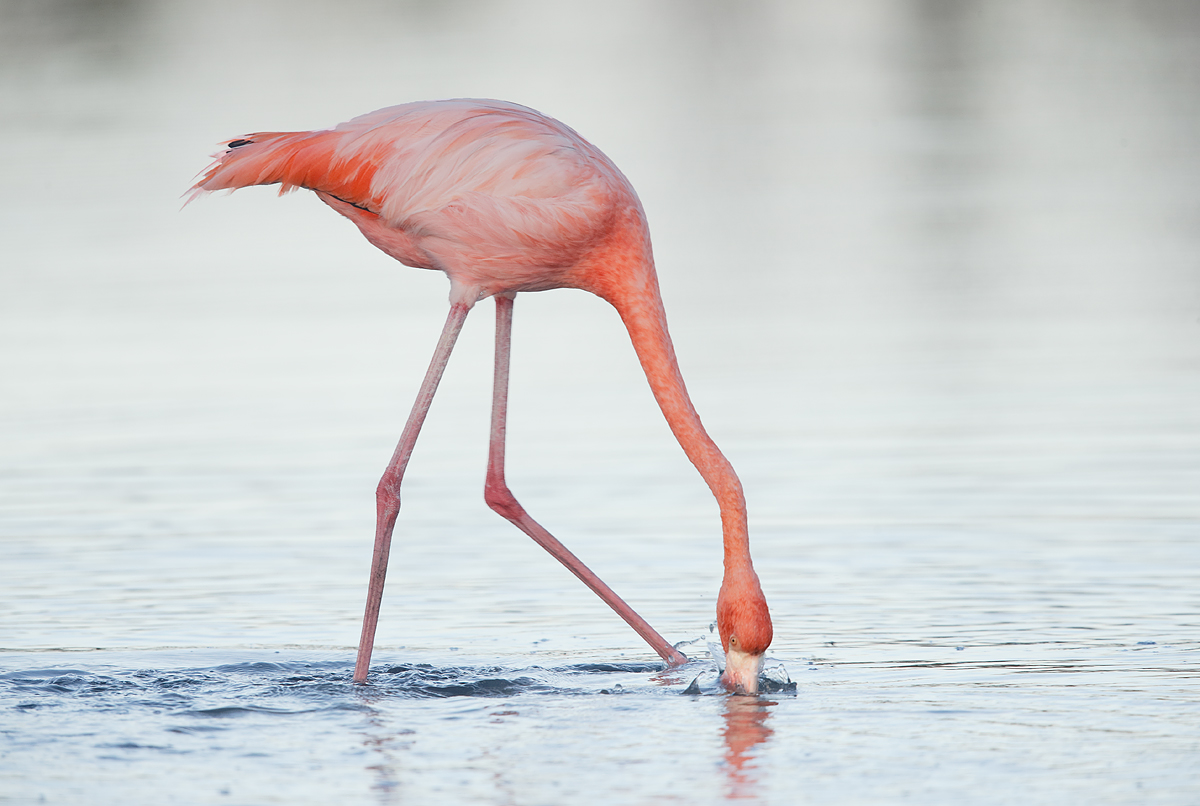
Two sensors to the right of the central sensor/AI Servo-Surround/Rear Focus AF on the bird’s face active at the moment of exposure. Click here if you missed the Rear Focus Tutorial. Click on the image to see a larger version.
With tight head portraits it is imperative to be perfectly square to the subject to avoid depth-of-field problems where the face is sharp and the bill towards the tip not.
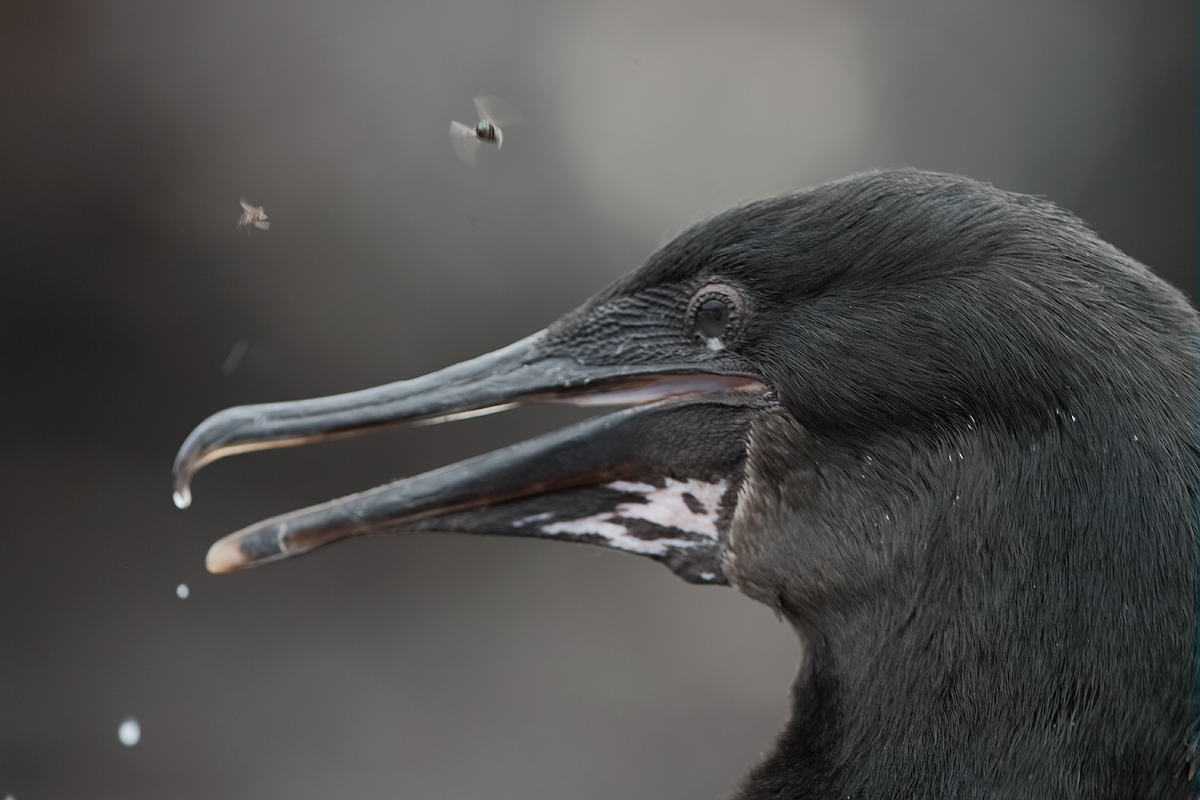
A Fly Oh My!
I opened the “Hand Held Photography with the Canon EF 200-400mm f/4L IS USM lens with Internal 1.4x Extender” blog post the other day, with a very nice head portrait of a yawning Flightless Cormorant. While reviewing my images from that day, I came across the image below. In a playful mood, I placed the fly from the image below on its own layer via a Quick Mask and placed it on its own layer. Then I used the Move Tool (V) to bring the fly into the image above. The tonalities of the background did not quite match so I hit Control M (Curves on a Layer) and used the up and down arrow keys to match the tonality along the border of the layer as closely as possible. Then I added a Regular Layer Mask, hit B, D, X, and refined the mask.
All of the above as detailed in Digital Basics. Digital Basics is an instructional PDF that is sent via e-mail. It includes my complete digital workflow, dozens of great Photoshop tips including Digital Eye Doctor techniques, several different ways of expanding canvas, all of my time-saving Keyboard Shortcuts, Quick Masking, Layer Masking and NIK Color Efex Pro basics, creating and using time-saving Actions, and tons more.
This Flightless Cormorant image was created with the same gear used to create the opening image above. As the bird jerked its head trying to catch the fly during the exposure, the image is unacceptably soft. The somewhat blurred fly at the top center of the frame caught my eye.
Whaddya Think?
Take a moment to leave a comment and let me know what you think of my creation? And of my Photoshop work. Is it wrong to do stuff like this in Photoshop? Be sure to let us know why either way.
IPT Info
There is lots of room on the Bosque IPT and on the Holland tulip trip. Complete details on the late January/early February 2013 Florida Composite IPT will be announced in the next BAA Bulletin. It will give a select few folks the opportunity to spend 10 days with Denise Ippolito and me and will give lots of others a chance to get a taste of a shorter IPT with two great leaders at an attractive price. Info For complete IPT info, please click here.
Bucket List?
If visiting the Galapagos is on your bucket list and you are a happy camper who is serious about joining us on our July 2015 trip, please shoot me an e-mail and ask to be placed on the interested list. There simply is no better Galapagos Photo Tour.
On The Road Again
Please know that I will be traveling to and from the Africa for the Tanzania Photo Safari with Todd Gustafson leaving today, August 1 and back in the office on August 21. I will have extremely limited and very slow at best internet access so please do not e-mail me until I get back. Jim will be in the office every weekday to help you with your mail order purchases and Jen will be here handling IPT registrations. The blog will continue to be active as I have prepared a dozen interesting, brand new educational posts for you in advance for you to enjoy during my absence.
Please consider using our B&H, Amazon, and Borrow Lenses affiliate links for all of your major and minor purchases both photographic and household. If we carry something in the BAA Store that you need our very great preference would be that you purchase those items from us :).
If you have a gear, image processing, or other question please e-mail me after July 19th. You can reach Jim here via e-mail. You can reach Jennifer here via e-mail. Please type “JIM” or “JEN” respectively at the front of the Subject Line.
Typos
On all blog posts, feel free to e-mail or leave a comment regarding any typos, wrong words, misspellings, omissions, or grammatical errors. Just be right. 🙂
Support the BAA Blog. Support the BAA Bulletins: Shop B&H here!
We want and need to keep providing you with the latest free information, photography and Photoshop lessons, and all manner of related information. Show your appreciation by making your purchases immediately after clicking on any of our B&H or Amazon Affiliate links in this blog post. Remember, B&H ain’t just photography!
If you are considering an item for purchase or comparison shopping be sure to place an item in your cart to see the too-low-to show the actual price. In many cases the prices are so low that B&H is forbidden from publicizing them!
If you are considering an item for purchase or comparison shopping be sure to place an item in your cart to see the too-low-to show the actual price. In many cases the prices are so low that B&H is forbidden from publicizing them!
Support the Blog
Amazon
Everyone buys something from Amazon, be it a big lens or deodorant. Support the blog by starting your search by typing in the little white box below. No purchase is too small to be appreciated; they all add up. Why make it a habit? Because I make it a habit of bringing you new images and information on an almost daily basis.
And from the BAA On-line Store:
LensCoats. I have a LensCoat on each of my big lenses to protect them from nicks and thus increase their re-sales value. All my big lens LensCoat stuff is in Hardwood Snow pattern. LegCoat Tripod Leg Covers. I have four tripods active and each has a Hardwood Snow LegCoat on it to help prevent further damage to my tender shoulders 🙂 And you will love them in mega-cold weather…. Gitzo GT3532 LS CF Tripod. This one replaces the GT3530LS Tripod and will last you a lifetime. Learn more about this great tripod here. Mongoose M3.6 Tripod Head. Right now this is the best tripod head around for use with lenses that weigh less than 9 pounds. For heavier lenses, check out the Wimberley V2 head. Double Bubble Level. You will find one in my camera’s hot shoe whenever I am not using flash. The Lens Align Mark II. I use the Lens Align Mark II pretty much religiously to micro-adjust all of my gear an average of once a month and always before a major trip. Enjoy our free comprehensive tutorial here. BreezeBrowser. I do not see how any digital photographer can exist without this program. Delkin Flash Cards. I use and depend on Delkin compact Flash Cards and card readers most every day. Learn more about their great 700X and 1000X cards here or about my favorite Delkin card here.
BIRDS AS ART BULLETIN #445 is online and can be accessed here. As usual it is jam-packed with tons of great images and lots of great info including a summary review of the new 200-400.
Canon EF 200-400mm f/4L IS USM lens with Internal 1.4x Extender
Galapagos Photo-Cruise Report
Bucket List: the July 2015 Galapagos Photo-Cruise
The BIRDS AS ART 2nd International Bird Photography Contest
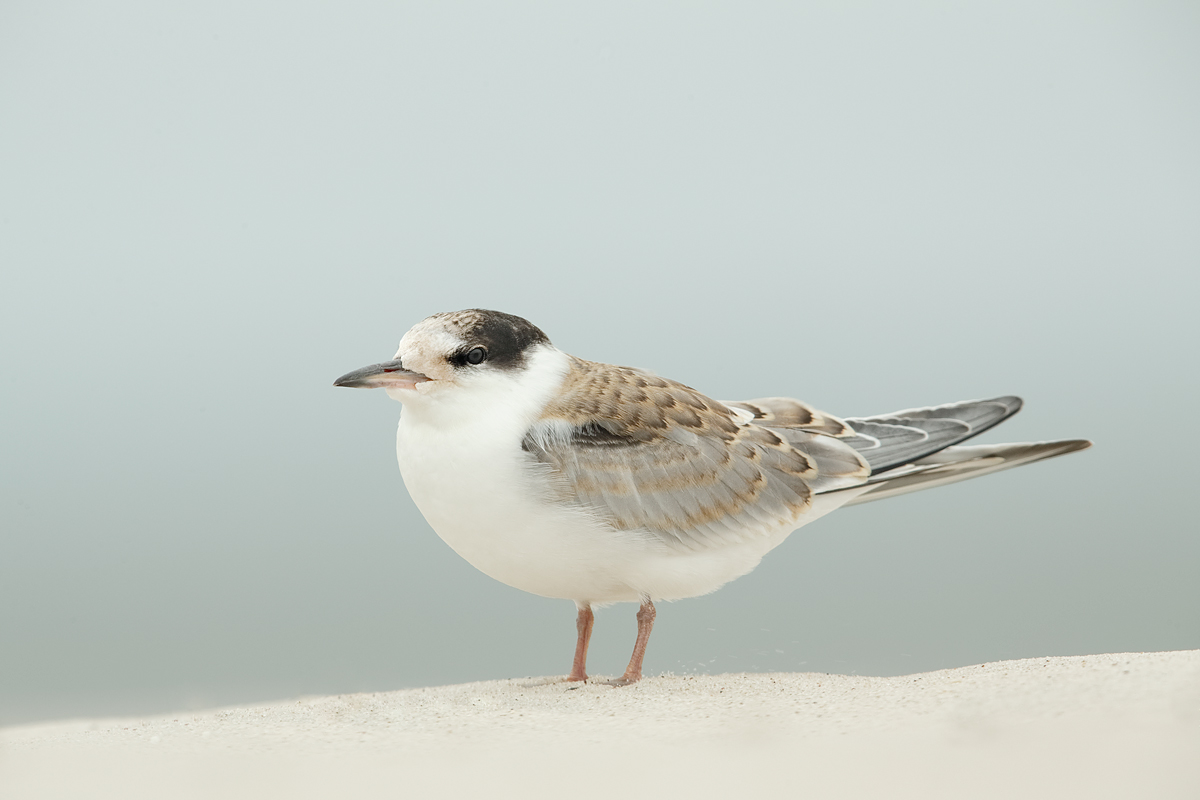
Central sensor Expand (by necessity)/AI Servo/Rear Focus AF on the bird’s eye and recompose. Click here if you missed the Rear Focus Tutorial. Click on the image to see a larger version.
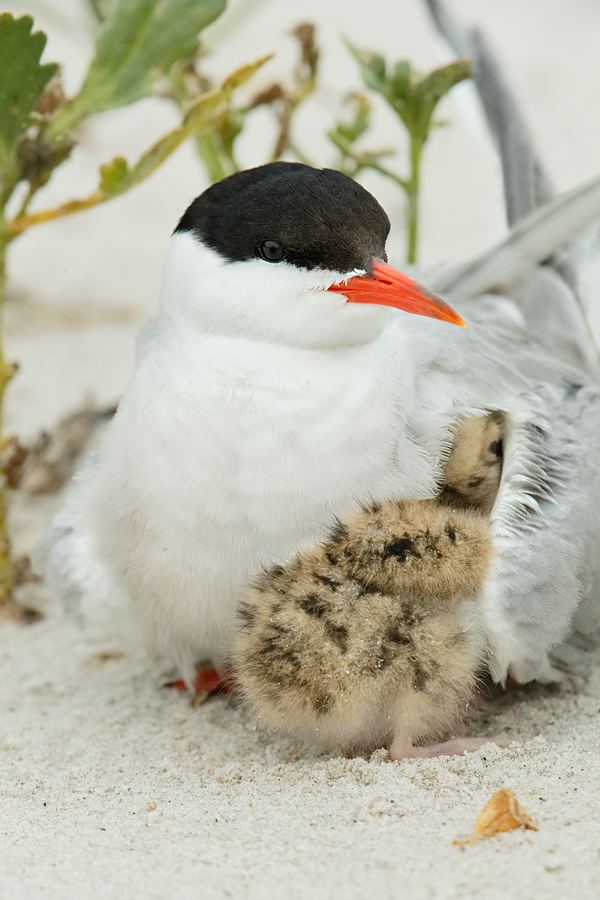
This is recently fledged juvenile Common Tern. With the super abundance of baitfish right off the beach this was a hugely productive breeding season for Nickerson’s Common Terns.
This Image
For me, this seemingly simple image epitomizes the BIRDS AS ART style. Handsome bird, lovely Atlantic Ocean on a cloudy day background, a nice image design with textbook placement: thee times as much room in front of the bird than behind the bird and twice as much room above the subject than below, and sharp with a perfect head angle.
Lots of time and effort went into creating this image. On the last morning of the IPT, a cold morning with blustery northeast winds, I counseled those in the group with long lenses to face away from the colony, get low, and be patient. Lots of young terns flew in and waited patiently for the adults to come in to feed them. Most begged incessantly at every bird that flew by. To create this image I lay flat behind my tripod with the legs splayed. Getting the subject on the edge of a sand ridge was key to the artistic success of the image as it provided the distant background and offered a decent look at the feet only slightly nestled down in the soft sand.
Denise Ippolito, working with her new favorite rig, the 300 f/2.8L IS, a 2X TC, and the EOS-1D Mark IV, created lots of great flight and feeding images with her wider view and more responsive AF. I went for the tight portraits. And Paul Pinto Jr, all of 13 years old, nailed the image of the trip when a Great Black-backed Gull swooped down and grabbed a young Common Tern right in front of the group that he was with about 60 feet to our right. I will be speaking more of this fine young photographer in a future blog post and sharing some of his images as well.
The Problem
Towards the end of the great Galapagos Photo-Cruise I began noticing AF problems with the 600 II/2X III combo with one of my 1D X bodies, especially in low light/low contrast situations. At first I passed these problems off as normal. When the problems continued and actually got worse over time on the recently concluded Nickerson Beach Baby Beach Nesting Birds IPT I remembered a thread that I had seen in the BPN Gear Forum thread here about a 1D X recall. When I was making the images featured in the “Oh Baby; Thanks Pat!” blog post of July 27th, the AF problems exacerbated; even when I placed the active sensor on a chick’s eye, AF simply would not lock on. For the third image in that post I was forced to go to Manual focus. Why? Even when I pre-focusd manually before attempting rear focus AF, the system would hunt and hunt and hunt some more without acquiring focus.
It was then that everything came into sharp focus (at least in my head). I had followed the link to the formal Canon announcement here, but though both of my 1D X bodies were in the affected group I chose to live by the old adage; if it ain’t broke; don’t fix it.
When I revisited the Canon site yesterday, here is what I found:
Product Advisory
This notice is to proactively inform our customers of the details of the phenomena described below along with Canon’s support actions. Because we value the trust our customers have placed in us, we are dedicated to continuously improving product quality and delivering industry-leading service and support. We offer our sincerest apologies to any customer who may be inconvenienced.
Affected Products
EOS-1D X Digital SLR Camera
EOS-1D C Cinema EOS Camera
Phenomena
In some units of the models listed below, there is a possibility that the following phenomena may occur due to wear caused by insufficient lubrication within the camera’s driving mechanism.
1. AF searches but does not lock in on the subject. (Caused by minute particles produced by wear mentioned above.)
2. The image shown in the viewfinder is “blurry” or “not steady”. (Occurs if wear progresses.)
Info on how to tell if your 1D X is in the affected group follows.
One of my cameras has apparently progressed to stage 1. And the 2nd one is also in the affected group but has not yet exhibited any symptoms. On Friday past when I finally figured things out, I was in a quandary: I did not have enough time to get the cameras to the Jamesburg Repair Facility to have the recall service performed and get them back before I left for my Africa trip this coming Thursday. So I did what most folks would do when facing such a dilemma. I ordered two brand new 1D X bodies for the trip. I will have my two original 1D X bodies serviced and sell them both when I get back from the Tanzania trip. If you are interested in purchasing one or both of my 1D X bodies for a fair price, please shoot me an e-mail.
On The Road Again
Please know that I will be traveling to and from the Africa for the Tanzania Photo Safari with Todd Gustafson leaving today, August 1 and back in the office on August 21. I will have extremely limited and very slow at best internet access so please do not e-mail me until I get back. Jim will be in the office every weekday to help you with your mail order purchases and Jen will be here handling IPT registrations. The blog will continue to be active as I have prepared a dozen interesting, brand new educational posts for you in advance for you to enjoy during my absence.
Please consider using our B&H, Amazon, and Borrow Lenses affiliate links for all of your major and minor purchases both photographic and household. If we carry something in the BAA Store that you need our very great preference would be that you purchase those items from us :).
If you have a gear, image processing, or other question please e-mail me after July 19th. You can reach Jim here via e-mail. You can reach Jennifer here via e-mail. Please type “JIM” or “JEN” respectively at the front of the Subject Line.
Typos
On all blog posts, feel free to e-mail or leave a comment regarding any typos, wrong words, misspellings, omissions, or grammatical errors. Just be right. 🙂
Support the BAA Blog. Support the BAA Bulletins: Shop B&H here!
We want and need to keep providing you with the latest free information, photography and Photoshop lessons, and all manner of related information. Show your appreciation by making your purchases immediately after clicking on any of our B&H or Amazon Affiliate links in this blog post. Remember, B&H ain’t just photography!
If you are considering an item for purchase or comparison shopping be sure to place an item in your cart to see the too-low-to show the actual price. In many cases the prices are so low that B&H is forbidden from publicizing them!
If you are considering an item for purchase or comparison shopping be sure to place an item in your cart to see the too-low-to show the actual price. In many cases the prices are so low that B&H is forbidden from publicizing them!
Support the Blog
Amazon
Everyone buys something from Amazon, be it a big lens or deodorant. Support the blog by starting your search by typing in the little white box below. No purchase is too small to be appreciated; they all add up. Why make it a habit? Because I make it a habit of bringing you new images and information on an almost daily basis.
And from the BAA On-line Store:
LensCoats. I have a LensCoat on each of my big lenses to protect them from nicks and thus increase their re-sales value. All my big lens LensCoat stuff is in Hardwood Snow pattern. LegCoat Tripod Leg Covers. I have four tripods active and each has a Hardwood Snow LegCoat on it to help prevent further damage to my tender shoulders 🙂 And you will love them in mega-cold weather…. Gitzo GT3532 LS CF Tripod. This one replaces the GT3530LS Tripod and will last you a lifetime. Learn more about this great tripod here. Mongoose M3.6 Tripod Head. Right now this is the best tripod head around for use with lenses that weigh less than 9 pounds. For heavier lenses, check out the Wimberley V2 head. Double Bubble Level. You will find one in my camera’s hot shoe whenever I am not using flash. The Lens Align Mark II. I use the Lens Align Mark II pretty much religiously to micro-adjust all of my gear an average of once a month and always before a major trip. Enjoy our free comprehensive tutorial here. BreezeBrowser. I do not see how any digital photographer can exist without this program. Delkin Flash Cards. I use and depend on Delkin compact Flash Cards and card readers most every day. Learn more about their great 700X and 1000X cards here or about my favorite Delkin card here.
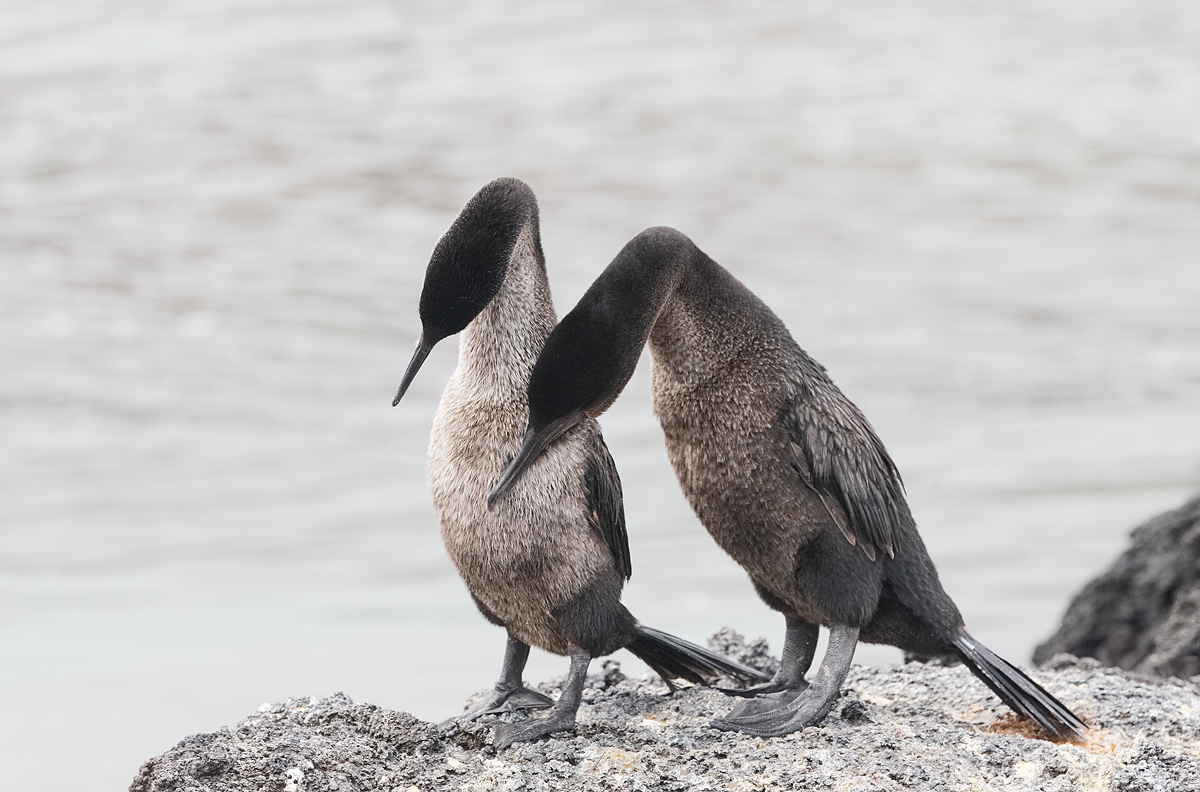
Two sensors left of the central sensor/AI Servo Surround/Rear Focus AF left bird’s neck active at the moment of exposure. Click here if you missed the Rear Focus Tutorial. Be sure to click on the image to see a larger version.
Punta Albemarle
After the dry landing at Punta Albemarle we walked about ¼ mile for our first of what would be many chances with the world’s only flightless cormorant, the aptly named Flightless Cormorant. The last 100 yards over wet and somewhat slippery and sometimes jagged rocks were somewhat treacherous and several folks opted to stay behind to photograph marine iguanas and the beautiful Sally Lightfoot Crabs. Though this was my eighth Galapagos photo-cruise this was a new location for me.
The courtship dance above is performed both on land and in the water; the latter is far more intricate and dramatic and is far more difficult to photograph well. It is rare that a photograph of a bird, much less two birds, succeeds, despite the fact that not a single eye is visible.
Two sensors to the right of the central sensor/AI Servo/Surround/Rear Focus AF squarely on the bird’s eye active at the moment of exposure. Click here if you missed the Rear Focus Tutorial. Be sure to click on the image to see a larger version.
Head Portraits
When creating head portraits like the one above you either need to have the bird’s head parallel to the imaging sensor or use lots of depth of field. The latter will often bring up distracting background elements. With the bird’s head square to the back of the camera here I was fine stopping down only 1/3 stop to f/6.3.
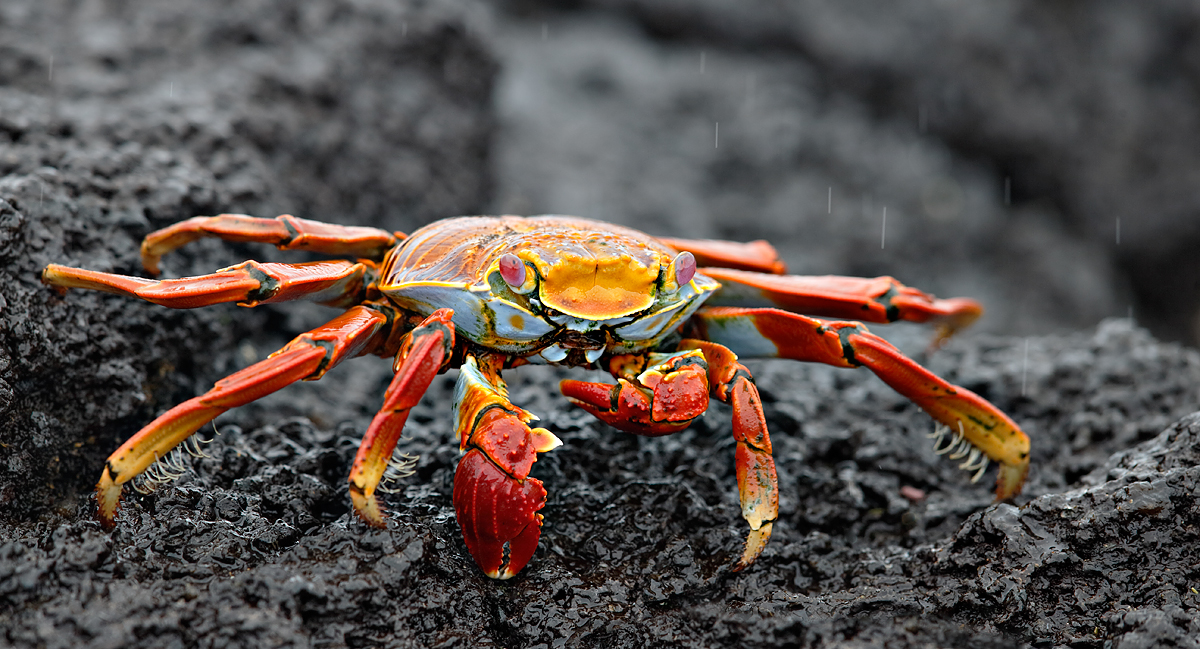
This image of a Sally Lightfoot Crab was created with the tripod-mounted Canon EF 600mm f/4L IS II USM lens and the Canon EOS-1D X. ISO 400. Evaluative metering -1/3 stop: 1/250 sec. at f/5.6 in Manual mode.
One sensor above and one to the right of the Central sensor/AI Servo Surround/Rear Focus active at the moment of exposure. Click here if you missed the Rear Focus Tutorial. Click on the image to see a larger version.
Changing AF Sensors
It takes a bit of study and lots of time and practice to be able to quickly change both the AF Area Selection modes and the active AF sensor on the fly, that is, while the subject is moving within the frame. Both our 1D X AF Guide and our 5D Mark III User’s Guide will point you in the right direction.
Your Favorite?
Take a moment to leave a comment and let us know which of the three images here you like best. And be sure to let us know why.
Traveling
Please know that I will be traveling to and from Africa for the Tanzania Photo Safari with Todd Gustafson leaving today, August 1 and back in the office on August 21. I will have extremely limited and very slow at best internet access so please do not e-mail me until I get back. Jim will be in the office every weekday to help you with your mail order purchases and Jen will be here handling IPT registrations. The blog will continue to be active as I have prepared a dozen interesting, brand new educational posts in advance for you to enjoy during my absence.
Please consider using our B&H, Amazon, and Borrow Lenses affiliate links for all of your major and minor purchases both photographic and household. If we carry something in the BAA Store that you need our very great preference would be that you purchase those items from us :).
If you have a gear, image processing, or other question please e-mail me after July 19th. You can reach Jim here via e-mail. You can reach Jennifer here via e-mail. Please type “JIM” or “JEN” respectively at the front of the Subject Line.
Expanding Your Creative Vision Nature Photography Seminar
Sept 30, 2013 9:00 am – 5:00 pm, Canton, MA.
Sponsored by Mass Audubon/Museum of American Bird Art
Spend an amazing day with Arthur Morris and Denise Ippolito in a full day nature photography seminar. You know me. 🙂 Learn more about Denise on her website; be sure to visit her beautiful image galleries. If you live withing 3 hours of Boston and love photographing nature this experience is not to be missed. Artie will be doing a Tuesday night program for Mass Audubon. Both events will be in conjunction with the opening of a 35-image gallery exhibit of his work at the Museum of American Bird Art on Sunday, September 29, 2013. All details to follow.
Schedule:
9:00 to 10:45am: Choosing and Using Lenses for Nature Photography BIRDS AS ARTStyle – Artie Morris
10:45 to 11:00am: break
11:00 to 12:00 noon: Blooming Ideas – Denise Ippolito
12:00 to 1:00pm: Lunch
1:00 to 2:00pm: Refining Your Photographic Vision: Artie Morris and Denise Ippolito
2:00 to 2:30: Pro Gear Handling Tips – Artie Morris and Denise Ippolito
2:30 to 2:45: break
2:45 to 3:45: Creating Pleasing Blur – Artie Morris and Denise Ippolito s
3:45 to 5pm: Image Critiquing. Registrants will be asked to submit no more than three 1400 (wide) or 1050 (tall) sharpened JPEGs via e-mail 2-4 weeks before the seminar. At least one image from each participant will be selected for review.
Artie Morris & Denise Ippolito
Date: Sunday – October 20, 2013: Time: 9:00am – 4:00pm
Location: Salem Gardner Lake Firehouse Hall, 429 Old Colchester Road, Salem, CT 06420
Admission Fee: The Artie Morris presentation from 9:00am until 10:45am is free and open to the public courtesy of Canon U.S.A. The presentation by Artie and Denise from 11:00am until 4:00pm is $40.00 (Lunch & morning coffee included)
9:00 to 10:45 – “Choosing and Using Lenses for Nature Photography… BIRDS AS ART Style” – Artie Morris (Sponsored by Canon U.S.A.)
10:45 TO 11:00: Break
11:00 to 12:00 – “Blooming Ideas” – Denise Ippolito
12:00 to 1:00 – Lunch
1:00 to 2:00 – “Refining Your Photographic Vision” – Artie Morris and Denise Ippolito
2:00 to 2:30 – “Pro Gear Handling Tips” – Artie Morris and Denise Ippolito
2:30 to 2:45 – Break
2:45 to 4:00 – “Creating Pleasing Blurs” – Artie Morris and Denise Ippolito
Scroll down here for details on the Saturday seminar that Denise Ippolito and yours truly are doing in Chattanooga on October 12, 2013 and the follow-up Old Car City In-the-Field Workshop. Blog folks who sign up for both are invited to join us at a secret Urbex location in Atlanta on Friday morning October 11. Feel free to e-mail me for details after you are registered for both. The Artie Morris presentation, “Choosing and Using Lenses for Nature Photography… BIRDS AS ART Style” (9:00 – 10:45am) is free and open to the public courtesy of Canon U.S.A.
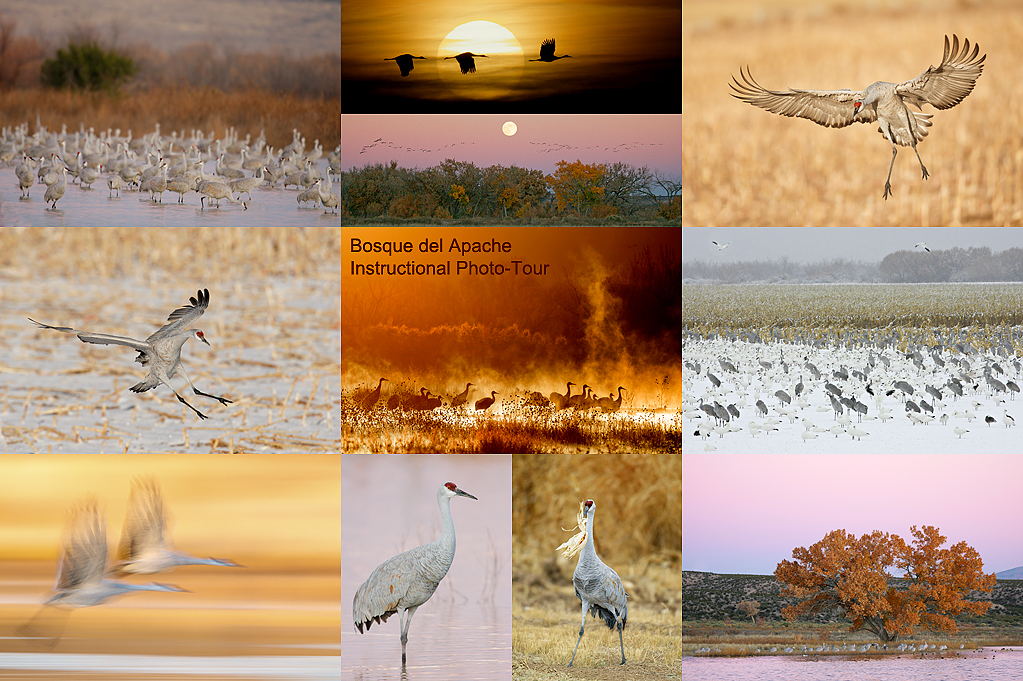
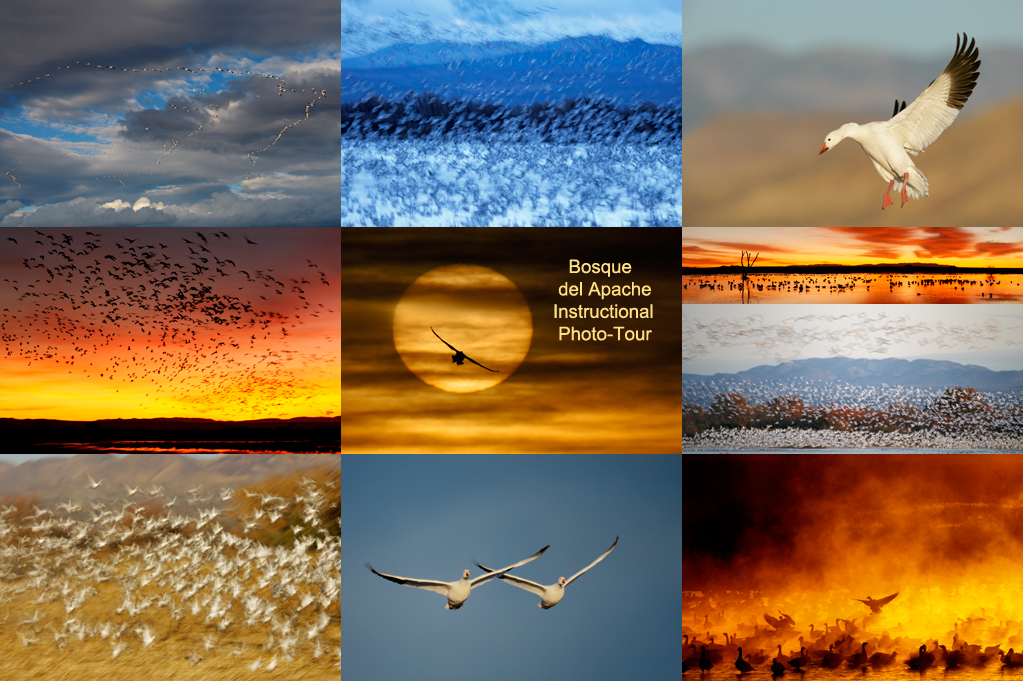
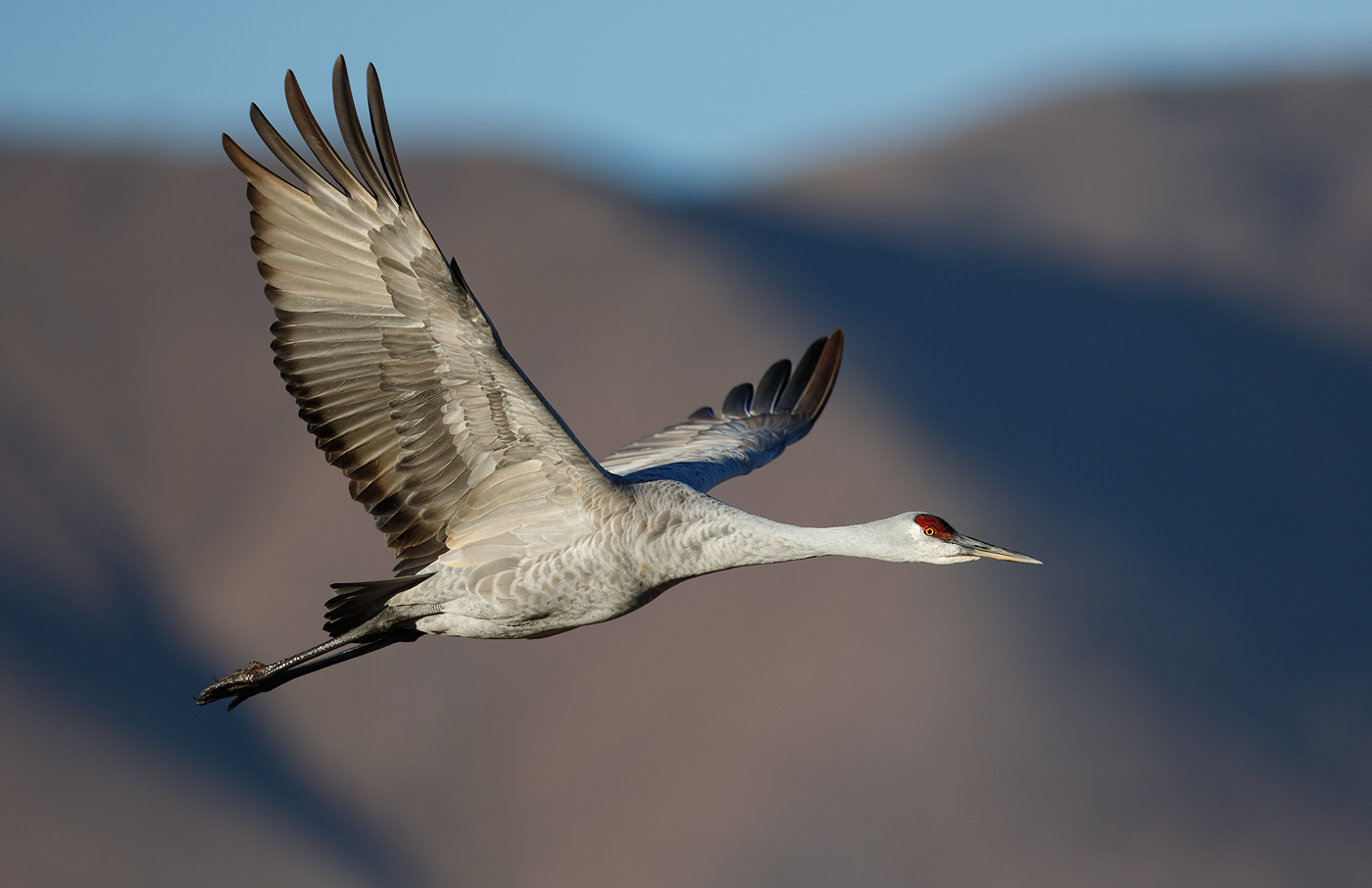
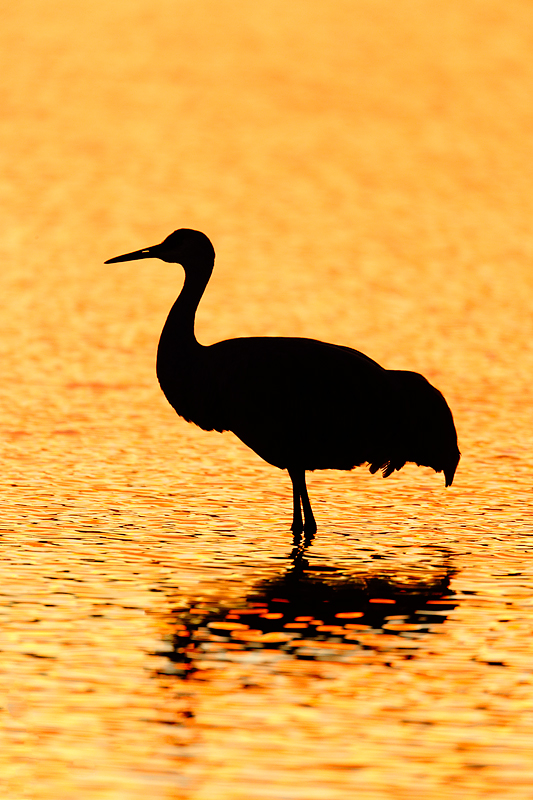
Sandhill Crane composite, Bosque del Apache NWR, San Antonio, NM. Click on the image for a larger version.
Bosque del Apache 2013 IPT: “The Complete Bosque Experience.” NOV 26-DEC 2, 2013. 7-FULL DAYS: $3399. Co-leader: Denise Ippolito. Introductory Slide program: 6:30 pm on 11/25. Limit: 12.
Tens of thousand of Snow Geese, 10,000 Sandhill Cranes, ducks including point-blank American Wigeon and Wood Duck, amazing sunrises, sunsets, and blast-offs. Live, eat, and breathe photography with one of (if not the) world’s premier photographic educators at one of his very favorite locations on the planet. Top-notch Photoshop instruction. This will make 19 consecutive Novembers at Bosque for me. Nobody knows the place better than I do. Join us to learn to think like a pro, to recognize situations and to anticipate them based on the weather, especially the sky conditions, the light, and the wind direction. Every time we make a move we will let you know why. When you head home applying what you learned will prove to be invaluable. Includes all lunches and the Thanksgiving Buffet at the Crowne Plaza in Albuquerque. I hope that you can join me for what will be an unparalleled learning experience.
A $500 non-refundable deposit is required to hold your slot for this IPT. Your balance is due 4 months before the date of the IPT and is also non-refundable. If the trip fills, we will be glad to apply a credit applicable to a future IPT for the full amount less a $100 processing fee. If we do not receive your check for the balance on or before the due date we will try to fill your spot from the waiting list. If your spot is filled, you will lose your deposit. If not, you can secure your spot by paying your balance.
Please print, complete, and sign the form that is linked to here and shoot it to us along with your deposit check (made out to “Arthur Morris.”) You can also leave your deposit with a credit card by calling the office at 863-692-0906. If you register by phone, please print, complete and sign the form as noted above and either mail it to us or e-mail the scan. If you have any questions, please feel free to contact me via e-mail.
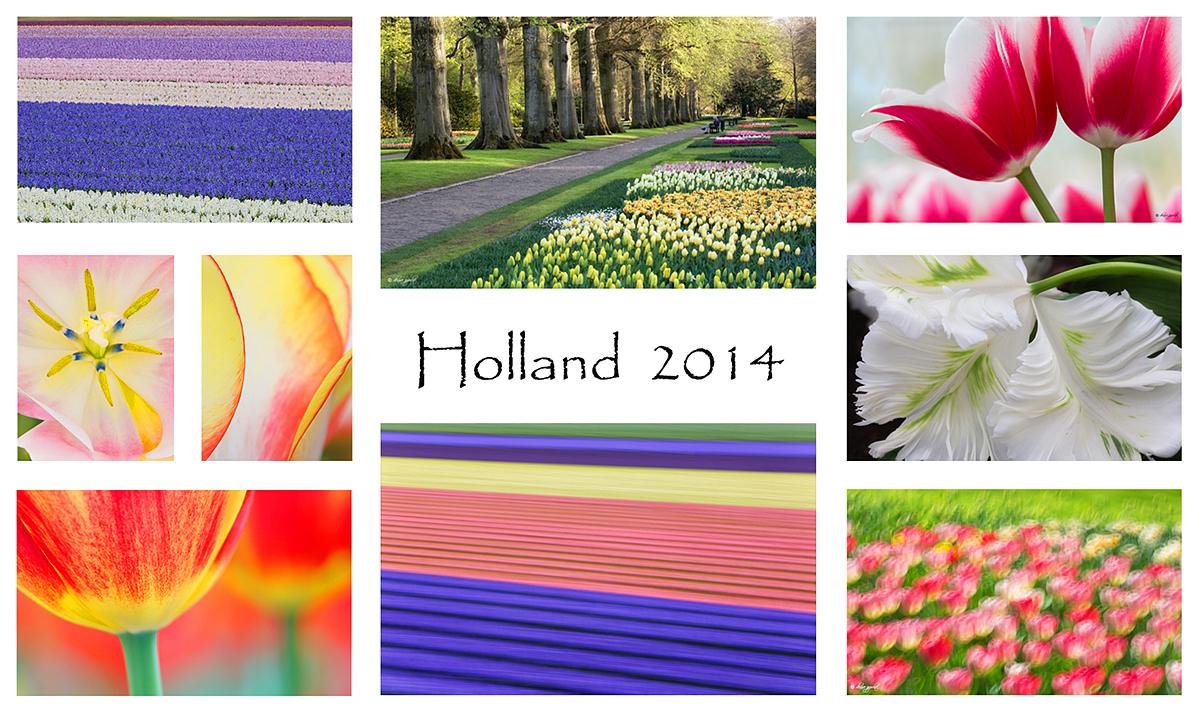
Images copyright 2012: Denise Ippoltio & Arthur Morris. Card design by Denise Ippolito. Click on the image to enjoy a spectacular larger version.
Holland 2014 7 1/2-Day/8-Night: A Creative Adventure/BIRDS AS ART/Tulips & A Touch of Holland IPT. April 17-April 24, 2014 :$4995 Limit: 12 photographers/Openings 9
This trip needs 8 registrants to run so please do not purchase your plane tickets until you hear from us; right now we need 5 more folks.
Join Denise Ippolito, Flower Queen and the author of “Bloomin’ Ideas,” and Arthur Morris, Canon Explorer of Light Emeritus and one of the planet’s premier photographic educators for a great trip to Holland in mid-April 2014. Day 1 of the IPT will be April 17, 2014. We will have a short afternoon get-together and then our first photographic session at the justly-famed Keukenhof. Most days we will return to the hotel for lunch, image sharing and a break. On Day 8, April 24, we will enjoy both morning and afternoon photography sessions.
The primary subjects will be tulips and orchids at Keukenhof and the spectacularly amazing tulip, hyacinth, and daffodil bulb fields around Lisse. In addition we will spend one full day in Amsterdam. There will be optional visits the Van Gogh Museum in the morning and the Anne Frank House in the afternoon; there will be plenty of time for street photography as well. And some great food. On another day we will have a wonderful early dinner at Kinderdijk and then head out with our gear to photograph the windmills and possibly some birds for those who bring their longs lenses. We will spend an afternoon in the lovely Dutch town of Edam where we will do some street photography and enjoy a superb dinner. All lodging, ground transportation, entry fees, and meals (from dinner on Day 1 through dinner on Day 8) are included.
For those who will be bringing a big lens we will likely have an optional bird photography afternoon or two. If we get lucky, the big attraction should be gorgeous Purple Herons in flight at a breeding marsh. We would be photographing them from the roadside. And we might be able to find a few Great-crested Grebes at a location near Keukenhof.
Click here for complete details and some previously unpublished images. And/or click here and see item one for lots more tulip photos and complete trip details.
Click here for complete details and some previously unpublished images. And/or click here and see item one for lots more tulip photos and complete trip details.
Images courtesy of and copyright 2012: Bill Mueller. Card design by Denise Ippolito.
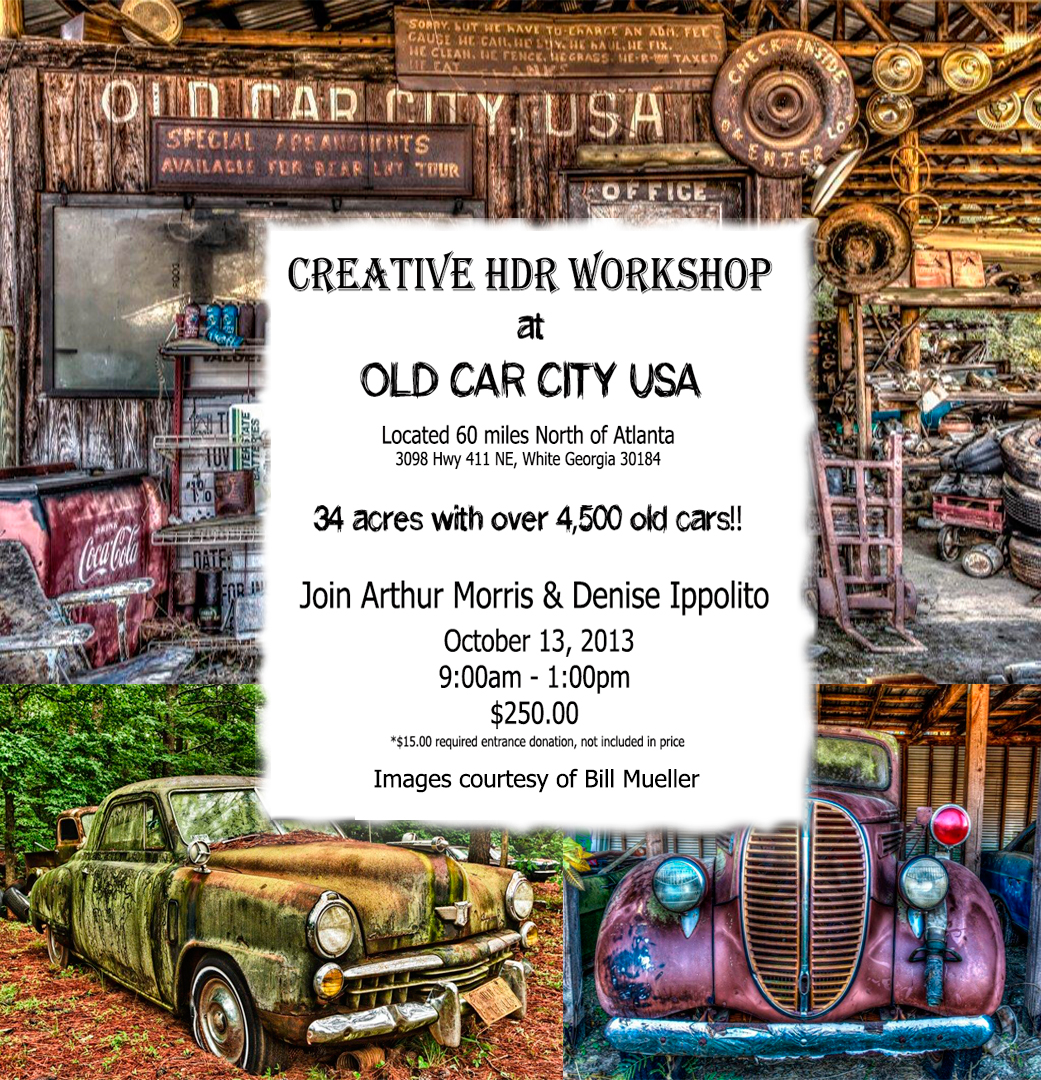
Old Car City Creative Photography In-the-Field HDR Workshop: Sunday, October 13, 2013/ 9am till 1pm.
White, Georgia: $250 plus a $15 entrance fee donation (cash only on the day of the event) that will go to charity. Limit: 16 photographers.
On October 13, 2013, Arthur Morris/BIRDS AS ART and Denise Ippolito/A Creative Adventure will be conducting an In-the-Field HDR Workshop at Old Car City in White, Georgia. Old Car City is about an hour north of Atlanta, GA and an hour south of Chattanooga, TN where they will, as noted above, be doing a full day seminar for the Photographic Society of Chattanooga on Saturday, October 12th. Click here for complete details.
Typos
On all blog posts, feel free to e-mail or leave a comment regarding any typos, wrong words, misspellings, omissions, or grammatical errors. Just be right. 🙂
Support the BAA Blog. Support the BAA Bulletins: Shop B&H here!
We want and need to keep providing you with the latest free information, photography and Photoshop lessons, and all manner of related information. Show your appreciation by making your purchases immediately after clicking on any of our B&H or Amazon Affiliate links in this blog post. Remember, B&H ain’t just photography!
If you are considering an item for purchase or comparison shopping be sure to place an item in your cart to see the too-low-to show the actual price. In many cases the prices are so low that B&H is forbidden from publicizing them!
If you are considering an item for purchase or comparison shopping be sure to place an item in your cart to see the too-low-to show the actual price. In many cases the prices are so low that B&H is forbidden from publicizing them!
Support the Blog
Amazon
Everyone buys something from Amazon, be it a big lens or deodorant. Support the blog by starting your search by clicking on the logo-link below. No purchase is too small to be appreciated; they all add up. Why make it a habit? Because I make it a habit of bringing you new images and information on an almost daily basis.
And from the BAA On-line Store:
LensCoats. I have a LensCoat on each of my big lenses to protect them from nicks and thus increase their re-sales value. All my big lens LensCoat stuff is in Hardwood Snow pattern. LegCoat Tripod Leg Covers. I have four tripods active and each has a Hardwood Snow LegCoat on it to help prevent further damage to my tender shoulders 🙂 And you will love them in mega-cold weather…. Gitzo GT3532 LS CF Tripod. This one replaces the GT3530LS Tripod and will last you a lifetime. Learn more about this great tripod here. Mongoose M3.6 Tripod Head. Right now this is the best tripod head around for use with lenses that weigh less than 9 pounds. For heavier lenses, check out the Wimberley V2 head. Double Bubble Level. You will find one in my camera’s hot shoe whenever I am not using flash. The Lens Align Mark II. I use the Lens Align Mark II pretty much religiously to micro-adjust all of my gear an average of once a month and always before a major trip. Enjoy our free comprehensive tutorial here. BreezeBrowser. I do not see how any digital photographer can exist without this program. Delkin Flash Cards. I use and depend on Delkin compact Flash Cards and card readers most every day. Learn more about their great 700X and 1000X cards here or about my favorite Delkin card here.
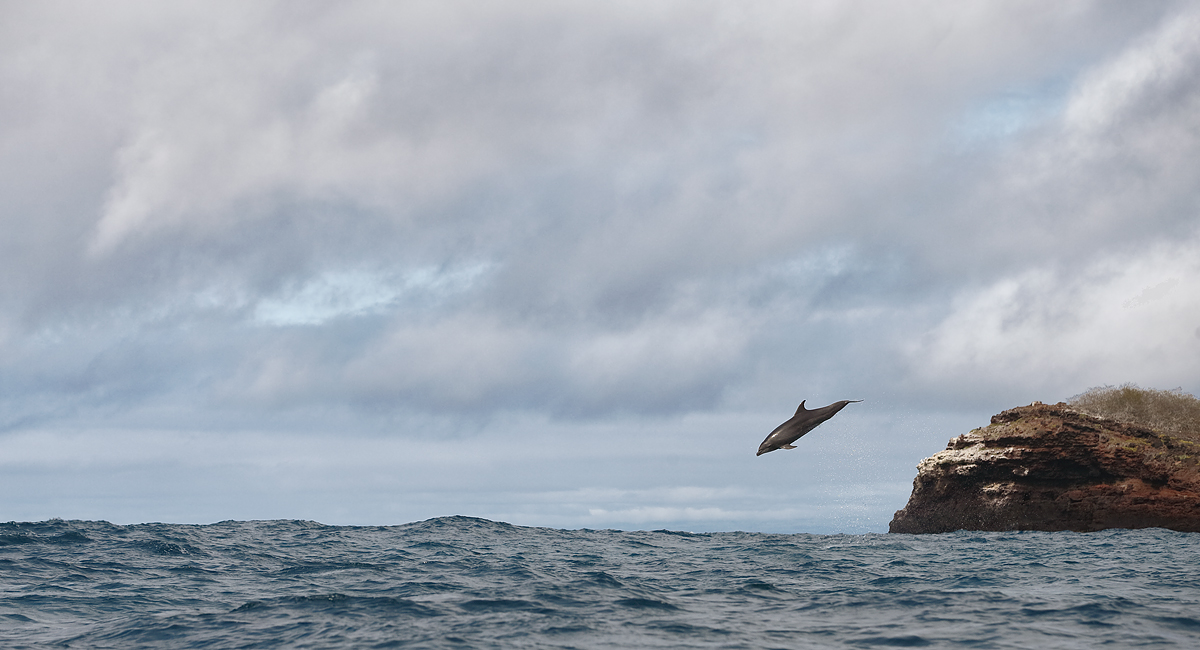
This flight shot of a Bottle-nosed Dolphin was created with the Canon EF 70-200mm f/2.8L IS II lens (hand held at 120mm) and the Canon EOS-1D X). ISO 400. Evaluative metering +2/3 stop: 1/4000 sec. at f/4.5 in Av mode.
Two sensors below the central sensor/AI Servo/Rear Focus on the water at the horizon line active at the moment of exposure. Click here if you missed the Rear Focus Tutorial. Be sure to click on the image to see a larger version.
In the “Flying Dolphin or Photoshop Creation?” blog post I wrote, referring to the image above, “Was the airborne dolphin cut and pasted from another image? If you have an opinion that you would like to share, please leave a comment and share your evidence either way.”
Several folks, most notably and recently Wayne Rundell, who gave a detailed analysis as to how he knew that the dolphin was indeed cut and pasted into the image, felt that the image was phony….
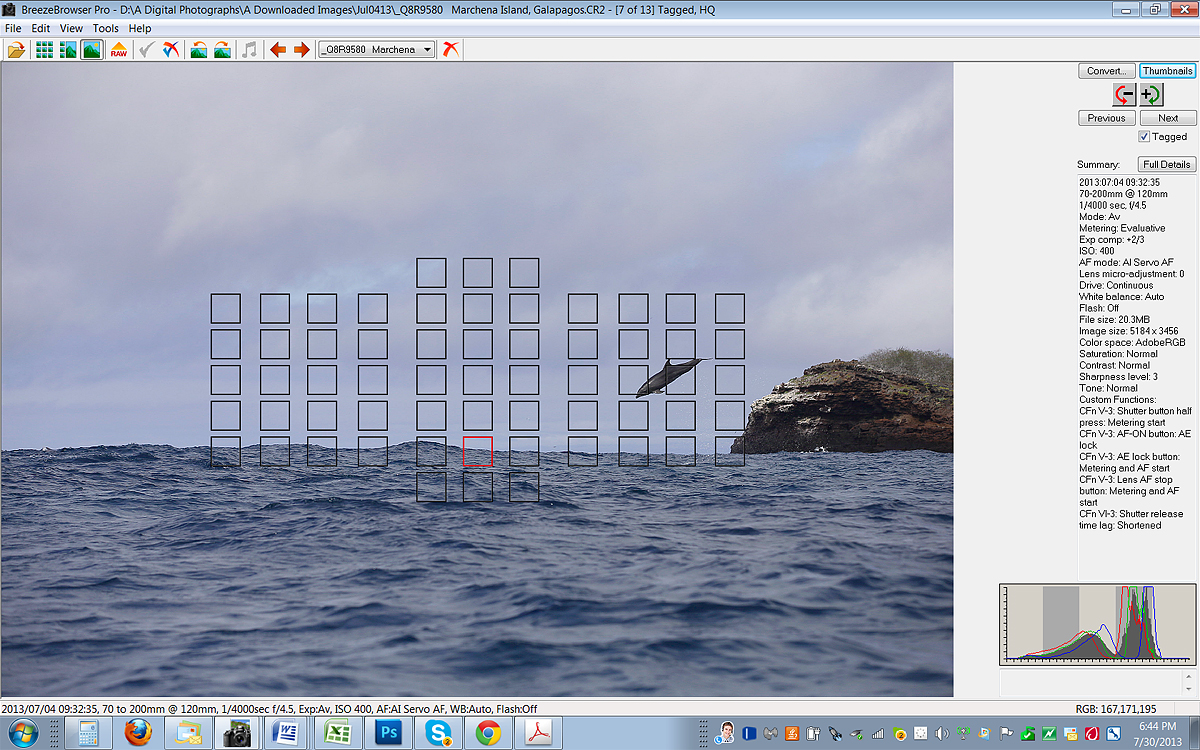
This is the BreezeBrowser Main View screen capture for the flying dolphin image above.
Tale Told by the BreezeBrowser Main View Screen Capture
Immediately above is the BreezeBrowser Main View screen capture for the image in question. If you have good eyes or if you click on the screen capture to view the larger version you will see, at the top of the frame, that the file name is “_Q8R9580 Marchena Island, Galapagos.CR2” The CR2 indicates that the image file is a RAW file. Thus, the image in question is actually genuine, a decent crop of the original file but otherwise pretty much straight out of camera.
The illuminated red square shows that the selected sensor was active at the moment of exposure. I give myself a quick pat on the back for figuring that focusing on the relatively distant horizon line would yield a sharp dolphin.
Note: in Breezebrowser you need to make sure to check Show Focus Points under View to activate this feature. To see the focus points in DPP check AF Point under View or hit Alt L. Regular readers know that I use and depend on BreezeBrowser every day of the year. It allows me to sort my keepers and deletes the rejects faster than any other browsing program. We use it on the main computer in the home office to catalog our images file-drawer style. And the companion program, Downloader Pro allows me to download my images quickly and conveniently. It automatically adds my IPTC data and the shooting location. I have it set up to create a folder named by the Month/date/year. The Breezebrowser/Downloader Pro combo saves me many hours each week. To learn earn more or to purchase this great PC only program, click here. To find out about running BreezeBrowser on a Mac, click here.
The Funny Thing…
The funny thing is that when I began writing the Flying Dolphin blog post I had no intention of asking if it were real or phony. That was an afterthought. I have long believed several things about Photoshop:
1-If you tell folks what you did, everyone will spot the obvious flaws, the crude mistakes that you make.
2-If you do not say anything until after the fact nobody knows anything.
3-If you show a straight out of the camera image and ask if it is real or phony some folks will invent or image stuff to prove that it is phony. That is what happened here said the devious man. 🙂
And More…
In the “Oh Baby; Thanks Pat!”blog post here, the first two Common Tern chick images were my favorites by far? The first for its tiny size and the utter helplessness portrayed. The second for the obvious reason: the huge fish. The first image is one of my all time favorite family jewels. It will be one of 35 prints in an exhibit of my work that will be on display at Mass Audubon’s Museum of American Bird Art this fall. Learn more about Mass Audubon here.
Stay tuned for additional details and info on a series of events including a full day seminar on September 30, 2013.
Welcome to Borrow Lenses.com/The Newest BIRDS AS ART Affiliate Sponsor
Renting a lens for a big trip or to learn if the lens if right for you has always been a great plan. On IPTs we have been renting big lenses for probably two decades. But our choices have been and are extremely limited and we never have any Nikon lenses to rent. Borrow Lenses, US-based in San Carlos, CA, is a first class outfit that carries a huge selection of the latest greatest camera, video, audio, lighting, computer, and photography gear. All can be rented for a reasonable fee and delivered to your location with or without insurance.
Please consider supporting our efforts here and with our free BAA Bulletins by renting from Borrow Lenses when the need arises. Click on the banner below to open a whole new world.
Bucket List?
If visiting the Galapagos is on your bucket list and you are a happy camper who is serious about joining us on our July 2015 trip, please shoot me an e-mail and ask to be placed on the interested list. There simply is no better Galapagos Photo Tour.
Typos
On all blog posts, feel free to e-mail or leave a comment regarding any typos, wrong words, misspellings, omissions, or grammatical errors. Just be right. 🙂
Support the BAA Blog. Support the BAA Bulletins: Shop B&H here!
We want and need to keep providing you with the latest free information, photography and Photoshop lessons, and all manner of related information. Show your appreciation by making your purchases immediately after clicking on any of our B&H or Amazon Affiliate links in this blog post. Remember, B&H ain’t just photography!
If you are considering an item for purchase or comparison shopping be sure to place an item in your cart to see the too-low-to show the actual price. In many cases the prices are so low that B&H is forbidden from publicizing them!
If you are considering an item for purchase or comparison shopping be sure to place an item in your cart to see the too-low-to show the actual price. In many cases the prices are so low that B&H is forbidden from publicizing them!
Support the Blog
Amazon
Everyone buys something from Amazon, be it a big lens or deodorant. Support the blog by starting your search by starting your search by clicking on the logo-link below. No purchase is too small to be appreciated; they all add up. Why make it a habit? Because I make it a habit of bringing you new images and information on an almost daily basis.
And from the BAA On-line Store:
LensCoats. I have a LensCoat on each of my big lenses to protect them from nicks and thus increase their re-sales value. All my big lens LensCoat stuff is in Hardwood Snow pattern. LegCoat Tripod Leg Covers. I have four tripods active and each has a Hardwood Snow LegCoat on it to help prevent further damage to my tender shoulders 🙂 And you will love them in mega-cold weather…. Gitzo GT3532 LS CF Tripod. This one replaces the GT3530LS Tripod and will last you a lifetime. Learn more about this great tripod here. Mongoose M3.6 Tripod Head. Right now this is the best tripod head around for use with lenses that weigh less than 9 pounds. For heavier lenses, check out the Wimberley V2 head. Double Bubble Level. You will find one in my camera’s hot shoe whenever I am not using flash. The Lens Align Mark II. I use the Lens Align Mark II pretty much religiously to micro-adjust all of my gear an average of once a month and always before a major trip. Enjoy our free comprehensive tutorial here. BreezeBrowser. I do not see how any digital photographer can exist without this program. Delkin Flash Cards. I use and depend on Delkin compact Flash Cards and card readers most every day. Learn more about their great 700X and 1000X cards here or about my favorite Delkin card here.
Two sensors to the right of the central sensor/AI Servo-Surround/Rear Focus AF on the bird’s face active at the moment of exposure. Click here if you missed the Rear Focus Tutorial. Click on the image to see a larger version.
With tight head portraits it is imperative to be perfectly square to the subject to avoid depth-of-field problems where the face is sharp and the bill towards the tip not.
The Canon EF 200-400mm f/4L IS USM lens with Internal 1.4x Extender: Ideal for Zodiac Photography
After our early morning landing, we returned to the Samba for breakfast at about 9am—the pancakes “con coco” (with coconut) were a huge hit. By 10:15am we were back in the zodiacs for a session of panga photography.
As you might surmise after looking at the image above, the skill of the crewmen driving the zodiacs is extraordinary; many times they are able to position the panga perfectly and stabilize it by getting the bow onto a sloping rock while at the same angling the watercraft to maximize the potential for all the photographers in the small boat.
As I wanted a head portrait of the young Flightless Cormorant above, I slid the lever down to engage the internal 1.4X TC. With lots of whitewash in the background I needed to twist my torso a bit to come up with a relatively clean background. The yawn was a bonus. The ease of zooming out to ensure the framing that you want is both convenient and easy. This bird spent lots of time attempting to catch the flies that were pestering it.
Central sensor/AI Servo-Surround/Rear Focus AF on the bird’s back active at the moment of exposure. Click here if you missed the Rear Focus Tutorial. Click on the image to see a larger version.
Hand Held Action Photography with the Canon EF 200-400mm f/4L IS USM lens with Internal 1.4x Extender
For whatever reasons, I find it easier to hand hold the 200-400 than to hand hold either the 500 F/4L IS II or the 600 f/4L IS II even though the 500 is lighter than the 200-400. It surely has to do with shorter length and compactness of the 200-400 and the torque created by the longer lenses.
Artie Morris & Denise Ippolito
Date: Sunday – October 20, 2013: Time: 9:00am – 4:00pm
Location: Salem Gardner Lake Firehouse Hall, 429 Old Colchester Road, Salem, CT 06420
Admission Fee: The Artie Morris presentation from 9:00am until 10:45am is free and open to the public courtesy of Canon U.S.A.
The presentation by Artie and Denise from 11:00am until 4:00pm is $40.00 (Lunch & morning coffee included)
9:00 to 10:45 – “Choosing and Using Lenses for Nature Photography… BIRDS AS ART Style” – Artie Morris (Sponsored by Canon U.S.A.)
10:45 TO 11:00: Break
11:00 to 12:00 – “Blooming Ideas” – Denise Ippolito
12:00 to 1:00 – Lunch
1:00 to 2:00 – “Refining Your Photographic Vision” – Artie Morris and Denise Ippolito
2:00 to 2:30 – “Pro Gear Handling Tips” – Artie Morris and Denise Ippolito
2:30 to 2:45 – Break
2:45 to 4:00 – “Creating Pleasing Blurs” – Artie Morris and Denise Ippolito
If visiting the Galapagos is on your bucket list and you are a happy camper who is serious about joining us on our July 2015 trip, please shoot me an e-mail and ask to be placed on the interested list. There simply is no better Galapagos Photo Tour.
Typos
On all blog posts, feel free to e-mail or leave a comment regarding any typos, wrong words, misspellings, omissions, or grammatical errors. Just be right. 🙂
Support the BAA Blog. Support the BAA Bulletins: Shop B&H here!
We want and need to keep providing you with the latest free information, photography and Photoshop lessons, and all manner of related information. Show your appreciation by making your purchases immediately after clicking on any of our B&H or Amazon Affiliate links in this blog post. Remember, B&H ain’t just photography!
If you are considering an item for purchase or comparison shopping be sure to place an item in your cart to see the too-low-to show the actual price. In many cases the prices are so low that B&H is forbidden from publicizing them!
If you are considering an item for purchase or comparison shopping be sure to place an item in your cart to see the too-low-to show the actual price. In many cases the prices are so low that B&H is forbidden from publicizing them!
Support the Blog
Amazon
Everyone buys something from Amazon, be it a big lens or deodorant. Support the blog by starting your search by typing in the little white box below. No purchase is too small to be appreciated; they all add up. Why make it a habit? Because I make it a habit of bringing you new images and information on an almost daily basis.
And from the BAA On-line Store:
LensCoats. I have a LensCoat on each of my big lenses to protect them from nicks and thus increase their re-sales value. All my big lens LensCoat stuff is in Hardwood Snow pattern. LegCoat Tripod Leg Covers. I have four tripods active and each has a Hardwood Snow LegCoat on it to help prevent further damage to my tender shoulders 🙂 And you will love them in mega-cold weather…. Gitzo GT3532 LS CF Tripod. This one replaces the GT3530LS Tripod and will last you a lifetime. Learn more about this great tripod here. Mongoose M3.6 Tripod Head. Right now this is the best tripod head around for use with lenses that weigh less than 9 pounds. For heavier lenses, check out the Wimberley V2 head. Double Bubble Level. You will find one in my camera’s hot shoe whenever I am not using flash. The Lens Align Mark II. I use the Lens Align Mark II pretty much religiously to micro-adjust all of my gear an average of once a month and always before a major trip. Enjoy our free comprehensive tutorial here. BreezeBrowser. I do not see how any digital photographer can exist without this program. Delkin Flash Cards. I use and depend on Delkin compact Flash Cards and card readers most every day. Learn more about their great 700X and 1000X cards here or about my favorite Delkin card here.
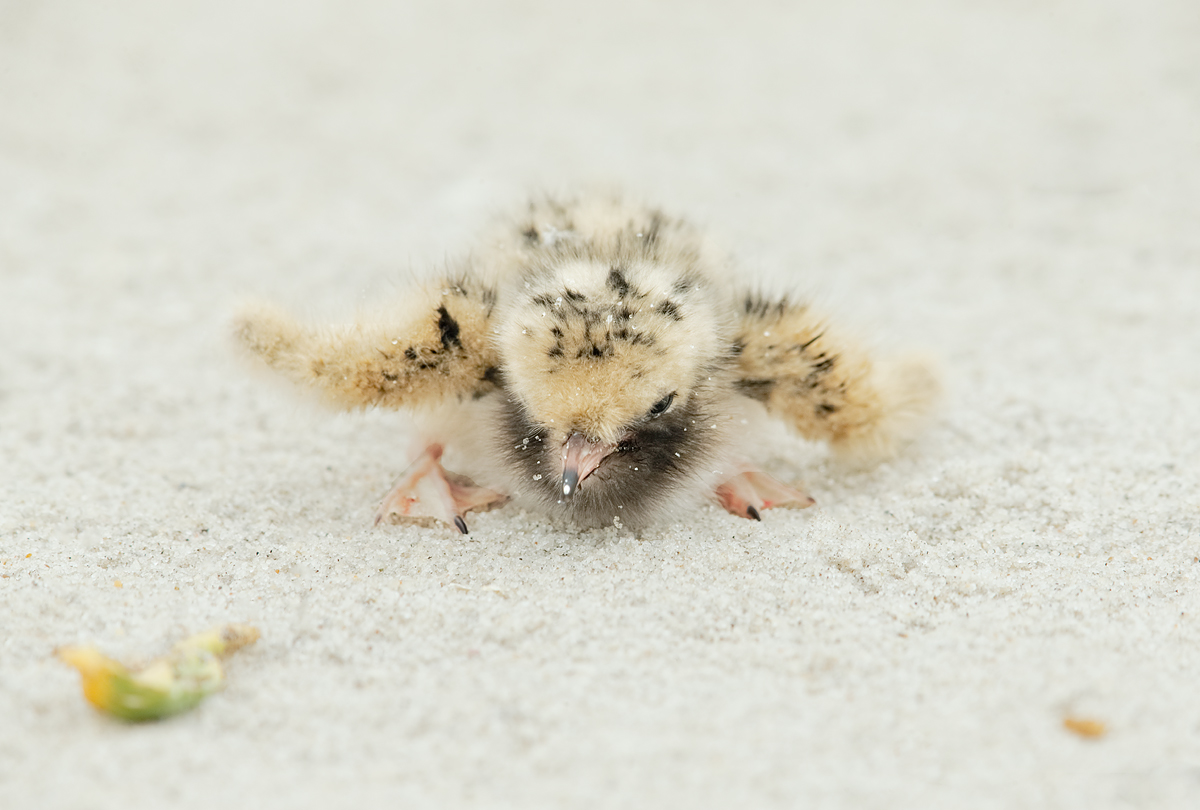
Central sensor Expand (by necessity)/AI Servo/Rear Focus AF just in front of the chick’s eye active at the moment of exposure. Click here if you missed the Rear Focus Tutorial. Click on the image to see a larger version.
This is the tiny, younger of the two chicks, the one that had been attacked. Note the prominent egg tooth.
Thanks Pat!
Alan and Pat Lillich have been on about a zillion IPTs, most recently on both the Holland Tulip IPT and the Texel follow-up. When I first met Alan, on a San Diego IPT in 2011 (I just checked–I thought that it was a lot longer ago than that), I did not like him a whole lot. He used Nikon and seemed to know everything. Over the next few trips I learned that I was wrong. Simply put, Alan is a nice guy who consistently goes out of his way to to help others. He still knows a lot about the technical side of photography and computers–he is recently retired from Adobe, and is an excellent photographer as well. Just yesterday morning he stood in the parking lot of the Best Western Mill River Manor in Rockville Center for well more than an hour teaching co-leader Denise Ippolito to use her new Canon 24mm tilt shift lens; typical Alan Lillich.
As nice as Alan is, wife Patricia is definitely his better half. Pat is sweet as sugar, and is a skilled artist, sculptor, and photographer. Pat was standing at the colony ropes photographing some tern babies. I saw one mostly hidden behind a beach plant. Pat volunteered, “Artie, do you see the tiny chick laying on the sand right in front of you?” I had not until she pointed it out. “It was hiding in a small plant when an adult tern landed nearby, grabbed the tiny chick, and flung it to the ground.” Where it lay helplessly looking right at us. I was already set up with the 600 II and the 2X II TC so I quickly went to work.
I spend a good deal of time on IPTs pointing out situations to folks, birds in nice settings, action that might occur. But lots of eyes are always better than a single pair so I often am able to learn from others on the trip. In this case I was able to make a wonderful series of images thanks to Patricia Lillich.
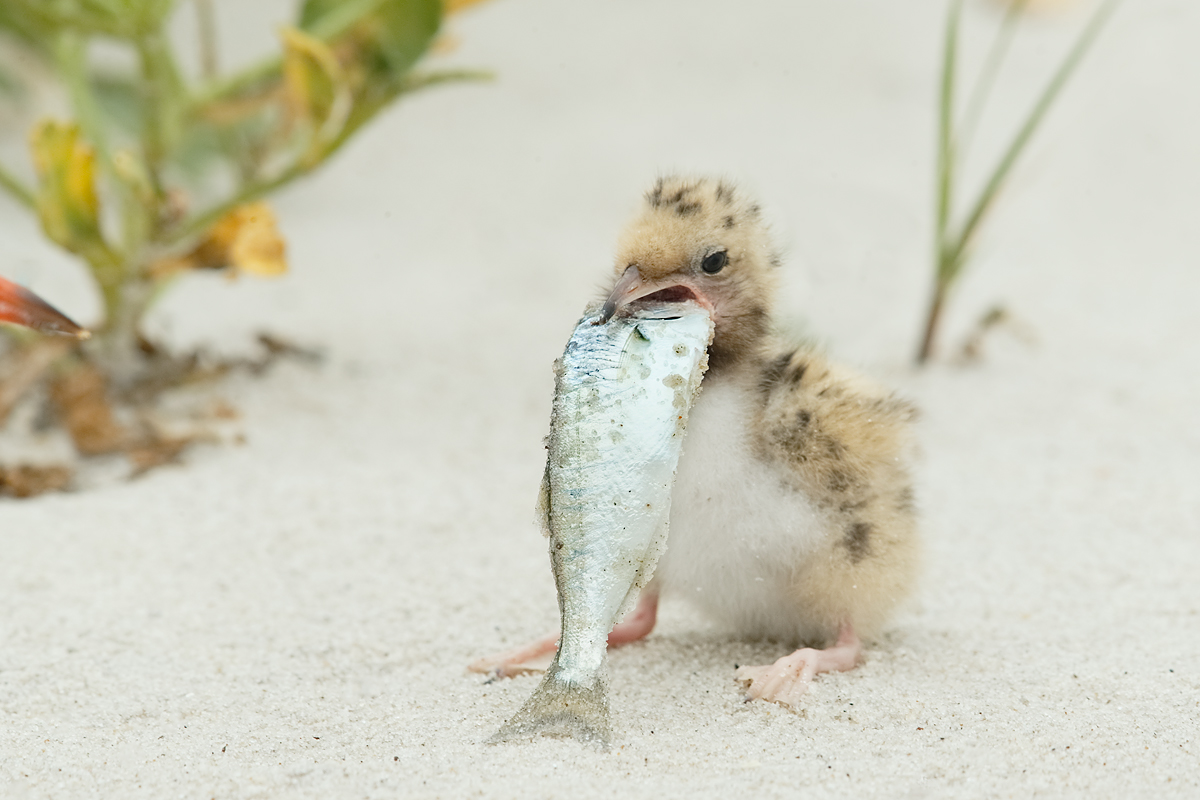
Central sensor Expand (by necessity)/AI Servo/Rear Focus AF just in front of the bend of the chick’s wing stub active at the moment of exposure. Click here if you missed the Rear Focus Tutorial. Click on the image to see a larger version.
This is the older, more rambunctious chick.
Snapper Blue
While one of the adults began to brood the tiny helpless chick its mate landed nearby with a baby bluefish. When I was a kid living in Brooklyn we used to catch snapper blues not much bigger than the one in the image and fry them up crispy, bones and all, for lunch. By now a few folks had gathered around photographing; all were amazed when the helpless chick’s older sibling swallowed the whole thing after about 3 minutes of trying.
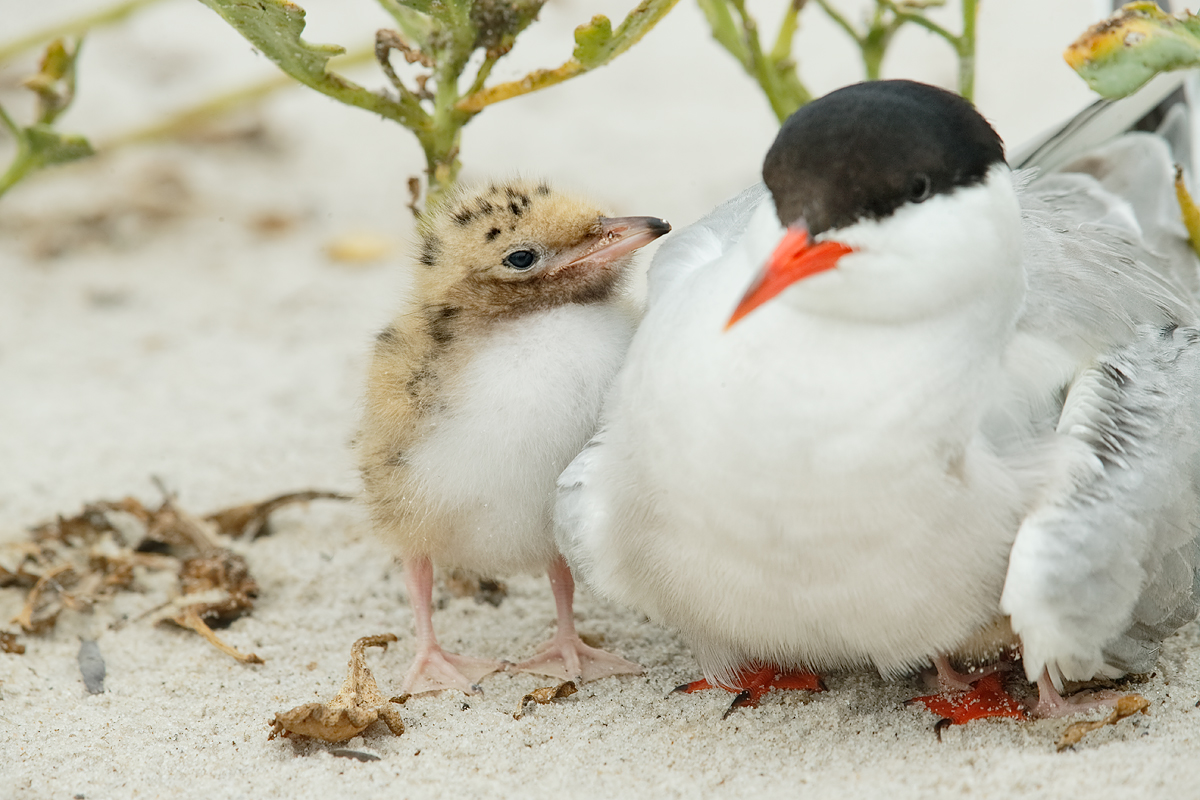
Manual Focus on the chick’s eye. Click on the image to see a larger version.
Here you can barely see the tiny chick’s foot as it is being brooded by one of the adults. The older chick is waiting momentarily to join its nest-mate. Note the far less prominent egg tooth of the older chick.
Why Manual Focus?
For the answer to this very important question for all 1D X owners, see the answer in a blog post coming soon. Anyone want to hazard a guess?
200-400 Note
Please understand that though I had the new 200-400 on the beach when I made these images and though I do love the lens, the 600 II with the 2X III was the right tool for the the job in these situations. That combo gave me a focal length of 1200mm. The 200-400 with the internal TC in place and an external TC added works out to only 784mm. With the size of the subject in the frame being a function of the square of the focal length the huge advantage of reach goes to the 600II/2X III combo hands down. As in a 144 to 61.5 advantage (the relative squares of the two focal lengths).
Central sensor Expand (by necessity)/AI Servo/Rear Focus AF on the chick’s eye and re-compose. Click here if you missed the Rear Focus Tutorial. Click on the image to see a larger version.
Here the older chick has found a surely less comfortable place at the inn.
What a Privilege
What a privilege it to spend four days watching the life and death struggles of the Nickerson’s beach nesting birds. We saw copulating Black Skimmers. We got to photograph chicks that were only hours old. We saw fledged young take a fish from one of their parents only to be slammed by three others and lose its valuable meal. And we saw two Common Tern chicks taken by Great Black-backed Gulls and swallowed whole. Be sure to see BAA Bulletin #446 (coming soon) for the complete Nickerson Beach IPT Report.
White Balance
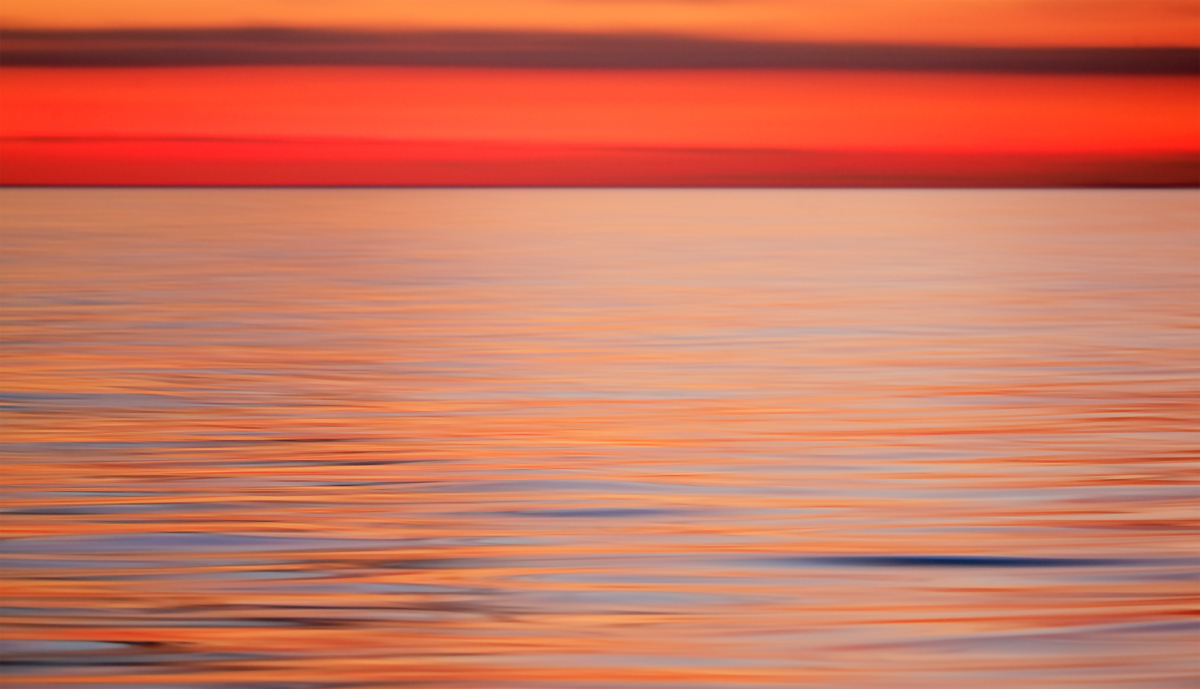
While I usually work in Auto White Balance all of the images here were created at K6000 for a warmer look. I started in the pre-dawn at K-1000 and worked my way down in 500-1000 unit increments to K6000 as the day brightened a bit.
Your Favorite?
Take a moment to leave a comment and let us know which of the four images here you like best. And be sure to let us know why.
Photographic Society of Chattanooga Seminar
Scroll down here for details on the Saturday seminar that Denise Ippolito and yours truly are doing in Chattanooga on October 12, 2013 and the follow-up Old Car City In-the-Field Workshop. Blog folks who sign up for both are invited to join us at a secret Urbex location in Atlanta on Friday morning October 11. Feel free to e-mail me for details after you are registered for both.
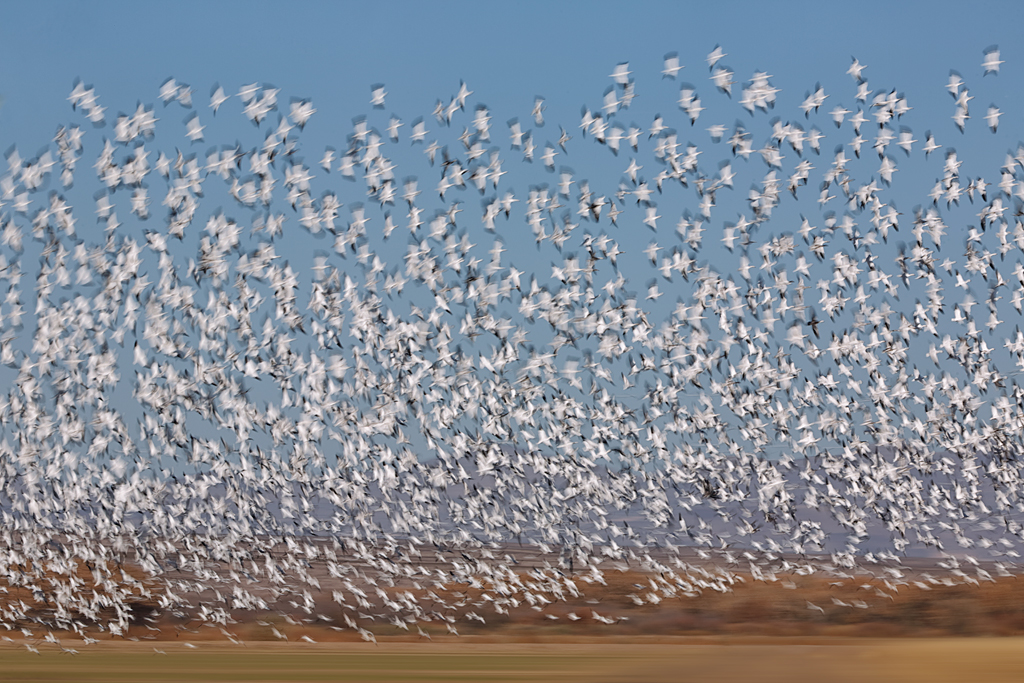
Snow Goose composite, Bosque del Apache NWR, San Antonio, NM. Click on the image for a larger version.
Bosque del Apache 2013 IPT: “The Complete Bosque Experience.” NOV 26-DEC 2, 2013. 7-FULL DAYS: $3399. Co-leader: Denise Ippolito. Introductory Slide program: 6:30 pm on 11/25. Limit: 12.
Tens of thousand of Snow Geese, 10,000 Sandhill Cranes, ducks including point-blank American Wigeon and Wood Duck, amazing sunrises, sunsets, and blast-offs. Live, eat, and breathe photography with one of (if not the) world’s premier photographic educators at one of his very favorite locations on the planet. Top-notch Photoshop instruction. This will make 19 consecutive Novembers at Bosque for me. Nobody knows the place better than I do. Join us to learn to think like a pro, to recognize situations and to anticipate them based on the weather, especially the sky conditions, the light, and the wind direction. Every time we make a move we will let you know why. When you head home applying what you learned will prove to be invaluable. Includes all lunches and the Thanksgiving Buffet at the Crowne Plaza in Albuquerque. I hope that you can join me for what will be an unparalleled learning experience.
A $500 non-refundable deposit is required to hold your slot for this IPT. Your balance is due 4 months before the date of the IPT and is also non-refundable. If the trip fills, we will be glad to apply a credit applicable to a future IPT for the full amount less a $100 processing fee. If we do not receive your check for the balance on or before the due date we will try to fill your spot from the waiting list. If your spot is filled, you will lose your deposit. If not, you can secure your spot by paying your balance.
Please print, complete, and sign the form that is linked to here and shoot it to us along with your deposit check (made out to “Arthur Morris.”) You can also leave your deposit with a credit card by calling the office at 863-692-0906. If you register by phone, please print, complete and sign the form as noted above and either mail it to us or e-mail the scan. If you have any questions, please feel free to contact me via e-mail.
Images copyright 2012: Denise Ippoltio & Arthur Morris. Card design by Denise Ippolito. Click on the image to enjoy a spectacular larger version.
Holland 2014 7 1/2-Day/8-Night: A Creative Adventure/BIRDS AS ART/Tulips & A Touch of Holland IPT. April 17-April 24, 2014 :$4995 Limit: 12 photographers/Openings 9
This trip needs 8 registrants to run so please do not purchase your plane tickets until you hear from us; right now we need 5 more folks.
Join Denise Ippolito, Flower Queen and the author of “Bloomin’ Ideas,” and Arthur Morris, Canon Explorer of Light Emeritus and one of the planet’s premier photographic educators for a great trip to Holland in mid-April 2014. Day 1 of the IPT will be April 17, 2014. We will have a short afternoon get-together and then our first photographic session at the justly-famed Keukenhof. Most days we will return to the hotel for lunch, image sharing and a break. On Day 8, April 24, we will enjoy both morning and afternoon photography sessions.
The primary subjects will be tulips and orchids at Keukenhof and the spectacularly amazing tulip, hyacinth, and daffodil bulb fields around Lisse. In addition we will spend one full day in Amsterdam. There will be optional visits the Van Gogh Museum in the morning and the Anne Frank House in the afternoon; there will be plenty of time for street photography as well. And some great food. On another day we will have a wonderful early dinner at Kinderdijk and then head out with our gear to photograph the windmills and possibly some birds for those who bring their longs lenses. We will spend an afternoon in the lovely Dutch town of Edam where we will do some street photography and enjoy a superb dinner. All lodging, ground transportation, entry fees, and meals (from dinner on Day 1 through dinner on Day 8) are included.
For those who will be bringing a big lens we will likely have an optional bird photography afternoon or two. If we get lucky, the big attraction should be gorgeous Purple Herons in flight at a breeding marsh. We would be photographing them from the roadside. And we might be able to find a few Great-crested Grebes at a location near Keukenhof.
Click here for complete details and some previously unpublished images. And/or click here and see item one for lots more tulip photos and complete trip details.
Click here for complete details and some previously unpublished images. And/or click here and see item one for lots more tulip photos and complete trip details.
Images courtesy of and copyright 2012: Bill Mueller. Card design by Denise Ippolito.
Old Car City Creative Photography In-the-Field HDR Workshop: Sunday, October 13, 2013/ 9am till 1pm.
White, Georgia: $250 plus a $15 entrance fee donation (cash only on the day of the event) that will go to charity. Limit: 16 photographers.
On October 13, 2013, Arthur Morris/BIRDS AS ART and Denise Ippolito/A Creative Adventure will be conducting an In-the-Field HDR Workshop at Old Car City in White, Georgia. Old Car City is about an hour north of Atlanta, GA and an hour south of Chattanooga, TN where they will, as noted above, be doing a full day seminar for the Photographic Society of Chattanooga on Saturday, October 12th. Click here for complete details.
Typos
On all blog posts, feel free to e-mail or leave a comment regarding any typos, wrong words, misspellings, omissions, or grammatical errors. Just be right. 🙂
Support the BAA Blog. Support the BAA Bulletins: Shop B&H here!
We want and need to keep providing you with the latest free information, photography and Photoshop lessons, and all manner of related information. Show your appreciation by making your purchases immediately after clicking on any of our B&H or Amazon Affiliate links in this blog post. Remember, B&H ain’t just photography!
If you are considering an item for purchase or comparison shopping be sure to place an item in your cart to see the too-low-to show the actual price. In many cases the prices are so low that B&H is forbidden from publicizing them!
If you are considering an item for purchase or comparison shopping be sure to place an item in your cart to see the too-low-to show the actual price. In many cases the prices are so low that B&H is forbidden from publicizing them!
Support the Blog
Amazon
Everyone buys something from Amazon, be it a big lens or deodorant. Support the blog by starting your search by typing in the little white box below. No purchase is too small to be appreciated; they all add up. Why make it a habit? Because I make it a habit of bringing you new images and information on an almost daily basis.
And from the BAA On-line Store:
LensCoats. I have a LensCoat on each of my big lenses to protect them from nicks and thus increase their re-sales value. All my big lens LensCoat stuff is in Hardwood Snow pattern. LegCoat Tripod Leg Covers. I have four tripods active and each has a Hardwood Snow LegCoat on it to help prevent further damage to my tender shoulders 🙂 And you will love them in mega-cold weather…. Gitzo GT3532 LS CF Tripod. This one replaces the GT3530LS Tripod and will last you a lifetime. Learn more about this great tripod here. Mongoose M3.6 Tripod Head. Right now this is the best tripod head around for use with lenses that weigh less than 9 pounds. For heavier lenses, check out the Wimberley V2 head. Double Bubble Level. You will find one in my camera’s hot shoe whenever I am not using flash. The Lens Align Mark II. I use the Lens Align Mark II pretty much religiously to micro-adjust all of my gear an average of once a month and always before a major trip. Enjoy our free comprehensive tutorial here. BreezeBrowser. I do not see how any digital photographer can exist without this program. Delkin Flash Cards. I use and depend on Delkin compact Flash Cards and card readers most every day. Learn more about their great 700X and 1000X cards here or about my favorite Delkin card here.
Galapagos: Day 3—Navigating Past Marchena Island to Isabela
This flight shot of a Bottle-nosed Dolphin was created with the Canon EF 70-200mm f/2.8L IS II lens (hand held at 120mm) and the Canon EOS-1D X). ISO 400. Evaluative metering +2/3 stop: 1/4000 sec. at f/4.5 in Av mode.
Two sensors below the central sensor/AI Servo/Rear Focus on the water at the horizon line active at the moment of exposure. Click here if you missed the Rear Focus Tutorial. Be sure to click on the image to see a larger version.
Flying Circus
My two+ week Galapagos cruises are designed to be a mix of days jam-packed with world class, frenetic photography action and a bit of relaxation. As distances between some of the great locations are relatively large some of the relaxing days consist of long navigations with lots of free time. On Day 3 Juan took us past Marchena Island on the way to Isabela, past his very favorite Bottle-nosed Dolphin spot. At one point we had more than 100 of the playful, inquisitive marine mammals around the Samba. Though they were spy-hopping and jumping It was very difficult to photograph them from the boat and just as difficult to photograph them from the pangas (zodiacs).
We followed a group headed northwest when a dolphin far in the distance jumped about 20 feet clear of the water. I got the splashdown. But less than a minute later another followed suit and this time I was ready.
Or Did I?
Is the tale above true? Or was the airborne dolphin cut and pasted from another image? If you have an opinion that you would like to share, please leave a comment and share your evidence either way.
Three sensors below the central sensor/AI Servo-Surround/Rear Focus on the ocean active at the moment of exposure. Click here if you missed the Rear Focus Tutorial. Click on the image to see a larger version.
Sunset
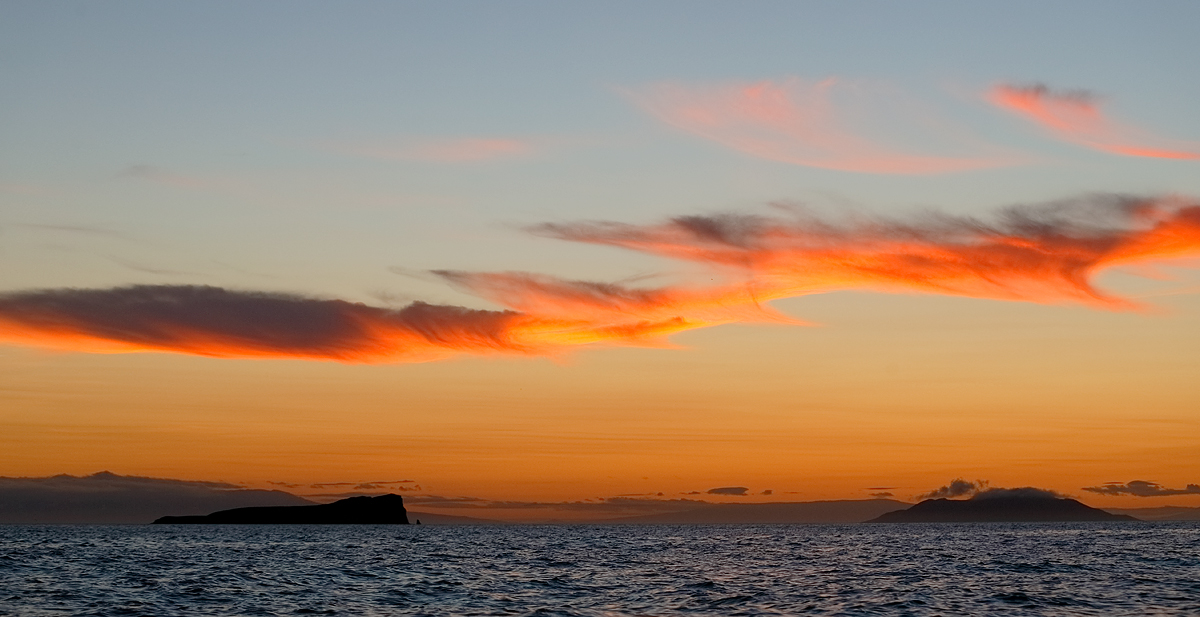
After about nine hours of stop and go sailing we anchored in a protective cove at Punta Albemarle, Isabela. Everyone enjoyed the sunset, yet another great dinner—baked grouper filet, fresh salad with chef Angel’s killer homemade honey mustard dressing, lentils prepared in the Ecuadorian Menestra style, scrumptious mashed potatoes as good as my mother used to make them, some fresh steamed broccoli, and Gypsy Arms for dessert. All that was followed by a good night’s sleep on a very gently rocking Samba.
Bucket List?
If visiting the Galapagos is on your bucket list and you are a happy camper who is serious about joining us on our July 2015 trip, please shoot me an e-mail and ask to be placed on the interested list. There simply is no better Galapagos Photo Tour.
Typos
On all blog posts, feel free to e-mail or leave a comment regarding any typos, wrong words, misspellings, omissions, or grammatical errors. Just be right. 🙂
Support the BAA Blog. Support the BAA Bulletins: Shop B&H here!
We want and need to keep providing you with the latest free information, photography and Photoshop lessons, and all manner of related information. Show your appreciation by making your purchases immediately after clicking on any of our B&H or Amazon Affiliate links in this blog post. Remember, B&H ain’t just photography!
If you are considering an item for purchase or comparison shopping be sure to place an item in your cart to see the too-low-to show the actual price. In many cases the prices are so low that B&H is forbidden from publicizing them!
If you are considering an item for purchase or comparison shopping be sure to place an item in your cart to see the too-low-to show the actual price. In many cases the prices are so low that B&H is forbidden from publicizing them!
Support the Blog
Amazon
Everyone buys something from Amazon, be it a big lens or deodorant. Support the blog by starting your search by starting your search by clicking on the logo-link below. No purchase is too small to be appreciated; they all add up. Why make it a habit? Because I make it a habit of bringing you new images and information on an almost daily basis.
And from the BAA On-line Store:
LensCoats. I have a LensCoat on each of my big lenses to protect them from nicks and thus increase their re-sales value. All my big lens LensCoat stuff is in Hardwood Snow pattern. LegCoat Tripod Leg Covers. I have four tripods active and each has a Hardwood Snow LegCoat on it to help prevent further damage to my tender shoulders 🙂 And you will love them in mega-cold weather…. Gitzo GT3532 LS CF Tripod. This one replaces the GT3530LS Tripod and will last you a lifetime. Learn more about this great tripod here. Mongoose M3.6 Tripod Head. Right now this is the best tripod head around for use with lenses that weigh less than 9 pounds. For heavier lenses, check out the Wimberley V2 head. Double Bubble Level. You will find one in my camera’s hot shoe whenever I am not using flash. The Lens Align Mark II. I use the Lens Align Mark II pretty much religiously to micro-adjust all of my gear an average of once a month and always before a major trip. Enjoy our free comprehensive tutorial here. BreezeBrowser. I do not see how any digital photographer can exist without this program. Delkin Flash Cards. I use and depend on Delkin compact Flash Cards and card readers most every day. Learn more about their great 700X and 1000X cards here or about my favorite Delkin card here.
Learning About the Canon EF 200-400mm f/4L IS USM lens with Internal 1.4x Extender on Tower Island/Prince Philips Steps
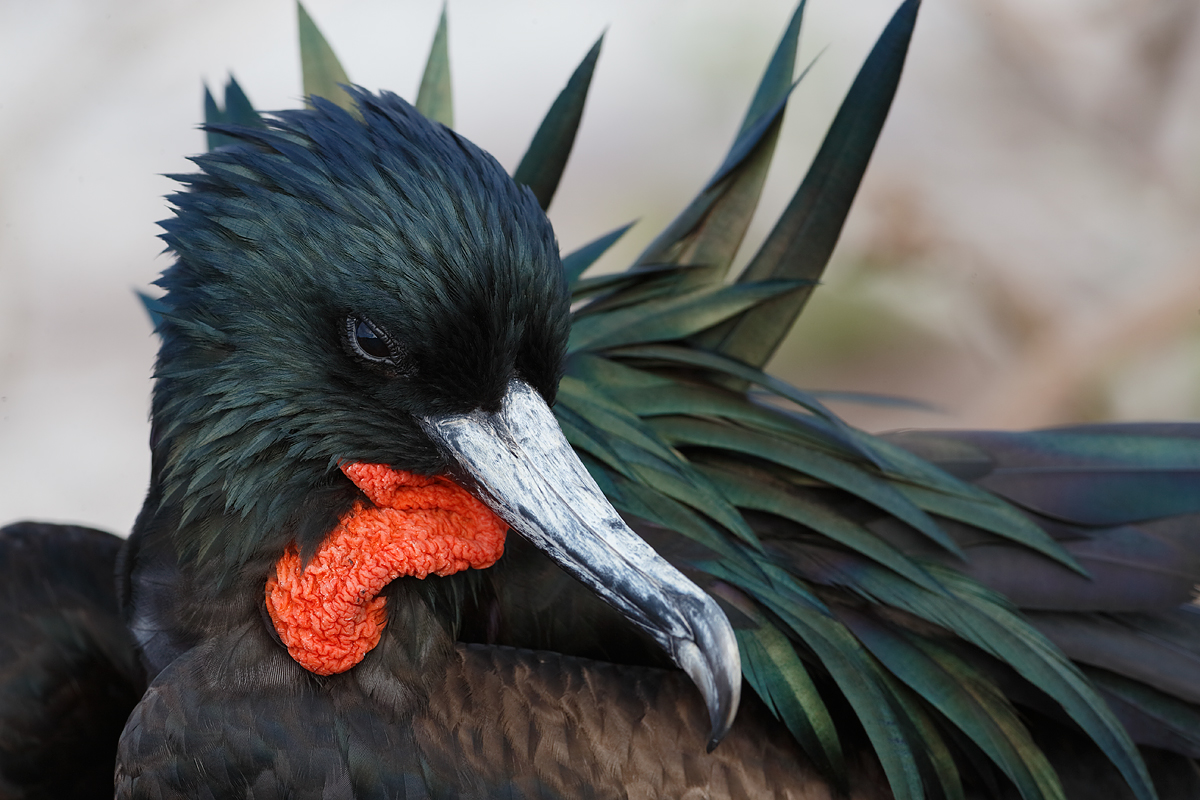
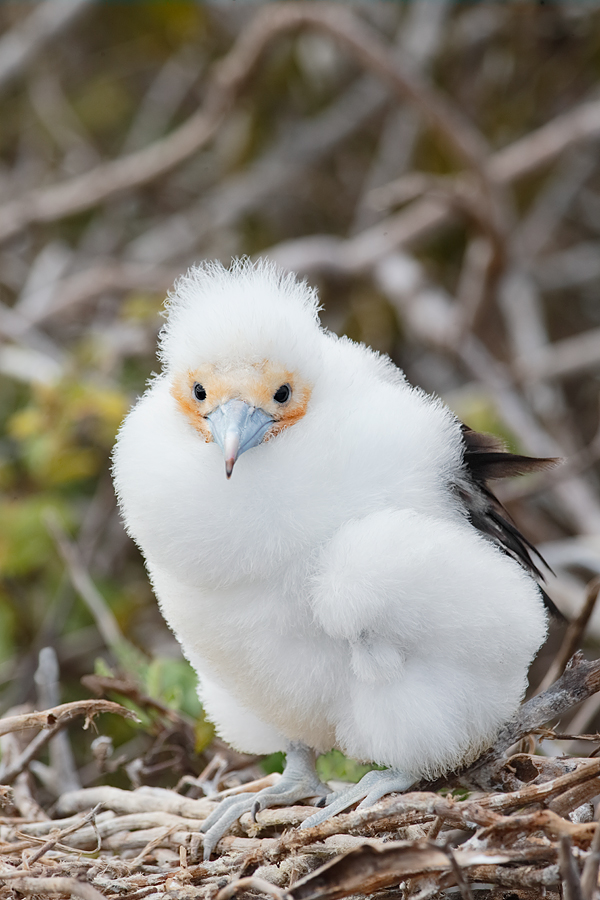
This Great Frigatebird image was created on our afternoon landing at Prince Philips Steps, Tower Island with the tripod-mounted Canon EF 200-400mm f/4L IS USM Lens with Internal 1.4x Extender (at 490mm with the internal TC in place) and the Canon EOS-1D X). ISO 400. Evaluative metering -1 2/3 stops as framed: 1/200 sec. at f/9.
Two sensors above and three to the left of the central sensor/AI Servo-Surround on the bird’s forehead active at the moment of exposure. Click here if you missed the Rear Focus Tutorial. Click on the image to see a larger version.
Trepidation
When I decided to bring the Canon EF 200-400mm f/4L IS USM lens with Internal 1.4x Extender as my only big lens on our morning landing at Darwin Bay, it was with some trepidation; I had only used the lens very briefly at home in Florida before heading to the Galapagos. My two main concerns were lens handling and maximum reach. While I initially wished for a faster zoom ratio speed (more zoom with less twist of the zoom ring), I quickly learned to a: place my left hand on the zoom ring and b: anticipate and zoom to the approximate focal length that I wanted as I raised the lens.
Central sensor/AI Servo-Expand/Rear Focus AF on the base of the bird’s bill active at the moment of exposure. Click here if you missed the Rear Focus Tutorial. Click on the image to see a larger version.
Advantages of the Internal TC
I did a good deal of photography with the lens as is (200-400mm) and lots with the internal 1.4X in place (280-560mm). There are several advantages to the internal TC: at about 1 second, set up is nearly instantaneous. For really skilled folks who store their TCs in a pocket without the front and rear caps, adding or removing an external TC might take as little as 10 seconds. Otherwise 30 to 60 seconds or even well more would be the norm for most. You can add another 10 seconds or so for those who turn the camera off and on to prevent dust from entering the system. With the internal TC dust is of no concern at all. After working with the lens for an hour or two, sliding the lever down to engage the internal TC became second nature. Additionally, there is no need to re-balance the lens in the clamp with the internal TC as there is when mounting an external TC.
In short, I quickly became familiar with all aspects of handling my new zoom lens.
Central sensor/AI Servo-Expand/Rear Focus AF on the bird’s left eye and re-compose. Click here if you missed the Rear Focus Tutorial. Click on the image to see a larger version.
Your Favorite?
Take a moment to leave a comment and let us know which of the three images you like best. And be sure to let us know why.
Photographic Society of Chattanooga Seminar
Scroll down here for details on the Saturday seminar that Denise Ippolito and yours truly are doing in Chattanooga on October 12, 2013 and the follow-up Old Car City In-the-Field Workshop. Blog folks who sign up for both are invited to join us at a secret Urbex location in Atlanta on Friday morning October 11. Feel free to e-mail me for details after you are registered for both.
Snow Goose composite, Bosque del Apache NWR, San Antonio, NM. Click on the image for a larger version.
Bosque del Apache 2013 IPT: “The Complete Bosque Experience.” NOV 26-DEC 2, 2013. 7-FULL DAYS: $3399. Co-leader: Denise Ippolito. Introductory Slide program: 6:30 pm on 11/25. Limit: 12.
Tens of thousand of Snow Geese, 10,000 Sandhill Cranes, ducks including point-blank American Wigeon and Wood Duck, amazing sunrises, sunsets, and blast-offs. Live, eat, and breathe photography with one of (if not the) world’s premier photographic educators at one of his very favorite locations on the planet. Top-notch Photoshop instruction. This will make 19 consecutive Novembers at Bosque for me. Nobody knows the place better than I do. Join us to learn to think like a pro, to recognize situations and to anticipate them based on the weather, especially the sky conditions, the light, and the wind direction. Every time we make a move we will let you know why. When you head home applying what you learned will prove to be invaluable. Includes all lunches and the Thanksgiving Buffet at the Crowne Plaza in Albuquerque. I hope that you can join me for what will be an unparalleled learning experience.
A $500 non-refundable deposit is required to hold your slot for this IPT. Your balance is due 4 months before the date of the IPT and is also non-refundable. If the trip fills, we will be glad to apply a credit applicable to a future IPT for the full amount less a $100 processing fee. If we do not receive your check for the balance on or before the due date we will try to fill your spot from the waiting list. If your spot is filled, you will lose your deposit. If not, you can secure your spot by paying your balance.
Please print, complete, and sign the form that is linked to here and shoot it to us along with your deposit check (made out to “Arthur Morris.”) You can also leave your deposit with a credit card by calling the office at 863-692-0906. If you register by phone, please print, complete and sign the form as noted above and either mail it to us or e-mail the scan. If you have any questions, please feel free to contact me via e-mail.
Images copyright 2012: Denise Ippoltio & Arthur Morris. Card design by Denise Ippolito. Click on the image to enjoy a spectacular larger version.
Holland 2014 7 1/2-Day/8-Night: A Creative Adventure/BIRDS AS ART/Tulips & A Touch of Holland IPT. April 17-April 24, 2014 :$4995 Limit: 12 photographers/Openings 9
This trip needs 8 registrants to run so please do not purchase your plane tickets until you hear from us; right now we need 5 more folks.
Join Denise Ippolito, Flower Queen and the author of “Bloomin’ Ideas,” BPN Photo Gear Moderator, former Nikon shooter, and technical expert Peter Kes, and Arthur Morris, Canon Explorer of Light and one of the planet’s premier photographic educators for a great trip to Holland in mid-April 2014. Day 1 of the IPT will be April 17, 2014. We will have a short afternoon get-together and then our first photographic session at the justly-famed Keukenhof. Peter who is originally from Holland, will be our local guide/interpreter/driver. Most days we will return to the hotel for lunch, image sharing and a break. On Day 8, April 24, we will enjoy both morning and afternoon photography sessions.
The primary subjects will be tulips and orchids at Keukenhof and the spectacularly amazing tulip, hyacinth, and daffodil bulb fields around Lisse. In addition we will spend one full day in Amsterdam. There will be optional visits the Van Gogh Museum in the morning and the Anne Frank House in the afternoon; there will be plenty of time for street photography as well. And some great food. On another day we will have a wonderful early dinner at Kinderdijk and then head out with our gear to photograph the windmills and possibly some birds for those who bring their longs lenses. We will spend an afternoon in the lovely Dutch town of Edam where we will do some street photography and enjoy a superb dinner. All lodging, ground transportation, entry fees, and meals (from dinner on Day 1 through dinner on Day 8) are included.
For those who will be bringing a big lens we will likely have an optional bird photography afternoon or two or possibly three. The big attraction should be gorgeous Purple Herons in flight at a breeding marsh. We would be photographing them from the roadside. And we might be able to find a few Great-crested Grebes at a location near Keukenhof.
Click here for complete details and some previously unpublished images. And/or click here and see item one for lots more tulip photos and complete trip details.
Images courtesy of and copyright 2012: Bill Mueller. Card design by Denise Ippolito.
Old Car City Creative Photography In-the-Field HDR Workshop: Sunday, October 13, 2013/ 9am till 1pm.
White, Georgia: $250 plus a $15 entrance fee donation (cash only on the day of the event) that will go to charity. Limit: 16 photographers.
On October 13, 2013, Arthur Morris/BIRDS AS ART and Denise Ippolito/A Creative Adventure will be conducting an In-the-Field HDR Workshop at Old Car City in White, Georgia. Old Car City is about an hour north of Atlanta, GA and an hour south of Chattanooga, TN where they will, as noted above, be doing a full day seminar for the Photographic Society of Chattanooga on Saturday, October 12th. Click here for complete details.
Typos
On all blog posts, feel free to e-mail or leave a comment regarding any typos, wrong words, misspellings, omissions, or grammatical errors. Just be right. 🙂
Support the BAA Blog. Support the BAA Bulletins: Shop B&H here!
We want and need to keep providing you with the latest free information, photography and Photoshop lessons, and all manner of related information. Show your appreciation by making your purchases immediately after clicking on any of our B&H or Amazon Affiliate links in this blog post. Remember, B&H ain’t just photography!
If you are considering an item for purchase or comparison shopping be sure to place an item in your cart to see the too-low-to show the actual price. In many cases the prices are so low that B&H is forbidden from publicizing them!
If you are considering an item for purchase or comparison shopping be sure to place an item in your cart to see the too-low-to show the actual price. In many cases the prices are so low that B&H is forbidden from publicizing them!
Support the Blog
Amazon
Everyone buys something from Amazon, be it a big lens or deodorant. Support the blog by starting your search by typing in the little white box below. No purchase is too small to be appreciated; they all add up. Why make it a habit? Because I make it a habit of bringing you new images and information on an almost daily basis.
And from the BAA On-line Store:
LensCoats. I have a LensCoat on each of my big lenses to protect them from nicks and thus increase their re-sales value. All my big lens LensCoat stuff is in Hardwood Snow pattern. LegCoat Tripod Leg Covers. I have four tripods active and each has a Hardwood Snow LegCoat on it to help prevent further damage to my tender shoulders 🙂 And you will love them in mega-cold weather…. Gitzo GT3532 LS CF Tripod. This one replaces the GT3530LS Tripod and will last you a lifetime. Learn more about this great tripod here. Mongoose M3.6 Tripod Head. Right now this is the best tripod head around for use with lenses that weigh less than 9 pounds. For heavier lenses, check out the Wimberley V2 head. Double Bubble Level. You will find one in my camera’s hot shoe whenever I am not using flash. The Lens Align Mark II. I use the Lens Align Mark II pretty much religiously to micro-adjust all of my gear an average of once a month and always before a major trip. Enjoy our free comprehensive tutorial here. BreezeBrowser. I do not see how any digital photographer can exist without this program. Delkin Flash Cards. I use and depend on Delkin compact Flash Cards and card readers most every day. Learn more about their great 700X and 1000X cards here or about my favorite Delkin card here.
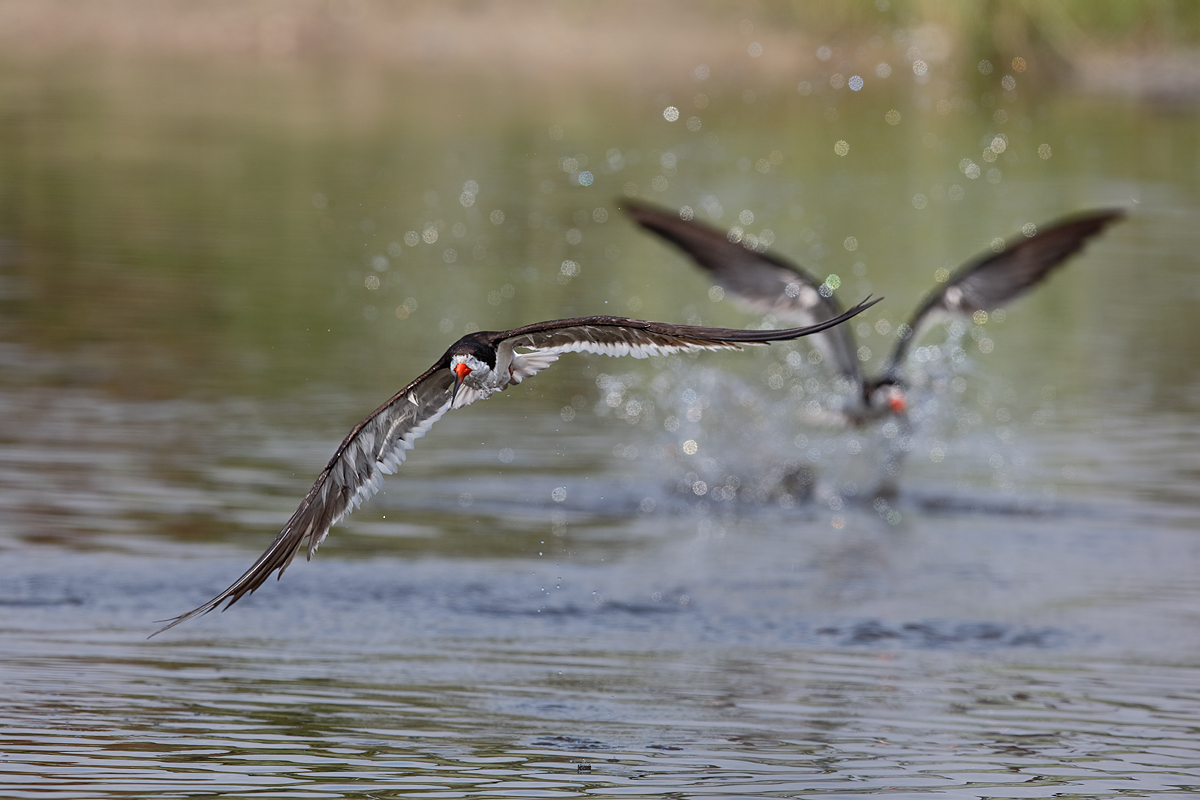
Central sensor (Surround)/AI Servo Rear Focus AF just caught the trailing edge of the closest bird’s left wing–active at the moment of exposure of course. Click here if you missed the Rear Focus Tutorial. Click on the image to see a larger version.
The Morning
The weatherman played havoc with the first morning of the Nickerson Beach IPT. At 5:45am there was torrential rain and high winds. It looked like Armageddon. We pushed back from 6am until 7:15 in hopes of some clearing. By 6:30 the skies to the west were clearing so we called everyone back in their rooms or on their cells or tracked them down at breakfast. We headed for Nickerson at 6:45 am.
We had a great morning till the sun came out at about 9:45. Why? The wind was from the west. After a great breakfast and image design and review session on laptops at Bagel Plaza in Merrick Denise and I decided to head right back to the beach with the group without a nap as it had gotten cloudy bright again. As we pulled into the lot we saw some bird activity in a rain pond at the west side of the lot. There were dozens of terns and skimmers bathing.
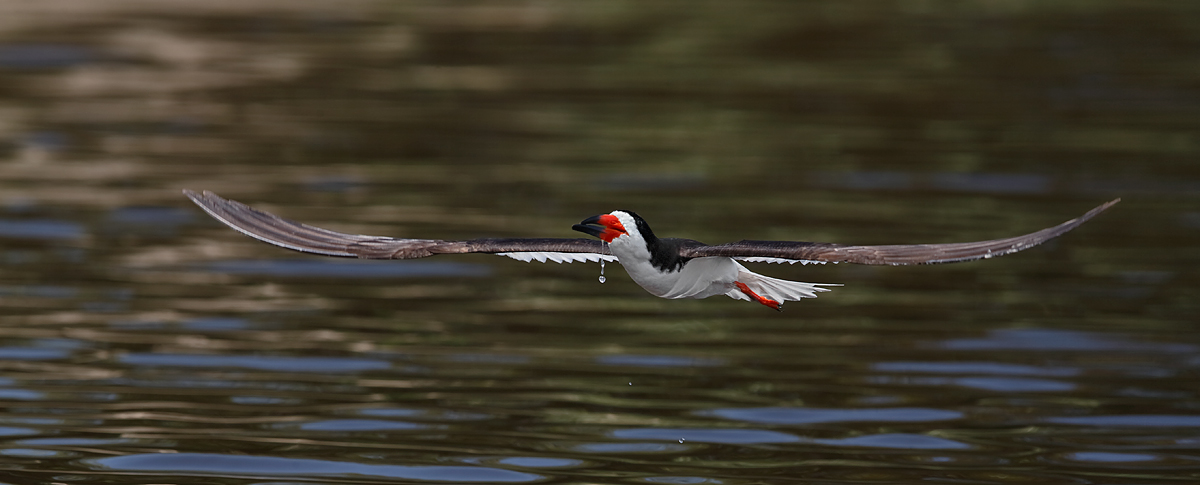
Central sensor (Surround)/AI Servo Rear Focus AF just caught the neck of the subject and the trailing edge of the far wing–active at the moment of exposure of course. Click here if you missed the Rear Focus Tutorial. Click on the image to see a larger version.
Open to Anything: Splashdowns!
As there was a four foot tall chain link fence it was pretty much impossible to get a lens on the bathing birds and I did not want to risk getting too close. Though it seemed like a longshot I had everyone get out their long lens. It was a long skinny pond and the skimmers were flying towards dipping into the pond for a drink on each pass. That they were not skimming made the difficult photography nearly impossible. The group was great. Everyone found a spot along the fence with their lenses angled to the north. There was no bitching, moaning, or complaining that he or she at the best spot.
Though the photography would be extremely tough–and we new that before we began–both denise and I felt that it was a unique situation and that we should give it a try. Unless the birds were right above the water the backgrounds were horrific. And as the fence went around the back of the pond there were reflections of the fence posts to deal with. But drinking skimmers are drinking skimmers! Everyone had a ton of fun trying and most everyone had a few keepers. As we were slightly off light angle even the exposures were tough; the closer birds like the one in the second image were more off sun angle than the farther birds like those in the first image but the action was so fast and furious and challenging that there simply was no way to change. I went with 1/1600 at f/6.3, coached the group on the exposure, and stuck with it. After about a somewhat frustrating hour we had gone from about 10 degrees of sun angle to more than 20 degrees off so we quit and headed to the beach.
Your Favorite?
Take a moment to leave a comment and let us know which of the two images you like best, the double header or the pano. Be sure to let us know why.
Photographic Society of Chattanooga Seminar
Scroll down here for details on the Saturday seminar that Denise Ippolito and yours truly are doing in Chattanooga on October 12, 2013 and the follow-up Old Car City In-the-Field Workshop. Blog folks who sign up for both are invited to join us at a secret Urbex location in Atlanta on Friday morning October 11. Feel free to e-mail me for details after you are registered for both.
Snow Goose composite, Bosque del Apache NWR, San Antonio, NM. Click on the image for a larger version.
Bosque del Apache 2013 IPT: “The Complete Bosque Experience.” NOV 26-DEC 2, 2013. 7-FULL DAYS: $3399. Co-leader: Denise Ippolito. Introductory Slide program: 6:30 pm on 11/25. Limit: 12.
Tens of thousand of Snow Geese, 10,000 Sandhill Cranes, ducks including point-blank American Wigeon and Wood Duck, amazing sunrises, sunsets, and blast-offs. Live, eat, and breathe photography with one of (if not the) world’s premier photographic educators at one of his very favorite locations on the planet. Top-notch Photoshop instruction. This will make 19 consecutive Novembers at Bosque for me. Nobody knows the place better than I do. Join us to learn to think like a pro, to recognize situations and to anticipate them based on the weather, especially the sky conditions, the light, and the wind direction. Every time we make a move we will let you know why. When you head home applying what you learned will prove to be invaluable. Includes all lunches and the Thanksgiving Buffet at the Crowne Plaza in Albuquerque. I hope that you can join me for what will be an unparalleled learning experience.
A $500 non-refundable deposit is required to hold your slot for this IPT. Your balance is due 4 months before the date of the IPT and is also non-refundable. If the trip fills, we will be glad to apply a credit applicable to a future IPT for the full amount less a $100 processing fee. If we do not receive your check for the balance on or before the due date we will try to fill your spot from the waiting list. If your spot is filled, you will lose your deposit. If not, you can secure your spot by paying your balance.
Please print, complete, and sign the form that is linked to here and shoot it to us along with your deposit check (made out to “Arthur Morris.”) You can also leave your deposit with a credit card by calling the office at 863-692-0906. If you register by phone, please print, complete and sign the form as noted above and either mail it to us or e-mail the scan. If you have any questions, please feel free to contact me via e-mail.
Images copyright 2012: Denise Ippoltio & Arthur Morris. Card design by Denise Ippolito. Click on the image to enjoy a spectacular larger version.
Holland 2014 7 1/2-Day/8-Night: A Creative Adventure/BIRDS AS ART/Tulips & A Touch of Holland IPT. April 17-April 24, 2014 :$4995 Limit: 12 photographers/Openings 9
This trip needs 8 registrants to run so please do not purchase your plane tickets until you hear from us; right now we need 5 more folks.
Join Denise Ippolito, Flower Queen and the author of “Bloomin’ Ideas,” BPN Photo Gear Moderator, former Nikon shooter, and technical expert Peter Kes, and Arthur Morris, Canon Explorer of Light and one of the planet’s premier photographic educators for a great trip to Holland in mid-April 2014. Day 1 of the IPT will be April 17, 2014. We will have a short afternoon get-together and then our first photographic session at the justly-famed Keukenhof. Peter who is originally from Holland, will be our local guide/interpreter/driver. Most days we will return to the hotel for lunch, image sharing and a break. On Day 8, April 24, we will enjoy both morning and afternoon photography sessions.
The primary subjects will be tulips and orchids at Keukenhof and the spectacularly amazing tulip, hyacinth, and daffodil bulb fields around Lisse. In addition we will spend one full day in Amsterdam. There will be optional visits the Van Gogh Museum in the morning and the Anne Frank House in the afternoon; there will be plenty of time for street photography as well. And some great food. On another day we will have a wonderful early dinner at Kinderdijk and then head out with our gear to photograph the windmills and possibly some birds for those who bring their longs lenses. We will spend an afternoon in the lovely Dutch town of Edam where we will do some street photography and enjoy a superb dinner. All lodging, ground transportation, entry fees, and meals (from dinner on Day 1 through dinner on Day 8) are included.
For those who will be bringing a big lens we will likely have an optional bird photography afternoon or two or possibly three. The big attraction should be gorgeous Purple Herons in flight at a breeding marsh. We would be photographing them from the roadside. And we might be able to find a few Great-crested Grebes at a location near Keukenhof.
Click here for complete details and some previously unpublished images. And/or click here and see item one for lots more tulip photos and complete trip details.
Images courtesy of and copyright 2012: Bill Mueller. Card design by Denise Ippolito.
Old Car City Creative Photography In-the-Field HDR Workshop: Sunday, October 13, 2013/ 9am till 1pm.
White, Georgia: $250 plus a $15 entrance fee donation (cash only on the day of the event) that will go to charity. Limit: 16 photographers.
On October 13, 2013, Arthur Morris/BIRDS AS ART and Denise Ippolito/A Creative Adventure will be conducting an In-the-Field HDR Workshop at Old Car City in White, Georgia. Old Car City is about an hour north of Atlanta, GA and an hour south of Chattanooga, TN where they will, as noted above, be doing a full day seminar for the Photographic Society of Chattanooga on Saturday, October 12th. Click here for complete details.
Typos
On all blog posts, feel free to e-mail or leave a comment regarding any typos, wrong words, misspellings, omissions, or grammatical errors. Just be right. 🙂
Support the BAA Blog. Support the BAA Bulletins: Shop B&H here!
We want and need to keep providing you with the latest free information, photography and Photoshop lessons, and all manner of related information. Show your appreciation by making your purchases immediately after clicking on any of our B&H or Amazon Affiliate links in this blog post. Remember, B&H ain’t just photography!
If you are considering an item for purchase or comparison shopping be sure to place an item in your cart to see the too-low-to show the actual price. In many cases the prices are so low that B&H is forbidden from publicizing them!
If you are considering an item for purchase or comparison shopping be sure to place an item in your cart to see the too-low-to show the actual price. In many cases the prices are so low that B&H is forbidden from publicizing them!
Support the Blog
Amazon
Everyone buys something from Amazon, be it a big lens or deodorant. Support the blog by starting your search by typing in the little white box below. No purchase is too small to be appreciated; they all add up. Why make it a habit? Because I make it a habit of bringing you new images and information on an almost daily basis.
And from the BAA On-line Store:
LensCoats. I have a LensCoat on each of my big lenses to protect them from nicks and thus increase their re-sales value. All my big lens LensCoat stuff is in Hardwood Snow pattern. LegCoat Tripod Leg Covers. I have four tripods active and each has a Hardwood Snow LegCoat on it to help prevent further damage to my tender shoulders 🙂 And you will love them in mega-cold weather…. Gitzo GT3532 LS CF Tripod. This one replaces the GT3530LS Tripod and will last you a lifetime. Learn more about this great tripod here. Mongoose M3.6 Tripod Head. Right now this is the best tripod head around for use with lenses that weigh less than 9 pounds. For heavier lenses, check out the Wimberley V2 head. Double Bubble Level. You will find one in my camera’s hot shoe whenever I am not using flash. The Lens Align Mark II. I use the Lens Align Mark II pretty much religiously to micro-adjust all of my gear an average of once a month and always before a major trip. Enjoy our free comprehensive tutorial here. BreezeBrowser. I do not see how any digital photographer can exist without this program. Delkin Flash Cards. I use and depend on Delkin compact Flash Cards and card readers most every day. Learn more about their great 700X and 1000X cards here or about my favorite Delkin card here.
Central sensor Expand (by necessity)/AI Servo/Rear Focus on the bird’s eye and re-compose. Click here if you missed the Rear Focus Tutorial. Click on the image to see a larger version.
This, the small in the frame version, was my favorite by a mile.
Can Less Be More?
On July 11, while I was in the Galapagos, “Can Less Be More?” was published. I asked, “Which image do you like best? I made the small-in-the-frame image before I approached more closely to create the image that opened that blog post. Please leave a comment and let us know which of the two images you like best. And why?
About 15 folks responded. Six liked the large in the frame image. Two liked the small in the frame image. The rest liked them both. Here is my take:
While the larger in the frame image would be best for a field guide, there is no doubt in my mind that the small in the frame image is much more pleasing to the eye, and thus, a much more successful photograph. And besides, I like it best by far.
Jack Breakfast summed it up quite well when he wrote, “To me, the second image is vastly superior, at least from an artistic standpoint. The second image elicits, is evocative, and has some spark to it. The first image is a well-executed picture of a bird. I’ll go with door #2 any day of the week. Well done, Commander Morris.”
Brooke was also in my camp on this one when she wrote: “I definitely like the second photo (small in-the-frame) best. The bird’s head is at a good angle, and the two epiphytes really add to the scene without distracting from the bird. My personal preference is to have a part of the bird’s environment in the photo without it being distracting.”
When I first began photographing birds my great desire was to create “full frame” images. I quickly learned that stuffing the bird in the frame with the bill tip against one frame edge and the tail tip against the other frame edge is not the way to go. Birds need room in the frame. They need to be able to see into their worlds, to have a place to go. That is why we place the birds back in the frame when working in horizontal format. In The Art of Bird Photography II I suggest that the longest dimension of the bird should never take up more than 3/4 of the frame.
Two sensors above and one to the right of the central sensor/AI Servo-Surround/Rear Focus AF on the bird’s neck active at the moment of exposure. Click here if you missed the Rear Focus Tutorial. This was one of the very first images that I made on what turned out to be a magical morning. White morph red-footeds make up less than 5% of the population.
Love the White Morph Images
In the July 19th blog post, “Beginning of a Love Affair with the Canon EF 200-400mm f/4L IS lens: Day 2 Darwin Bay, Tower Island am-Part I,” I asked folks to let us know their favorite images. I believe that all of the images garnered at least a single vote. My two favorites were the two white-morph Red-footed Booby images, the one with the cactus background (above) because of the beautiful image design and excellent post processing (he said modestly). I ran Detail Extractor on the cactus and punched up the YELLOWs and GREENs to highlight the cactus. On the flight image (below) I love the sharpness, the wing position, the splayed tail, and those piercing eyes.
Central sensor/AI Servo Surround/Rear Focus AF on the bird’s face active at the moment of exposure. Click here if you missed the Rear Focus Tutorial. Click on the image to see a larger version.
Nickerson Beach IPT
Denise Ippolito and I are heading out to dinner in Rockville Centre in a few. We meet the group for the sold-out Nickerson Beach Baby Beach-nesting Birds IPT at 7pm sharp. We are looking forward to putting on a great workshop.
Photographic Society of Chattanooga Seminar
Scroll down here for details on the Saturday seminar that Denise Ippolito and yours truly are doing in Chattanooga on October 12, 2013 and the follow-up Old Car City In-the-Field Workshop. Blog folks who sign up for both are invited to join us at a secret Urbex location in Atlanta on Friday morning October 11. Feel free to e-mail me for details after you are registered for both.
Snow Goose composite, Bosque del Apache NWR, San Antonio, NM. Click on the image for a larger version.
Bosque del Apache 2013 IPT: “The Complete Bosque Experience.” NOV 26-DEC 2, 2013. 7-FULL DAYS: $3399. Co-leader: Denise Ippolito. Introductory Slide program: 6:30 pm on 11/25. Limit: 12.
Tens of thousand of Snow Geese, 10,000 Sandhill Cranes, ducks including point-blank American Wigeon and Wood Duck, amazing sunrises, sunsets, and blast-offs. Live, eat, and breathe photography with one of (if not the) world’s premier photographic educators at one of his very favorite locations on the planet. Top-notch Photoshop instruction. This will make 19 consecutive Novembers at Bosque for me. Nobody knows the place better than I do. Join us to learn to think like a pro, to recognize situations and to anticipate them based on the weather, especially the sky conditions, the light, and the wind direction. Every time we make a move we will let you know why. When you head home applying what you learned will prove to be invaluable. Includes all lunches and the Thanksgiving Buffet at the Crowne Plaza in Albuquerque. I hope that you can join me for what will be an unparalleled learning experience.
A $500 non-refundable deposit is required to hold your slot for this IPT. Your balance is due 4 months before the date of the IPT and is also non-refundable. If the trip fills, we will be glad to apply a credit applicable to a future IPT for the full amount less a $100 processing fee. If we do not receive your check for the balance on or before the due date we will try to fill your spot from the waiting list. If your spot is filled, you will lose your deposit. If not, you can secure your spot by paying your balance.
Please print, complete, and sign the form that is linked to here and shoot it to us along with your deposit check (made out to “Arthur Morris.”) You can also leave your deposit with a credit card by calling the office at 863-692-0906. If you register by phone, please print, complete and sign the form as noted above and either mail it to us or e-mail the scan. If you have any questions, please feel free to contact me via e-mail.
Images copyright 2012: Denise Ippoltio & Arthur Morris. Card design by Denise Ippolito. Click on the image to enjoy a spectacular larger version.
Holland 2014 7 1/2-Day/8-Night: A Creative Adventure/BIRDS AS ART/Tulips & A Touch of Holland IPT. April 17-April 24, 2014 :$4995 Limit: 12 photographers/Openings 9
This trip needs 8 registrants to run so please do not purchase your plane tickets until you hear from us; right now we need 5 more folks.
Join Denise Ippolito, Flower Queen and the author of “Bloomin’ Ideas,” BPN Photo Gear Moderator, former Nikon shooter, and technical expert Peter Kes, and Arthur Morris, Canon Explorer of Light and one of the planet’s premier photographic educators for a great trip to Holland in mid-April 2014. Day 1 of the IPT will be April 17, 2014. We will have a short afternoon get-together and then our first photographic session at the justly-famed Keukenhof. Peter who is originally from Holland, will be our local guide/interpreter/driver. Most days we will return to the hotel for lunch, image sharing and a break. On Day 8, April 24, we will enjoy both morning and afternoon photography sessions.
The primary subjects will be tulips and orchids at Keukenhof and the spectacularly amazing tulip, hyacinth, and daffodil bulb fields around Lisse. In addition we will spend one full day in Amsterdam. There will be optional visits the Van Gogh Museum in the morning and the Anne Frank House in the afternoon; there will be plenty of time for street photography as well. And some great food. On another day we will have a wonderful early dinner at Kinderdijk and then head out with our gear to photograph the windmills and possibly some birds for those who bring their longs lenses. We will spend an afternoon in the lovely Dutch town of Edam where we will do some street photography and enjoy a superb dinner. All lodging, ground transportation, entry fees, and meals (from dinner on Day 1 through dinner on Day 8) are included.
For those who will be bringing a big lens we will likely have an optional bird photography afternoon or two or possibly three. The big attraction should be gorgeous Purple Herons in flight at a breeding marsh. We would be photographing them from the roadside. And we might be able to find a few Great-crested Grebes at a location near Keukenhof.
Click here for complete details and some previously unpublished images. And/or click here and see item one for lots more tulip photos and complete trip details.
Images courtesy of and copyright 2012: Bill Mueller. Card design by Denise Ippolito.
Old Car City Creative Photography In-the-Field HDR Workshop: Sunday, October 13, 2013/ 9am till 1pm.
White, Georgia: $250 plus a $15 entrance fee donation (cash only on the day of the event) that will go to charity. Limit: 16 photographers.
On October 13, 2013, Arthur Morris/BIRDS AS ART and Denise Ippolito/A Creative Adventure will be conducting an In-the-Field HDR Workshop at Old Car City in White, Georgia. Old Car City is about an hour north of Atlanta, GA and an hour south of Chattanooga, TN where they will, as noted above, be doing a full day seminar for the Photographic Society of Chattanooga on Saturday, October 12th. Click here for complete details.
Typos
On all blog posts, feel free to e-mail or leave a comment regarding any typos, wrong words, misspellings, omissions, or grammatical errors. Just be right. 🙂
Support the BAA Blog. Support the BAA Bulletins: Shop B&H here!
We want and need to keep providing you with the latest free information, photography and Photoshop lessons, and all manner of related information. Show your appreciation by making your purchases immediately after clicking on any of our B&H or Amazon Affiliate links in this blog post. Remember, B&H ain’t just photography!
If you are considering an item for purchase or comparison shopping be sure to place an item in your cart to see the too-low-to show the actual price. In many cases the prices are so low that B&H is forbidden from publicizing them!
If you are considering an item for purchase or comparison shopping be sure to place an item in your cart to see the too-low-to show the actual price. In many cases the prices are so low that B&H is forbidden from publicizing them!
Support the Blog
Amazon
Everyone buys something from Amazon, be it a big lens or deodorant. Support the blog by starting your search by typing in the little white box below. No purchase is too small to be appreciated; they all add up. Why make it a habit? Because I make it a habit of bringing you new images and information on an almost daily basis.
And from the BAA On-line Store:
LensCoats. I have a LensCoat on each of my big lenses to protect them from nicks and thus increase their re-sales value. All my big lens LensCoat stuff is in Hardwood Snow pattern. LegCoat Tripod Leg Covers. I have four tripods active and each has a Hardwood Snow LegCoat on it to help prevent further damage to my tender shoulders 🙂 And you will love them in mega-cold weather…. Gitzo GT3532 LS CF Tripod. This one replaces the GT3530LS Tripod and will last you a lifetime. Learn more about this great tripod here. Mongoose M3.6 Tripod Head. Right now this is the best tripod head around for use with lenses that weigh less than 9 pounds. For heavier lenses, check out the Wimberley V2 head. Double Bubble Level. You will find one in my camera’s hot shoe whenever I am not using flash. The Lens Align Mark II. I use the Lens Align Mark II pretty much religiously to micro-adjust all of my gear an average of once a month and always before a major trip. Enjoy our free comprehensive tutorial here. BreezeBrowser. I do not see how any digital photographer can exist without this program. Delkin Flash Cards. I use and depend on Delkin compact Flash Cards and card readers most every day. Learn more about their great 700X and 1000X cards here or about my favorite Delkin card here.
Central sensor (by necessity)/AI Servo-Expand/Rear Focus AF on the bird’s face active at the moment of exposure. Click here if you missed the Rear Focus Tutorial. Click on the image to see a larger version.
Falling in Love with the Canon EF 200-400mm f/4L IS USM Lens with Internal 1.4x Extender
When I woke on July 3rd, I could not decide whether to bring the 600 II, the new 200-400, or both. I finally decided to go with the 200-400mm f/4L IS USM Lens with Internal 1.4x Extender. As you saw in yesterday’s blog post, it turned out the be a great flight photography lens. Later on in what turned out to be a fabulous morning, I had many opportunities to add an external 1.4X TC with the internal extender in place. This yields an exceedingly sharp 392-784mm zoom lens that is ideal for small birds and tight close-ups of larger species.
Central sensor/AI Servo-Surround/Rear Focus AF on the base of the bird’s bill active at the moment of exposure. Click here if you missed the Rear Focus Tutorial. Click on the image to see a larger version.
Zooming Out for Perfect Framing
For both of the images above I was working at somewhat longer focal lengths when the subject yawned. I simply turned the zoom ring clockwise for a wider view to frame the image perfectly. This is huge advantage when compared to working with fixed focal length lenses where you often mis-frame the image when the subject yawns or stretches its neck.
Central sensor/AI Servo-Surround/Rear Focus AF on the base of the bird’s very large beak and re-compose. Click here if you missed the Rear Focus Tutorial. Click on the image to see a larger version.
Your Favorite?
Please take a moment to leave a comment and let us know which of the four images is your favorite. And do let us know why. I have a first favorite and a second favorite and will share them with you somewhere down the line.
Bucket List?
If visiting the Galapagos is on your bucket list and you are a happy camper who is serious about joining us on our July 2015 trip, please shoot me an e-mail and ask to be placed on the interested list. There simply is no better Galapagos Photo Tour. There is lots of interest so far with many folks wish that we were going in 2014….
Inspired?
If reading the stuff on the new Canon EF 200-400mm f/4L IS USM Lens with Internal 1.4x Extender has inspired you to purchase one please consider using our B&H affiliate link below as a thank you:
On all blog posts, feel free to e-mail or leave a comment regarding any typos, wrong words, misspellings, omissions, or grammatical errors. Just be right. 🙂
Support the BAA Blog. Support the BAA Bulletins: Shop B&H here!
We want and need to keep providing you with the latest free information, photography and Photoshop lessons, and all manner of related information. Show your appreciation by making your purchases immediately after clicking on any of our B&H or Amazon Affiliate links in this blog post. Remember, B&H ain’t just photography!
If you are considering an item for purchase or comparison shopping be sure to place an item in your cart to see the too-low-to show the actual price. In many cases the prices are so low that B&H is forbidden from publicizing them!
If you are considering an item for purchase or comparison shopping be sure to place an item in your cart to see the too-low-to show the actual price. In many cases the prices are so low that B&H is forbidden from publicizing them!
Support the Blog
Amazon
Everyone buys something from Amazon, be it a big lens or deodorant. Support the blog by starting your search by typing in the little white box below. No purchase is too small to be appreciated; they all add up. Why make it a habit? Because I make it a habit of bringing you new images and information on an almost daily basis.
And from the BAA On-line Store:
LensCoats. I have a LensCoat on each of my big lenses to protect them from nicks and thus increase their re-sales value. All my big lens LensCoat stuff is in Hardwood Snow pattern. LegCoat Tripod Leg Covers. I have four tripods active and each has a Hardwood Snow LegCoat on it to help prevent further damage to my tender shoulders 🙂 And you will love them in mega-cold weather…. Gitzo GT3532 LS CF Tripod. This one replaces the GT3530LS Tripod and will last you a lifetime. Learn more about this great tripod here. Mongoose M3.6 Tripod Head. Right now this is the best tripod head around for use with lenses that weigh less than 9 pounds. For heavier lenses, check out the Wimberley V2 head. Double Bubble Level. You will find one in my camera’s hot shoe whenever I am not using flash. The Lens Align Mark II. I use the Lens Align Mark II pretty much religiously to micro-adjust all of my gear an average of once a month and always before a major trip. Enjoy our free comprehensive tutorial here. BreezeBrowser. I do not see how any digital photographer can exist without this program. Delkin Flash Cards. I use and depend on Delkin compact Flash Cards and card readers most every day. Learn more about their great 700X and 1000X cards here or about my favorite Delkin card here.
Canon 200-400 & 70-200 Low Foot and Lens Plate Tips
On Friday past, Mark Williams wrote asking how the various lens plates mount on the Mongoose M3.6 that I use and depend on every day. I brought some gear out to the pool deck and created the five images here at ISO 1600. The explanations are below each image.
Mounting the Wimberley P-20 Plate on an Intermediate Telephoto Lens
Why mount the plate backwards? With the plate mounted backwards as seen above the lens will balance just fine with either teleconverter in place.
Important note: I have run across many folks either in the field or on IPTs who have their P-20 plates mounted improperly as they do not realize that the anti-rotation flange needs to be butted up against either the front of the back of the lens foot before tightening the single mounting screw.
Learn about all of the Wimberley Arca-Swiss Style Lens Plates that we carry here.
Mounting the 70-200 II onto the Mongoose M3.6
To mount the 70-200 II onto the Mongoose M3.6 follow these steps:
1-tighten the vertical panning knob (or use the locking feature)
2-raise the lever to loosen the jaws of the clamp
3-while holding the lens in your right hand slide the lens plate into the jaws of the clamp
4-pull the lever down with your left hand to lock the plate safely in place
5-check the front to back balance and adjust the position of the plate in the clamp as needed; while supporting the lens in your right hand raise the lever with your left hand to loosen the clamp, move the lens plate fore or aft as needed, and re-lock the clamp. I do that dozens of times each day. Working on any tripod head without having your lens balanced fore and aft leads to problems with image sharpness.
Note: some folks like to work the clamp lever by having it point towards the front of the lens rather than towards the back of the lens as above. I do it both ways for no reason at all.
Important note: we should have three Mongoose M3.6 heads in stock by Tuesday or Wednesday; as we are only getting a limited number it would be best to place your order with Jim on Monday as we will not be getting any more until at least the end of the month due to a manufacturing backlog.
The Forth Generation Design CRX-5 Low Foot on the new Canon 200-400mm
Above you see the Forth Generation Design CRX-5 Low Foot mounted in the farthest back position. This position makes it easy to balance the lens when working on a tripod and i best for hand holding.
The CRX-5 Low Foot can be mounted in one of the five positions to optimize performance with the following new Canon super-telephoto lenses:
Learn about all of the 4th Generation Design plates and low feet that we carry here.
Mounting the new Canon 200-400 onto the Mongoose M3.6
To mount the new Canon 200-400 onto the Mongoose M3.6 simply follow the directions above for mounting the 70-200 II onto the Mongoose M3.6.
This image gives a tighter, slightly better view of the clamp. Out-of-focus in the lower right corner you can see the lever for the internal 1.4X TC in the in place position.
Questions?
If you have any questions on plates or tripod heads please send them to me via e-mail.
Photographic Society of Chattanooga Seminar
Scroll down here for details on the Saturday seminar that Denise Ippolito and yours truly are doing in Chattanooga on October 12, 2013 and the follow-up Old Car City In-the-Field Workshop. Blog folks who sign up for both are invited to join us at a secret Urbex location in Atlanta on Friday morning October 11. Feel free to e-mail me for details after you are registered for both.
From Greg Clarkson via e-mail
Thanks so much for the awesome and inspiring weekend seminar that you and Denise put on in Brandon! It was greatly appreciated. Greg
Snow Goose composite, Bosque del Apache NWR, San Antonio, NM. Click on the image for a larger version.
Bosque del Apache 2013 IPT: “The Complete Bosque Experience.” NOV 26-DEC 2, 2013. 7-FULL DAYS: $3399. Co-leader: Denise Ippolito. Introductory Slide program: 6:30 pm on 11/25. Limit: 12.
Tens of thousand of Snow Geese, 10,000 Sandhill Cranes, ducks including point-blank American Wigeon and Wood Duck, amazing sunrises, sunsets, and blast-offs. Live, eat, and breathe photography with one of (if not the) world’s premier photographic educators at one of his very favorite locations on the planet. Top-notch Photoshop instruction. This will make 19 consecutive Novembers at Bosque for me. Nobody knows the place better than I do. Join us to learn to think like a pro, to recognize situations and to anticipate them based on the weather, especially the sky conditions, the light, and the wind direction. Every time we make a move we will let you know why. When you head home applying what you learned will prove to be invaluable. Includes all lunches and the Thanksgiving Buffet at the Crowne Plaza in Albuquerque. I hope that you can join me for what will be an unparalleled learning experience.
A $500 non-refundable deposit is required to hold your slot for this IPT. Your balance is due 4 months before the date of the IPT and is also non-refundable. If the trip fills, we will be glad to apply a credit applicable to a future IPT for the full amount less a $100 processing fee. If we do not receive your check for the balance on or before the due date we will try to fill your spot from the waiting list. If your spot is filled, you will lose your deposit. If not, you can secure your spot by paying your balance.
Please print, complete, and sign the form that is linked to here and shoot it to us along with your deposit check (made out to “Arthur Morris.”) You can also leave your deposit with a credit card by calling the office at 863-692-0906. If you register by phone, please print, complete and sign the form as noted above and either mail it to us or e-mail the scan. If you have any questions, please feel free to contact me via e-mail.
Images copyright 2012: Denise Ippoltio & Arthur Morris. Card design by Denise Ippolito. Click on the image to enjoy a spectacular larger version.
Holland 2014 7 1/2-Day/8-Night: A Creative Adventure/BIRDS AS ART/Tulips & A Touch of Holland IPT. April 17-April 24, 2014 :$4995 Limit: 12 photographers/Openings 9
This trip needs 8 registrants to run so please do not purchase your plane tickets until you hear from us; right now we need 5 more folks.
Join Denise Ippolito, Flower Queen and the author of “Bloomin’ Ideas,” BPN Photo Gear Moderator, former Nikon shooter, and technical expert Peter Kes, and Arthur Morris, Canon Explorer of Light and one of the planet’s premier photographic educators for a great trip to Holland in mid-April 2014. Day 1 of the IPT will be April 17, 2014. We will have a short afternoon get-together and then our first photographic session at the justly-famed Keukenhof. Peter who is originally from Holland, will be our local guide/interpreter/driver. Most days we will return to the hotel for lunch, image sharing and a break. On Day 8, April 24, we will enjoy both morning and afternoon photography sessions.
The primary subjects will be tulips and orchids at Keukenhof and the spectacularly amazing tulip, hyacinth, and daffodil bulb fields around Lisse. In addition we will spend one full day in Amsterdam. There will be optional visits the Van Gogh Museum in the morning and the Anne Frank House in the afternoon; there will be plenty of time for street photography as well. And some great food. On another day we will have a wonderful early dinner at Kinderdijk and then head out with our gear to photograph the windmills and possibly some birds for those who bring their longs lenses. We will spend an afternoon in the lovely Dutch town of Edam where we will do some street photography and enjoy a superb dinner. All lodging, ground transportation, entry fees, and meals (from dinner on Day 1 through dinner on Day 8) are included.
For those who will be bringing a big lens we will likely have an optional bird photography afternoon or two or possibly three. The big attraction should be gorgeous Purple Herons in flight at a breeding marsh. We would be photographing them from the roadside. And we might be able to find a few Great-crested Grebes at a location near Keukenhof.
Click here for complete details and some previously unpublished images. And/or click here and see item one for lots more tulip photos and complete trip details.
Images courtesy of and copyright 2012: Bill Mueller. Card design by Denise Ippolito.
Old Car City Creative Photography In-the-Field HDR Workshop: Sunday, October 13, 2013/ 9am till 1pm.
White, Georgia: $250 plus a $15 entrance fee donation (cash only on the day of the event) that will go to charity. Limit: 16 photographers.
On October 13, 2013, Arthur Morris/BIRDS AS ART and Denise Ippolito/A Creative Adventure will be conducting an In-the-Field HDR Workshop at Old Car City in White, Georgia. Old Car City is about an hour north of Atlanta, GA and an hour south of Chattanooga, TN where they will, as noted above, be doing a full day seminar for the Photographic Society of Chattanooga on Saturday, October 12th. Click here for complete details.
Typos
On all blog posts, feel free to e-mail or leave a comment regarding any typos, wrong words, misspellings, omissions, or grammatical errors. Just be right. 🙂
Support the BAA Blog. Support the BAA Bulletins: Shop B&H here!
We want and need to keep providing you with the latest free information, photography and Photoshop lessons, and all manner of related information. Show your appreciation by making your purchases immediately after clicking on any of our B&H or Amazon Affiliate links in this blog post. Remember, B&H ain’t just photography!
If you are considering an item for purchase or comparison shopping be sure to place an item in your cart to see the too-low-to show the actual price. In many cases the prices are so low that B&H is forbidden from publicizing them!
If you are considering an item for purchase or comparison shopping be sure to place an item in your cart to see the too-low-to show the actual price. In many cases the prices are so low that B&H is forbidden from publicizing them!
Support the Blog
Amazon
Everyone buys something from Amazon, be it a big lens or deodorant. Support the blog by starting your search by typing in the little white box below. No purchase is too small to be appreciated; they all add up. Why make it a habit? Because I make it a habit of bringing you new images and information on an almost daily basis.
And from the BAA On-line Store:
LensCoats. I have a LensCoat on each of my big lenses to protect them from nicks and thus increase their re-sales value. All my big lens LensCoat stuff is in Hardwood Snow pattern. LegCoat Tripod Leg Covers. I have four tripods active and each has a Hardwood Snow LegCoat on it to help prevent further damage to my tender shoulders 🙂 And you will love them in mega-cold weather…. Gitzo GT3532 LS CF Tripod. This one replaces the GT3530LS Tripod and will last you a lifetime. Learn more about this great tripod here. Mongoose M3.6 Tripod Head. Right now this is the best tripod head around for use with lenses that weigh less than 9 pounds. For heavier lenses, check out the Wimberley V2 head. Double Bubble Level. You will find one in my camera’s hot shoe whenever I am not using flash. The Lens Align Mark II. I use the Lens Align Mark II pretty much religiously to micro-adjust all of my gear an average of once a month and always before a major trip. Enjoy our free comprehensive tutorial here. BreezeBrowser. I do not see how any digital photographer can exist without this program. Delkin Flash Cards. I use and depend on Delkin compact Flash Cards and card readers most every day. Learn more about their great 700X and 1000X cards here or about my favorite Delkin card here.
Two sensors above and one to the right of the central sensor/AI Servo-Surround/Rear Focus AF on the bird’s neck active at the moment of exposure. Click here if you missed the Rear Focus Tutorial. This was one of the very first images that I made on what turned out to be a magical morning. White morph red-footeds make up less than 5% of the population.
Wow-What a Morning!
We awoke at 4:30am on Day 2. Breakfast at 5am. In the Zodiacs by 5:50 am. And landing at six sharp. Tower Island’s Darwin Bay ranks as one of the world’s great wildlife photography destinations, right up there with the best of East Africa, the best of South Georgia and Antarctica, and the best of Japan in winter. After the wet landing you are left wondering what to photograph first; the opportunities can be overwhelming. On this morning there were groups of Red-footed Boobies on the beach collecting nesting materials with others flying in in rapid succession to join them.
Central sensor/AI Servo Surround/Rear Focus AF on the bird’s face active at the moment of exposure. Click here if you missed the Rear Focus Tutorial. Click on the image to see a larger version.
Flight Opportunities
With a big cloud to the east, several in the group thought that flight photograph would be impossible. But an f/4 lens with ISO 800 yielded more than enough shutter speed for flight. I had everyone sit in order to move the backgrounds effectively away from the subjects. Even at f/5.6 and ISO 400 yielded shutter speeds in the 1/500 to 1/640 sec. range, just at the lower end of my range for creating sharp flight images. The white morphs would gain you an extra 2/3 to a full stop of shutter speed as you properly exposed for their bright whites.
As I reviewed the images on my laptop before lunch I began to realize that the new 200-400 would shape up to be an incredible hand hold-able flight lens….
Central sensor/AI Servo Surround/Rear Focus AF on the bird’s face active at the moment of exposure. Click here if you missed the Rear Focus Tutorial. Click on the image to see a larger version.
Flight Photography with the Canon EF 200-400mm f/4L IS USM Lens with Internal 1.4x Extender
Aside from a bit of fatigue toward the end of the hour long session, the 200-400 was a dream flight photograph lens. Being able to zoom a bit wider as the birds approach is a huge advantage over using a fixed focal length lens. With a bit of concentration and practice clipped wings will become rare rather than commonplace; universal tips for flight photography with a zoom lens: zoom wider. The lens is of course deadly sharp. And for more distant subjects simply sliding the lever down to engage the internal 1.4X TC is fast and easy and results in your hand holding a 280-560mm zoom lens.
Central sensor/AI Servo Surround/Rear Focus AF on the bird’s face active at the moment of exposure. Click here if you missed the Rear Focus Tutorial. Click on the image to see a larger version.
White Sky Flight
Many bird photographers shy away from photographing birds in flight against light grey skies that are rendered white when dark subjects are properly exposed. It is one of my favorite situations. Just be sure, as above, to add lots of light.
Your Favorite?
Please take a moment to leave a comment and let us know which of the four images is your favorite. And do let us know why. I have a first favorite and a second favorite and will share them with you somewhere down the line.
Bucket List?
If visiting the Galapagos is on your bucket list and you are a happy camper who is serious about joining us on our July 2015 trip, please shoot me an e-mail and ask to be placed on the interested list. There simply is no better Galapagos Photo Tour.
Snow Goose composite, Bosque del Apache NWR, San Antonio, NM. Click on the image for a larger version.
Bosque del Apache 2013 IPT: “The Complete Bosque Experience.” NOV 26-DEC 2, 2013. 7-FULL DAYS: $3399. Co-leader: Denise Ippolito. Introductory Slide program: 6:30 pm on 11/25. Limit: 12.
Tens of thousand of Snow Geese, 10,000 Sandhill Cranes, ducks including point-blank American Wigeon and Wood Duck, amazing sunrises, sunsets, and blast-offs. Live, eat, and breathe photography with one of (if not the) world’s premier photographic educators at one of his very favorite locations on the planet. Top-notch Photoshop instruction. This will make 19 consecutive Novembers at Bosque for me. Nobody knows the place better than I do. Join us to learn to think like a pro, to recognize situations and to anticipate them based on the weather, especially the sky conditions, the light, and the wind direction. Every time we make a move we will let you know why. When you head home applying what you learned will prove to be invaluable. Includes all lunches and the Thanksgiving Buffet at the Crowne Plaza in Albuquerque. I hope that you can join me for what will be an unparalleled learning experience.
There is never a strict itinerary on a Bosque IPT as each day is tailored to the local conditions at the time and the weather. We are totally flexible in order to maximize both the photographic and learning opportunities. There is an introductory slide program on the night before the tour begins. We are up early each day leaving the hotel by 5:30 am to be in position for sunrise. After 18 years we pretty much know where to be when in what sky conditions and what winds. We usually photograph until about 10:30am. Then it is back to Socorro for lunch and then a classroom session with the group most days. We head back to the refuge at about 3:30pm each day and photograph until sunset. Then dinner with the group most nights. We always spend at least one afternoon at the ponds at the Albuquerque Zoo doing Wood Ducks and usually two mornings at New Mexico Tech doing American Wigeons. The rest is Snow Geese and Sandhill Cranes with the emphasis on expanding both your technical skills and your creativity.
A $500 non-refundable deposit is required to hold your slot for this IPT. Your balance is due 4 months before the date of the IPT and is also non-refundable. If the trip fills, we will be glad to apply a credit applicable to a future IPT for the full amount less a $100 processing fee. If we do not receive your check for the balance on or before the due date we will try to fill your spot from the waiting list. If your spot is filled, you will lose your deposit. If not, you can secure your spot by paying your balance.
Please print, complete, and sign the form that is linked to here and shoot it to us along with your deposit check (made out to “Arthur Morris.”) You can also leave your deposit with a credit card by calling the office at 863-692-0906. If you register by phone, please print, complete and sign the form as noted above and either mail it to us or e-mail the scan. If you have any questions, please feel free to contact me via e-mail.
Typos
On all blog posts, feel free to e-mail or leave a comment regarding any typos, wrong words, misspellings, omissions, or grammatical errors. Just be right. 🙂
Support the BAA Blog. Support the BAA Bulletins: Shop B&H here!
We want and need to keep providing you with the latest free information, photography and Photoshop lessons, and all manner of related information. Show your appreciation by making your purchases immediately after clicking on any of our B&H or Amazon Affiliate links in this blog post. Remember, B&H ain’t just photography!
If you are considering an item for purchase or comparison shopping be sure to place an item in your cart to see the too-low-to show the actual price. In many cases the prices are so low that B&H is forbidden from publicizing them!
If you are considering an item for purchase or comparison shopping be sure to place an item in your cart to see the too-low-to show the actual price. In many cases the prices are so low that B&H is forbidden from publicizing them!
Support the Blog
Amazon
Everyone buys something from Amazon, be it a big lens or deodorant. Support the blog by starting your search by typing in the little white box below. No purchase is too small to be appreciated; they all add up. Why make it a habit? Because I make it a habit of bringing you new images and information on an almost daily basis.
And from the BAA On-line Store:
LensCoats. I have a LensCoat on each of my big lenses to protect them from nicks and thus increase their re-sales value. All my big lens LensCoat stuff is in Hardwood Snow pattern. LegCoat Tripod Leg Covers. I have four tripods active and each has a Hardwood Snow LegCoat on it to help prevent further damage to my tender shoulders 🙂 And you will love them in mega-cold weather…. Gitzo GT3532 LS CF Tripod. This one replaces the GT3530LS Tripod and will last you a lifetime. Learn more about this great tripod here. Mongoose M3.6 Tripod Head. Right now this is the best tripod head around for use with lenses that weigh less than 9 pounds. For heavier lenses, check out the Wimberley V2 head. Double Bubble Level. You will find one in my camera’s hot shoe whenever I am not using flash. The Lens Align Mark II. I use the Lens Align Mark II pretty much religiously to micro-adjust all of my gear an average of once a month and always before a major trip. Enjoy our free comprehensive tutorial here. BreezeBrowser. I do not see how any digital photographer can exist without this program. Delkin Flash Cards. I use and depend on Delkin compact Flash Cards and card readers most every day. Learn more about their great 700X and 1000X cards here or about my favorite Delkin card here.
I am working on this post while online in my Sequoia that is headed up the Florida Turnpike towards Indian Lake Estates. Captain Marian Schneider of Grande Tours in Boca Grnade, FL is at the wheel, her friend Marilyn is in the rear passenger seat. Marian and Marilyn were on the recently concluded Galapagos Photo-Cruise that turned out to be the best-ever photographically. My co-leader Denise Ippolito flies to Newark this afternoon. We all awoke at 2am this morning in Quito, Ecuador to catch the 6:25am AA flight to Miami. I should be home by about 5pm. I fly to Long Island for the sold out Nikcerson Beach IPT on Sunday.
Central sensor Surround AI Servo/Rear Focus on the bird’s eye and recompose. Click here if you missed the Rear Focus Tutorial. With the sun out, the eyes and faces of this species, as they are with scaup, almost always appear unsharp. I will share the image processing with you in the next blog post.
The Food
From the moment that I met the group, the questions were: “How’s the food on the boat? What are we gonna eat?” We were met by our naturalist guide Juan at the Baltra airport after our flight from Quito. An hour later we boarded the Samba after all of our luggage and photography gear had been transported to the boat by the crew. The 73 foot motor sailing yacht Samba would be our home for the next 15 days.
And then, lunch!
Simply put, everyone was amazed by the amount, quality, and taste of the food: pan fried and baked snapper, broiled wahoo, scrumptious Ecuadorian menestra–South American dry red beans in thick, amazing sauce, unexpectedly savory white rice, fresh steamed broccoli and cauliflower, a great salad, and a vanilla cake with raspberry drizzle for dessert.
Two active sensors to the right and above the Central sensor 61-point AI Servo/Rear Focus on the bird’s neck active at the moment of exposure. Click here if you missed the Rear Focus Tutorial. Click on the image to see a larger version.
We all found that the eyes and faces of the flamingos photographed when it clouded over briefly were much sharper then with images created when the sun was out. That said, with sharpest focus on the bird’s neck the face of this bird was a bit forward of the plane of sharpest focus and thus needed a bit of special attention during the image optimization process: Eye Doctor work, and NIK 50-50 and a contrast mask on the bird’s face and bill.
The First Landing
After a briefing by Juan, we all headed to our cabins to unpack and organize. As the skies were clear and blue, I moved the landing back to 4pm so that we could hopefully enjoy the sweet late afternoon light e readied our photo gear, loaded the pangas (zodiacs), and made our first landing—a dry one onto lava rock—at Dragon Hill on the island of Santa Cruz, also known as Indefatigable. Still unsure or my decision to purchase and bring the new Canon 200-400 with the built-in TC, I went with the 600 II, the 70-200II, and two sets of TCs. Everything worked out well.
The target species for our first landing was Greater Flamingo; we lucked out in spades. As we arrived there were two flamingos in a small brackish lagoon. As the light got sweeter they were joined by a third. We photographed them sleeping, striding, and feeding–their odd-shaped bills swishing rapidly back and forth through shallow waters of the muddy lagoon.
This Marine Iguana image was created with the tripod-mounted Canon EF 600mm f/4L IS II USM lens and the Canon EOS-1D X. ISO 800. Evaluative metering +2 stops: 1/125 sec. at f/4 .5 in Manual mode.
Central sensor (Surround)/AI Servo Rear Focus on the iguana’s eye and re-compose. Click here if you missed the Rear Focus Tutorial. Click on the image to see a larger version.
Back-up Subjects
In addition to the flamingos we photographed Marine Iguana, Black-necked Stilt, and White-cheeked Pintail. There are lots of beautiful Land Iguanas at Dragon Hill but photography at the lagoon was so good that we opted to forego the hike and enjoy the opportunities at hand. We will have good chances with the beautiful yellow reptiles at Urbina Bay and on South Plaza Island later on in the trip.
I first photographed the Marine Iguana above sitting on wet, red mud and then in the still waters of the lagoon. Both made for somewhat unusual settings as they generally prefer rocky coasts. They do lay their eggs in coarse sand. We will be seeing and photographing lots of Marine Iguanas of varying sizes and colorations on our photo-cruise.
One below the central sensor/AI Servo/Surround/Rear Focus on a cloud active at the moment of exposure. Click here if you missed the Rear Focus Tutorial. Be sure to click on the image to see a larger version.
The End
We were blessed with a lovely sunset. I made this image from the panga on the way back to the Samba. And oh, yes, dinner was great too.
Photographic Society of Chattanooga Seminar
Scroll down here for details on the Saturday seminar that Denise Ippolito and yours truly are doing in Chattanooga on October 12, 2013 and the follow-up Old Car City In-the-Field Workshop. Blog folks who sign up for both are invited to join us at a secret Urbex location in Atlanta on Friday morning October 11. Feel free to e-mail me for details after you are registered for both.
From Greg Clarkson via e-mail
Thanks so much for the awesome and inspiring weekend seminar that you and Denise put on in Brandon! It was greatly appreciated. Greg
Snow Goose composite, Bosque del Apache NWR, San Antonio, NM. Click on the image for a larger version.
Bosque del Apache 2013 IPT: “The Complete Bosque Experience.” NOV 26-DEC 2, 2013. 7-FULL DAYS: $3399. Co-leader: Denise Ippolito. Introductory Slide program: 6:30 pm on 11/25. Limit: 12.
Tens of thousand of Snow Geese, 10,000 Sandhill Cranes, ducks including point-blank American Wigeon and Wood Duck, amazing sunrises, sunsets, and blast-offs. Live, eat, and breathe photography with one of (if not the) world’s premier photographic educators at one of his very favorite locations on the planet. Top-notch Photoshop instruction. This will make 19 consecutive Novembers at Bosque for me. Nobody knows the place better than I do. Join us to learn to think like a pro, to recognize situations and to anticipate them based on the weather, especially the sky conditions, the light, and the wind direction. Every time we make a move we will let you know why. When you head home applying what you learned will prove to be invaluable. Includes all lunches and the Thanksgiving Buffet at the Crowne Plaza in Albuquerque. I hope that you can join me for what will be an unparalleled learning experience.
A $500 non-refundable deposit is required to hold your slot for this IPT. Your balance is due 4 months before the date of the IPT and is also non-refundable. If the trip fills, we will be glad to apply a credit applicable to a future IPT for the full amount less a $100 processing fee. If we do not receive your check for the balance on or before the due date we will try to fill your spot from the waiting list. If your spot is filled, you will lose your deposit. If not, you can secure your spot by paying your balance.
Please print, complete, and sign the form that is linked to here and shoot it to us along with your deposit check (made out to “Arthur Morris.”) You can also leave your deposit with a credit card by calling the office at 863-692-0906. If you register by phone, please print, complete and sign the form as noted above and either mail it to us or e-mail the scan. If you have any questions, please feel free to contact me via e-mail.
Images copyright 2012: Denise Ippoltio & Arthur Morris. Card design by Denise Ippolito. Click on the image to enjoy a spectacular larger version.
Holland 2014 7 1/2-Day/8-Night: A Creative Adventure/BIRDS AS ART/Tulips & A Touch of Holland IPT. April 17-April 24, 2014 :$4995 Limit: 12 photographers/Openings 9
This trip needs 8 registrants to run so please do not purchase your plane tickets until you hear from us; right now we need 5 more folks.
Join Denise Ippolito, Flower Queen and the author of “Bloomin’ Ideas,” BPN Photo Gear Moderator, former Nikon shooter, and technical expert Peter Kes, and Arthur Morris, Canon Explorer of Light and one of the planet’s premier photographic educators for a great trip to Holland in mid-April 2014. Day 1 of the IPT will be April 17, 2014. We will have a short afternoon get-together and then our first photographic session at the justly-famed Keukenhof. Peter who is originally from Holland, will be our local guide/interpreter/driver. Most days we will return to the hotel for lunch, image sharing and a break. On Day 8, April 24, we will enjoy both morning and afternoon photography sessions.
The primary subjects will be tulips and orchids at Keukenhof and the spectacularly amazing tulip, hyacinth, and daffodil bulb fields around Lisse. In addition we will spend one full day in Amsterdam. There will be optional visits the Van Gogh Museum in the morning and the Anne Frank House in the afternoon; there will be plenty of time for street photography as well. And some great food. On another day we will have a wonderful early dinner at Kinderdijk and then head out with our gear to photograph the windmills and possibly some birds for those who bring their longs lenses. We will spend an afternoon in the lovely Dutch town of Edam where we will do some street photography and enjoy a superb dinner. All lodging, ground transportation, entry fees, and meals (from dinner on Day 1 through dinner on Day 8) are included.
For those who will be bringing a big lens we will likely have an optional bird photography afternoon or two or possibly three. The big attraction should be gorgeous Purple Herons in flight at a breeding marsh. We would be photographing them from the roadside. And we might be able to find a few Great-crested Grebes at a location near Keukenhof.
Click here for complete details and some previously unpublished images. And/or click here and see item one for lots more tulip photos and complete trip details.
Images courtesy of and copyright 2012: Bill Mueller. Card design by Denise Ippolito.
Old Car City Creative Photography In-the-Field HDR Workshop: Sunday, October 13, 2013/ 9am till 1pm.
White, Georgia: $250 plus a $15 entrance fee donation (cash only on the day of the event) that will go to charity. Limit: 16 photographers.
On October 13, 2013, Arthur Morris/BIRDS AS ART and Denise Ippolito/A Creative Adventure will be conducting an In-the-Field HDR Workshop at Old Car City in White, Georgia. Old Car City is about an hour north of Atlanta, GA and an hour south of Chattanooga, TN where they will, as noted above, be doing a full day seminar for the Photographic Society of Chattanooga on Saturday, October 12th. Click here for complete details.
Typos
On all blog posts, feel free to e-mail or leave a comment regarding any typos, wrong words, misspellings, omissions, or grammatical errors. Just be right. 🙂
Support the BAA Blog. Support the BAA Bulletins: Shop B&H here!
We want and need to keep providing you with the latest free information, photography and Photoshop lessons, and all manner of related information. Show your appreciation by making your purchases immediately after clicking on any of our B&H or Amazon Affiliate links in this blog post. Remember, B&H ain’t just photography!
If you are considering an item for purchase or comparison shopping be sure to place an item in your cart to see the too-low-to show the actual price. In many cases the prices are so low that B&H is forbidden from publicizing them!
If you are considering an item for purchase or comparison shopping be sure to place an item in your cart to see the too-low-to show the actual price. In many cases the prices are so low that B&H is forbidden from publicizing them!
Support the Blog
Amazon
Everyone buys something from Amazon, be it a big lens or deodorant. Support the blog by starting your search by typing in the little white box below. No purchase is too small to be appreciated; they all add up. Why make it a habit? Because I make it a habit of bringing you new images and information on an almost daily basis.
And from the BAA On-line Store:
LensCoats. I have a LensCoat on each of my big lenses to protect them from nicks and thus increase their re-sales value. All my big lens LensCoat stuff is in Hardwood Snow pattern. LegCoat Tripod Leg Covers. I have four tripods active and each has a Hardwood Snow LegCoat on it to help prevent further damage to my tender shoulders 🙂 And you will love them in mega-cold weather…. Gitzo GT3532 LS CF Tripod. This one replaces the GT3530LS Tripod and will last you a lifetime. Learn more about this great tripod here. Mongoose M3.6 Tripod Head. Right now this is the best tripod head around for use with lenses that weigh less than 9 pounds. For heavier lenses, check out the Wimberley V2 head. Double Bubble Level. You will find one in my camera’s hot shoe whenever I am not using flash. The Lens Align Mark II. I use the Lens Align Mark II pretty much religiously to micro-adjust all of my gear an average of once a month and always before a major trip. Enjoy our free comprehensive tutorial here. BreezeBrowser. I do not see how any digital photographer can exist without this program. Delkin Flash Cards. I use and depend on Delkin compact Flash Cards and card readers most every day. Learn more about their great 700X and 1000X cards here or about my favorite Delkin card here.
Yours truly at Fort Desoto. Image courtesy of and copyright 2013: Tony Golic. You can see more of Tony’s excellent people images on his website here. Thanks a stack Tony!
My Favorite Me; A Guest Blog Post by Tim Grey
On November 18, Tim Grey interviewed me by phone for the December issue of his Pixology magazine. It was a chilling experience as I did the interview while taking my 40-minute ice bath–in 59 degree water. (Want more info? See Cold Thermogenesis here and here.)
After reading the interview I sent the following e-mail to Tim:
Yo Momma, I just read the interview. I’ve done a ton of them, and I gotta say that yours is the best-ever by far. What I liked most about it was that you did not clean up my New York speech. When you transcribed the interview, you did not attempt to calm me down or slow me down. My frenetic pace showed in every segment. As I was reading it I wanted to read faster and faster to catch up with myself and my thoughts. Though I have mellowed considerably over the last decade (see The Work of Byron Katie here), it was good to realize that I am still driven and passionate about my life and about photography. Later and love, artie
Tim Grey’s Pixology Magazine
Pixology magazine, an e-Magazine written and produced by Photoshop guru Tim Grey, debuted this past August. The interview article below was first published in the December issue that also included detailed informational pieces on Windows 8, Sampling Colors in Photoshop, Keeping Level, and Photoshop CS6 Preferences among others. All of the articles are of course written in Tim’s pleasant, easy-to-read, easy-to understand style with a examples of his wry sense of humor sprinkled throughout. You can learn more about back issues by clicking here and scrolling down to item 6.
For the Love of Birds
A Conversation with Arthur Morris
By Tim Grey
I first met Arthur Morris when we were both speaking at an event in Portland, Oregon, and I’ve been happy to call him a friend ever since. I’ve always been impressed by his photography, found him incredibly willing to share his knowledge, and enjoyed his great stories and fun personality. In my mind he is quite likely the best bird photographer in the world.
I give Artie credit for helping me capture all of my favorite bird photos. Each of those favorites was captured during one of his Instructional Photo Tours (IPTs). He had been kind enough to invite me along as a co-leader, and in the process I also became a co-learner along with the other attendees.
Artie has many accolades, being a Canon Explorer of Light, a world-renowned photographer, a much sought-after educator, and more. He has many fans, and he makes himself very accessible to those photographers. Just before Thanksgiving, the day before Artie was getting ready to head to Bosque del Apache to lead another great field photography workshop, we were able to spend some time on the phone. I’m very pleased to share that interview here, so you too can get to know Arthur Morris a little bit better.
What got you into photography in the first place?
Well, I was a bird-watcher for six or seven years, starting in about ‘76 or ‘77—I don’t even remember. And then I had seen some photographs and programs by these two guys, Thomas H. Davis, Jr., and this old Eastern European guy, older man at the time for me, Tony Manzoni. Before then I just had an AE-1 and a 50mm lens and I had taken a few pictures of my kids, you know a couple of rolls of print film. But not much interest in photography.
And then after seven years of birding I was like, “What am I doing?”. I had seen most of the birds of New York state, it’s getting boring. So, I asked around and ended up buying the Canon 400 f/4.5 FD manual focus lens. Went out, took some pictures, got the film back and said, “Oh, that’s nice, what are those spots on the film?. Oh, those are the birds.”
Then I started crawling in the mud, and the rest is pretty much history, and it’s been an amazing history.
Obviously you’re known first and foremost as a bird photographer, but I’ve seen plenty of amazing landscapes and bears and other photographic images from you. What is it that brought you to birds in the first place? Obviously bird watching, but why birds?
Well, I guess it goes back to my main interest when I first started birding, I mean really when I first started birding, I had gone out once or twice, I had gotten a field guide by Richard Pough, because I had seen a skimmer skimming in a little pond when I came back from fishing, and I thought that was pretty cool. And then I went to Jamaica Bay once or twice. Went in the spring with my family once. That was pretty good but it didn’t stick. Then in August I went back and in the log I saw that there was an American Kestrel sighted and I looked in the book and I said, “Oh, that’s BS. A blue and orange falcon in New York City? What are they, on drugs?”
Then of course I went out for a walk and I saw the bird, and I wanted to get closer. So I blindly followed it and the next thing I know some horn is honking. “Hey, you’re not allowed over there. That part of the refuge is closed. If you want to get close to the birds and have freedom then go across the street to the East Pond.”
So the next morning I went out to the south flats of the East Pond, which became one of my soul places. And there was this beautiful sort of cinnamon buff colored bird with a long bill that was curved up and had a pink base to the bill, and in the meantime behind me there’s like a hundred thousand cars and trucks going by on Cross Bay Boulevard, right in front of me probably fifty yards past the end of the pond is the A train and the C train, taking like a million people a day into the city, and overhead of course are jets going in and out of Kennedy. I’m going, “This is crazy, nobody knows this bird is here”.
And it’s so beautiful. So my first interest was in shorebirds, and they pretty much epitomize the reasons I like the birds. They’re beautifully handsome, they have interesting plumage sequences that you can study and learn, and learn to identify. It’s actually easier to identify them as to age – to tell if they’re juveniles or adults or in winter plumage, than it is to identify them as to species. And then they fly ridiculous distances. And I mean ridiculous.
The pectoral sandpiper breeds for the most part in central Siberia, flies across North America on an angle, hits the east coast and goes down to Argentina for our winters, and then repeats it in the spring, comes back up. And there are others. The American golden plover—they rival the flights of the Arctic tern, which goes to Africa and South America.
So, you know, the interesting plumages and the ability to fly a zillion miles. When I first started going out on the East Pond, I saw two Sanderlings, and they had a bunch of little colored bands on them. And each one had an orange band that had a tab on it, and the band with the tab, which is called a leg flag, is from Argentina. So number one, these birds were banded in Argentina, and now they’re in New York City, in Queens. Number two, what the hell are they doing flying together? It’s obvious that they were banded together, and then they made their way to this little patch of the East Pond together. So totally insane.
Well that ties in with one of the great mantras in photography, which has always been to know your subject. But with birds it seems like this is a huge undertaking. There are so many species, with varying behaviors, migration patterns, and more. How important is it to really understand the birds you’re photographing beyond just being able to identify the species?
Well, for me being a birder—at that time it was called bird-watching—but being a bird-watcher or a birder, was a huge advantage. Within a couple of years I said, “Hey, you give me somebody who’s a pretty good birder and I can teach them photography in five minutes.” If you have a great photographer who wants to become a bird photographer, that transition is far more difficult. So knowing your subject, as with anything that you photograph, is a huge advantage. Just being able to anticipate behaviors, and knowing where the birds are, are huge advantages.
I mean, when I go to Trinidad or someplace new—right now I’m planning an exploratory trip to Nepal in the spring—I’m not going to know the birds. And I’ll make it a point to learn the birds I photograph, and then I’ll know that species, but just knowing the birds in general, it’s a huge help.
I often tell other photographers that you are probably the most knowledgeable on photographic exposure of any photographer I know. Does that come from intuition, years of experience, careful study, or something else? In other words, is there hope that all photographers can learn to master exposure?
Well, let’s go back to the beginning. One of the things I’m most proud of is that I’ve taken only one course on nature photography. It was eight Tuesday nights given by my friend Milton Heiberg from New York City Audubon. It was in February of 1984, eight Tuesday nights for two hours. And I didn’t know anything about exposure.
Of course we were using film and Milton is still a good friend to this day. He lives down here in Orlando and I see him every once in a while. And I remember getting on my knees on the floor and begging him to teach me exposure. He was a professional commercial photographer. Nature was for fun. And when he photographed a Campbell’s soup can or a Doubleday book, he got the right exposure.
But he could not at the time teach me how to get the right exposure. So I read a lot, and I struggled, and, you know, John Shaw’s book, Nature Photographer’s Complete Guide to Professional Field Techniques (http://amzn.to/TFw2vB). That gave a decent basis, but it was much too simplified, assuming that the whole picture was always one tonality. But it got me started a little bit, and of course trial and error helped.
And then the big turnaround for me: I’d been studying for probably eight years or so, and two pretty well known nature photographers, John and Barbara Gerlach, did some writing for I think Nature Photography magazine, and I saw an ad for their exposure document. So I sent them whatever, twenty or thirty bucks, and I got this rexographed paper document—how much have things changed today with digital and PDFs and MP4 videos and the like?
Anyway, I got the thing and I started studying it, and I quickly realized two things. Number one, at the time they weren’t very good writers. I had a handle on what they were talking about, but it wasn’t explained clearly. And number two, they had this diagram, which I reproduced with credit in the original The Art of Bird Photography. And once I saw that, and I realized that, hey, if you spot meter a white and you open up one-and-a-third stops, or you spot meter a middle tone and close down one stop, you wind up with the correct level of exposure for brilliant whites. Once that hit me it was just one of those “ah ha” moments.
So my best advice for folks is… Well, today with digital it’s not so necessary. Take a picture, if you have ten seconds with the bird or subject you’ve got to get the exposure right every time. Expose so the histogram has data in the fifth box going all the way almost to clipping. So with digital it’s far more simplified.
But what I tell folks is, hey, there are those once in a lifetime moments, those BBC moments, that backlight for ten seconds, you have to have a good idea if you need to be plus two or minus one, or else you risk blowing the picture. So take the time to study exposure theory. And a zillion folks have said it, that the best treatment of exposure theory is in the original The Art of Bird Photography. So I’m proud of that. And then we simplified things in the CD book, but the principles are the same.
So I generally have a pretty good idea, and film and digital the exposures are the same thing. So if you have a dark subject that dominates the frame and then some whites you need to underexpose, and if you have whiteout conditions and no sun you need to go at least two stops over. Those principles don’t change. But it’s almost criminal how easy it is today for people who are starting with digital.
But sometimes it’s not so easy, and you don’t have multiple opportunities, or at least for any specific photo at any given time, and I think one of the most challenging examples of that would be birds in flight. What sort of tips can you offer for achieving greater success when photographing birds in flight?
Well, we start with the tip that I give for all kinds of bird photography, which is in general point your shadow at the bird. You want the bird within fifteen degrees of your shadow. In other words you want the sun behind you, and you don’t want to be photographing a bird that’s way to your left or right. Secondly, you want to make sure to have your limit range switch set on the far focus setting so the lens doesn’t waste time hunting, and generally, with most lenses, its a great idea to pre-focus manually.
We were on the ship, for example, in South Georgia and when we did the crossings back and forth to the Falklands, if most of the birds were sixty feet out from the ship, I’d tell people to just pre-focus on the water under the birds. Then when you lift the camera and get the bird in the frame, the system doesn’t have far to search.
And as far as exposure, you generally for flight want to, if you have one predominant subject… Say we’re at Bosque where I’m heading tomorrow, Bosque del Apache in New Mexico. Your primary subject is snow geese, the white ones. So it might be a sunny morning and if its really clear and its 8:30, we’re going to wind up at something very close to a two-thousandth at f/8 in manual mode. And as long as the bird is roughly in that 15-degree arc, 30 degrees all together, fifteen degrees on either side of the sun angle, where you’re shadow’s pointing, you’re going to get a pretty good exposure without any blown highlights.
The other thing that folks don’t realize is that you always want to photograph—not always but 99-percent of the best flight photographs are having the birds flying parallel to your position, slightly toward you, or right at you. So, you don’t want to be working with a west wind in the morning or an east wind in the evening when the birds are flying away from you.
Once in a while—I just posted one on the blog yesterday of an Inca tern—we had wind against sun. We were stuck on a rock, the light was behind us, so there wasn’t much light, but all the birds were flying and landing away from us into a west wind. So those conditions can be really tough, and if we had an east wind that morning we would have all been famous.
You talk about bird photographers out in the field, and it’s funny to me sometimes how readily they stand out with their extreme telephoto lenses, big tripods, Better Beamers attached to flashes… All that gear costs money, of course, and so one of the things I hear a lot from photographers who are interested in bird photography is whether it is even possible to do good bird photography on a budget.
Oh, without a doubt. In today’s blog post we talked about the Sigma 50-500. One of my students, Clemens van der Werf, used that a lot in South Georgia, especially in bad conditions, and he made amazing photographs. I mean, you’re going to need to spend at least a grand getting a used 400mm, even a used 70-200mm, depending on where you live.
And we’re doing a B&H Photo Event Space presentation in December, and one of the segments I’m doing is about choosing and using lenses for bird and nature photography. And one of the big lessons is, hey the 800 with a teleconverter is often the worst lens to have in your hand. It works great for my style of “clean, tight, and graphic”, but when the bird flaps its wings or two birds start fighting, I’m often too tight. So I try to always have an intermediate telephoto on my shoulder, a 70-200, or the 300 f/2.8, which is killer.
It is on the blog, but on the third day of this huge ship to the southern oceans, I tripped on the rock on perfectly clear ground and I fell and smashed a brand new 500mm II, $10,500, and I smashed my brand new 1DX, about $7,000. So for the rest of the trip I was using the 300mm. And a lot of days it was just great. I even went without a tripod, even though we had some fairly low light. And it can be really enjoyable going out with just a single shorter lens, even, say, when I’m going down to Fort DeSoto. Hey, I think that you were there with me?
Yes, I was there.
Sometimes I just take a short zoom and go out and say, “Let’s see what I can do”. And I’ll often create new and different pictures. So there are tons of opportunities no matter where you live or using shorter focal length lenses and making great pictures—I call them birdscapes.
Do you ever feel like you’ve photographed a particular bird species so much that you already have enough photos of that species and you just don’t need to photograph it anymore?
That actually makes me chuckle…
I’ve been to San Diego a zillion times. I know you were there guest co-leading also. But when I get to San Diego—my mom used to live there. She lived there from ’70 till about 2004, and I would go out every year. And every year I would get to her house, and as soon as I get in the house she would say:
“What are you doing tomorrow?”
Ma, you know what I’m doing tomorrow.
“No, what are you doing tomorrow?”
Ma, I’m going to La Jolla.
“And what are you gonna do when you get to La Jolla?”
Ma, you know what I’m gonna do when I get to La Jolla. I’m gonna photograph pelicans, just like I’ve been doing for the last fifteen years.
She’d say, “Don’t you have enough pictures of pelicans already?”
So, the answer to that is, no. I mean, if its Snow Goose, or Great Blue Heron, or Brown Pelican, probably the three most photographed species in my files, the next time I go out, you know, on Tuesday morning when I get up to photograph snow geese, I’ll be as excited as I was the first day.
You know, I’m not a storyteller with the camera, I’m more of a one shot person, looking for some beautiful pose or some amazing light or some new perspective, something that nobody’s done before. So that hope is always there, even if you photograph the same bird a hundred thousand times, the next frame might be the BBC prize.
Speaking of that unique photo as it were, over the years you’ve incorporated a pretty wide variety of creative approaches, including a variety of in-camera blur effects, for example. How do you dream up these techniques, and how important do you think it is that photographers explore these sorts of possibilities?
It’s one of the things I love most about digital. I jokingly say, “Hey, at the end of film it cost me 38 cents to push the button.” Do you really think you ought to be shooting 500 blurs at 38 cents a pop? I mean we made some good blurs with film, but it was really difficult and really expensive.
Now with digital you’re free to do anything. So, slow shutter speeds they were first… That was my digital epiphany, when I wound up switching for good from film to digital. It actually happened at Bosque. I made some pictures and I didn’t realize when I took them that I was at a sixth of a second. And for years I had been telling people, “Oh, don’t take a blur slower than a 15th of a second.” So this whole thing with digital where you, the learning aspects, you see the shutter speed you see the aperture you see the ISO you see the picture, it’s just incredible.
So once that happened you can start pushing the envelope, and now, it’s funny you mention it, with the new—most folks will know that I’ve been a Canon Explorer of Light for 15, 17, 18 years now—but the new 5D Mark III, oh my God. I had a 1DX and I just ordered a second one to bring to Bosque since I smashed the first one I bought, but the 5D Mark III has two features that are just too much fun.
In-camera HDR, you know I love HDR but, man, having to bring the three or the five or the seven images into either Photomatix or HDR Efex Pro, that’s a pain. Here you go, bang, bang, bang, and you get a 61 megapixel JPEG, and my favorite setting is Art Vivid.
They give you a bunch of presets, most of them are terrible. Natural is nice, Art Standard’s OK, but I love Art Vivid. Then I just desaturate it a little, lighten it a little. We had one on the ship, in South Georgia, and just from seeing the image on the laptop, they had a fundraiser to raise money for the rat eradication problem in South Georgia, and this three-frame HDR Art Vivid image of a bunch of King Penguins by a stream with snow-covered mountains and snow in the background went for $750. So that was exciting.
Then the other feature I love is the multiple exposure. And of course my good friend Denise Ippolito turned me on to that. She uses it with flowers, I use it a lot with big groups of birds where you move the camera, and there’s so much more experimentation to do with those features and with everything else digital. Heck, after you spend your ten or twenty grand on lenses and another ten or fifteen grand on cameras and get a four thousand dollar laptop and a couple of thousand dollars worth of software, and $500 worth of CompactFlash cards, digital’s free.
So once you’re out there you might as well push the damn button.
Denise and I did an eBook, A Guide to Pleasing Blurs, and one of the things we emphasized is that once you’re in a blur situation take a lot of pictures. It doesn’t cost you anything more once you’re there and you’re setup. And the funniest part is that often times the first one is the best. It’s funny, that’s pretty much a rule in photography. You see a macro subject, you setup, you take one, maybe there’s something you can move, or move this around, and then you get the pictures back, you can take a hundred and the first one’s the best.
Well, speaking of going through those exposures, I’ve had the opportunity on more than one occasion to watch you sort through images, and I have to admit it scares me. I’ve seen you delete images that are better than the best bird photos I’ve ever taken in my life. Can you share a little bit of your philosophy when it comes to deciding which images to keep and why you throw away what I would consider perfectly good images?
What I do, well, I just got back from this amazing trip to South Georgia and the Falkland Islands. More than three weeks, probably 18 to 20 photographic sessions, and some of them we were out in the field photographing for twelve hours. I captured—I don’t know—probably four or five thousand images. And I try to edit every picture every day.
And my rules for editing are… And when I say editing I mean not image optimization I mean sorting the images. On the first edit, the first time I go through the pictures, I may get down from 800 pictures from one day down to about 200 images. At the same time I’ll go through a second edit, and in the second edit my guideline is if you’re not thrilled delete it. And then on the way home I generally take another look, and my general rule is if you don’t love it or if it doesn’t fulfill some educational purpose, delete it.
So I wound up from the entire trip with about 950 images that I kept. And I only optimized about 70 images, which is quite low. Usually when I get home from a trip like that I have around 250 optimized.
You have a blog at birdsasart-blog.com, and there’s a huge amount of content there, with more just about every day. I swear it seems that you must spend more time writing for the blog than you do taking photos. How much time are you spending on the blog and what will readers find there?
Well, as I like to say, “the blog is the bomb.” Today is Sunday, I’ve just been home less than a week and I’m getting ready to fly away again tomorrow, and of course I didn’t have Internet access on the ship, so I prepared a post for every other day while I was away. We have a tremendous readership and we don’t want to lose them.
Then I did a bunch of blog posts, pretty much every day, every day and a half. And just to give you an idea we also have the Birds as Art bulletins, which are quite a great marketing and exposure tool, they’re free. And everything, the blog and the bulletins, all contain what I call the images with our legendary Birds as Art educational captions.
You always read in a magazine, you know, this picture f/16 at an 8th of a second. And for years I’ve said that doesn’t tell anybody anything. So from the first picture that I ever published online I made it a point to tell people how I metered and how I compensated. So just in looking at the blog or the bulletin, looking at the pictures, and seeing the exposure compensations, folks can get a huge idea of how to get better with exposure.
But just for an example, I’ve been getting up early, I generally am an early riser, I get to bed early, sometimes as early as 8:30 or 9. And I’m up at four, sometimes 3:30, it’s always by 5. So on Saturday, which was yesterday, I started working on a bulletin and ten hours later I finished the bulletin.
And today I did not the longest blog post but not the shortest—it featured images that other folks took on an incredible snowy day at a place called Cooper Bay when I punked out. I was tired and I didn’t go, and that blog post took me about five and a half hours.
You look at John Shaw, who’s a famous nature photographer, and he’s quiet and unassuming, and you look at me and I’ve got somewhat of a big mouth, I’m from New York. I’ve mellowed a ton and I’m much more at peace than I used to be five, ten years ago, but I like being the center of attention. My dad never had much nice to say about me so I’m still trying to make up for that.
But the thing is that I enjoy the sharing. Don’t get me wrong. I enjoy being the center of attention. And I enjoy what notoriety I have in the field. But in the long run it pays off. I mean, fifteen years ago, twenty, when I first got online, I started answering emails from everybody. Now if you send an email to most top pros you get a form response from their staff. So and so is in the field, he can’t, blah, blah, blah.
I’ve answered everyone individually for twenty years. And people go, “What’s wrong with you? That’s insane!”
It all goes back to answering the email questions, you know, doing the stuff on the blog, doing the stuff on the bulletin. It is marketing for things like Digital Basics. But the information there is huge, and we update it for free. And now we’ve just started a new gig, I’m emulating my friend Tim Grey a little bit. Denise and I have always talked about apps, and then learned that each one costs a couple thousand to do, even if it’s not too complex. I don’t know how to do it, so that hasn’t worked. And then when I got involved in this “24 Hour Photoshop” thing, I got Camtasia, and started doing screen capture Photoshop tutorials.
So we just released our first one the other day, King Penguin Image Clean-up, and I pretty much paid for Camtasia in just a couple days, so that’s like a brand new market and it’s going to be pretty much limitless. And the strategy will be to post a before and after picture on the blog, basically give people an idea of what we did, it’s all in Digital Basics, but as you very well know people just love actually seeing what you’re doing at the computer, seeing the step-by-step. So the screen capture videos are something new and exciting for us.
And speaking of watching what you’re doing, I’ve had the personal privilege of joining you on a few of your Instructional Photo Tours, your IPTs, and in fact, all of my best bird photographs were captured on one of your trips. Can you give readers a sense of what they can expect if they decide to join you on one of your IPTs?
Well, I fly to Bosque tomorrow, and then Tuesday morning Denise and I will wake up early and head out and do a scouting run just to see where the birds are in the morning. We’ll meet the group Tuesday evening where we’ll each do an introductory slide program, give them an idea of what they’ll be photographing. Then we get up the next day at about 4:30, leave the hotel at 5:30, photograph for a couple of hours, come back for lunch at about 11am. Then by about 12pm we’ll be starting Photoshop sessions. We’ll do that for an hour or an hour and a half, we have a bunch of great co-leaders including Denise Ippolito, Mike Hannisian, and my friend Jim Heupel, who’s a really good landscape photographer, and he’ll do a session on Lightroom during the day.
Then just multiply that by seven with the exception of Thursday when we’ll photograph and then go up to Albuquerque for a wonderful buffet at the Crown Plaza.
Usually at the end of the first full day of the tour we do a critiquing session where folks are invited to bring five or six of their best natural history images, and we give them an honest critique. And one of the things that we try to do each trip is to have me edit the day folder. So if I take 400 pictures just I go through them in BreezeBrowser and show them how to use the checkmarks for keepers and that’s a tremendous activity that folks just love.
What I’d like to do one day is an eBook with series of from two to ten images, and ask folks which ones do you keep and why. And then have them click through to the answer page and talk about head angle and all the little factors. You might take twenty or thirty pictures, and almost invariably if you take thirty images of the same bird in the same position, one image is going to stand out as being clearly best.
I just did this one day… A lot of times I’ll do it at lunch and the people would be gathered around behind me. So then we started doing it on a projector, and people just groove on it. So I don’t know when I’ll have time to get to that eBook, but probably not this week…
Well, it sounds like you’re very busy but having lots of fun.
Yeah, the whole trip has been… If anybody would have told me where I’d be in 2012, and how well I’d be doing, I wouldn’t have believed it at all. I would have said “You’re on drugs.”
Questions Welcome
Please leave a comment if you have a question; I will answer it at my earliest opportunity.
Traveling
Please know that artie will be traveling to and from the Galapagos until July 19th. He will not have any internet access while aboard the Samba from July 3-16th. He will be home briefly July 19-20 before flying to Long Island for the sold out Nickerson Beach Baby Birds IPT. Jim will be in the office every weekday to help you with your mail order purchases and Jen will be here handling IPT registrations. The blog will continue to be active as he has prepared more than a few posts for you in advance for you to enjoy during his absence.
If you have a gear or an image processing question please e-mail me after July 19th.
Typos
On all blog posts, feel free to e-mail or leave a comment regarding any typos, wrong words, misspellings, omissions, or grammatical errors. Just be right. 🙂
Support the BAA Blog. Support the BAA Bulletins: Shop B&H here!
We want and need to keep providing you with the latest free information, photography and Photoshop lessons, and all manner of related information. Show your appreciation by making your purchases immediately after clicking on any of our B&H or Amazon Affiliate links in this blog post. Remember, B&H ain’t just photography!
If you are considering an item for purchase or comparison shopping be sure to place an item in your cart to see the too-low-to show the actual price. In many cases the prices are so low that B&H is forbidden from publicizing them!
If you are considering an item for purchase or comparison shopping be sure to place an item in your cart to see the too-low-to show the actual price. In many cases the prices are so low that B&H is forbidden from publicizing them!
Support the Blog
Amazon
Everyone buys something from Amazon, be it a big lens or deodorant. Support the blog by starting your search by typing in the little white box below. No purchase is too small to be appreciated; they all add up. Why make it a habit? Because I make it a habit of bringing you new images and information on an almost daily basis.
The exposure compensation of +2/3 was a bit much; it required some fancy dancing during the DPP conversion to save the WHITEs of the funny glasses frame. To learn how and why I convert all of my Canon images in Digital Photo Professional see the DPP RAW Conversion Guide.
Two rows above and two sensors to the right of the central sensor/AI Servo-Surround/Rear Focus on Sam’s left eye active at the moment of exposure. Click here if you missed the Rear Focus Tutorial. Click on the image to see a larger version.
Couldn’t Be Prouder
Missing Young Man Found!
Sam, daughter Jennifer’s first child, was of course my first grandchild. Having never had a brother or a son, his birth was quite special for me. In the image above, Sam was volunteering at the refreshments table at Maya’s dance recital as he has been doing for each year as long as I can remember. The funds raised help to keep the wonderful dance school in business.
This image of Sam at the torah on the day of his bar mitzvah, May 19, 2012, (with Dad Erik in the background) was created with the 70-200mm f/2.8L IS II (hand held at 200mm) and the Canon EOS 5D Mark III Digital Camera (Body Only). ISO 1600. Evaluative metering +2 stops: 1/125 sec. at f/4 in Program mode.
Two sensors down and one row to the left of the central sensor/AI Servo-Surround/Rear Focus right between Maya’s eyes active at the moment of exposure. Click here if you missed the Rear Focus Tutorial. Click on the image to see a larger version.
Family Events Gear
For years I have always brought a 70-200mm f/2.8L IS lens to various family and friends events such as weddings and parties. Even with the 1.4X TC added I often wished for more reach. Now I have the option of toting along the Canon EF 200-400mm f/4L IS USM Lens with Internal 1.4x Extender. Life is tough.
Three rows up from the central sensor/AI Servo-Surround/Rear Focus right between Maya’s eyes active at the moment of exposure. Click here if you missed the Rear Focus Tutorial. Click on the image to see a larger version.
From Sam’s Mom, My Daughter, Jennifer
Sam recently turned 14 and graduated from Bok Academy middle school with a cumulative 4.0 GPA. In the fall he’ll be entering the International Baccalaureate program at Lake Wales High School. Sam’s a renaissance boy, with skills and interest in drawing, photography, literature, and math. His photographic memory means he always has something to chat with folks about, and he gets along with adults as well as he does with his peers.
(I clicked on the IB link above and I gotta tell you, I was impressed. And proud. Heck, I couldn’t be prouder of this fine young man. Way to go Sam! Grandpa.)
Traveling
Please know that artie will be traveling to and from the Galapagos until July 19th. He will not have any internet access while aboard the Samba from July 3-16th. He will be home briefly July 19-20 before flying to Long Island for the sold out Nickerson Beach Baby Birds IPT. Jim will be in the office every weekday to help you with your mail order purchases and Jen will be here handling IPT registrations. The blog will continue to be active as he has prepared more than a few posts for you in advance for you to enjoy during his absence.
If you have a gear or an image processing question please e-mail me after July 19th.
Typos
On all blog posts, feel free to e-mail or leave a comment regarding any typos, wrong words, misspellings, omissions, or grammatical errors. Just be right. 🙂
Support the BAA Blog. Support the BAA Bulletins: Shop B&H here!
We want and need to keep providing you with the latest free information, photography and Photoshop lessons, and all manner of related information. Show your appreciation by making your purchases immediately after clicking on any of our B&H or Amazon Affiliate links in this blog post. Remember, B&H ain’t just photography!
If you are considering an item for purchase or comparison shopping be sure to place an item in your cart to see the too-low-to show the actual price. In many cases the prices are so low that B&H is forbidden from publicizing them!
If you are considering an item for purchase or comparison shopping be sure to place an item in your cart to see the too-low-to show the actual price. In many cases the prices are so low that B&H is forbidden from publicizing them!
Support the Blog
Amazon
Everyone buys something from Amazon, be it a big lens or deodorant. Support the blog by starting your search by typing in the little white box below. No purchase is too small to be appreciated; they all add up. Why make it a habit? Because I make it a habit of bringing you new images and information on an almost daily basis.
And from the BAA On-line Store:
LensCoats. I have a LensCoat on each of my big lenses to protect them from nicks and thus increase their re-sales value. All my big lens LensCoat stuff is in Hardwood Snow pattern. LegCoat Tripod Leg Covers. I have four tripods active and each has a Hardwood Snow LegCoat on it to help prevent further damage to my tender shoulders 🙂 And you will love them in mega-cold weather…. Gitzo GT3532 LS CF Tripod. This one replaces the GT3530LS Tripod and will last you a lifetime. Learn more about this great tripod here. Mongoose M3.6 Tripod Head. Right now this is the best tripod head around for use with lenses that weigh less than 9 pounds. For heavier lenses, check out the Wimberley V2 head. Double Bubble Level. You will find one in my camera’s hot shoe whenever I am not using flash. The Lens Align Mark II. I use the Lens Align Mark II pretty much religiously to micro-adjust all of my gear an average of once a month and always before a major trip. Enjoy our free comprehensive tutorial here. BreezeBrowser. I do not see how any digital photographer can exist without this program. Delkin Flash Cards. I use and depend on Delkin compact Flash Cards and card readers most every day. Learn more about their great 700X and 1000X cards here or about my favorite Delkin card here.
This image was created with the tripod-mounted Canon EF 800mm f/5.6L IS USM Autofocus lens and the Canon EOS-1D X digital SLR . ISO 400. Evaluative metering +2/3 stop off the sky just above the mountains: 1/1650 sec. at f/7.1 in Manual mode. Central sensor/AI Servo Surround/Rear Focus AF active at the moment of exposure. Click here if you missed the Rear Focus Tutorial. Click on the image to see a larger version.
Top Ten Bird Photography Tips
1. Know your subjects well. Understanding bird behavior, habitat preferences, and the timing and patterns of migration make a great foundation upon which to build an interest in bird photography. Seek out areas where birds have become relatively acclimated to the human presence.
2. Move slowly. By doing so, you will often be able to approach your subjects closely while minimizing disturbance. Birds don’t mind some noise or even bright colors, but they are genetically programmed to flee when they detect quick movements or sharp sounds.
3. Stay low when attempting to photograph birds on the ground or on the beach. This way you will be able to approach your subjects much more closely than if you were standing. Kneeling is good, and sitting works well for many, but getting flat on your belly (if feasible) is even better. Images created while you are working at the bird’s eye level feature soft, out-of-focus foregrounds and backgrounds and often yield intimate images. The shorter your telephoto lens, the more important it is that you get low so that you avoid shooting down at your subject.
4. When it is difficult or impossible to get close physically, use a 1.4x teleconverter (TC) to increase the effective focal length of your lens by 40 percent. A 1.4x TC transforms a 400mm lens into a 560mm lens. You will, however, lose one stop of light and thus one stop of shutter speed; the quality of your images will be slightly degraded. If you are using a fast (i.e., wide aperture) professional quality lens and perfect sharpness techniques you can produce superb image files. Beginners are advised against using 2X teleconverters (doublers). Making sharp images with a 2X TC requires the use of a tripod and a prime lens of superb quality as well as perfect sharpness techniques.
With correct exposure for the WHITEs set manually I did not need to worry about changing the compensation when the birds flew in front of the dark distant mountain.
5. Buy the best autofocus equipment that you can afford. Autofocus is invaluable for most types of bird and wildlife photography. Quality equipment will last for many years and generally hold its resale value quite well. Be sure to purchase accessories (such as teleconverters) that are produced by the manufacturer of your system.
6. If you prefer a light, hand hold-able lens, consider either the Canon 100-400mm image stabilized lens or the newest version of the Nikon 80-400mm vibration reduction lens. These innovative lenses reduce the effects of equipment shake when hand holding and are capable of yielding sharp images at relatively slow shutter speeds. Digital cameras with 1.5x or 1.6x multiplier effects (crop factors) team up perfectly with such lenses.
7. In most cases choose a longer, slower lens over a shorter, faster one. For most serious bird photography quality 500mm or 600mm f/4 telephoto lenses are ideal. The 500s are lighter than the 600s, cost less, focus closer, and are easier to travel with. But the 600s offer the greatest reach. All super-telephoto lenses should be used on a Gitzo tripod (the 3532 LS is ideal for all but the tallest folks) with a Mongoose M3.6 action head. Some prefer the heavier Wimberley V2 head. Both are specialized, gimbal-type tripod heads that make handling big telephoto lenses a snap.
Central sensor (by necessity)/AI Servo Expand/Rear Focus AF and re-compose. Click here if you missed the Rear Focus Tutorial. Click on the image to see a larger version.
8. Before pressing the shutter button, consider the background elements in your image. Unusually light or dark areas in the background tend to distract the viewer; cluttered backgrounds can be even more problematic. If your backgrounds are a good distance from the subject, they will be rendered soft and pleasing no matter their appearance.
9. Photograph gulls as often as possible; they make great practice subjects and are just about everywhere, especially in coastal areas. They are large and easy to photograph, and when you point a camera at one it generally does something interesting in less than a minute.
10. Read everything you can about bird photography. A good place to start is by ordering a signed copy of the soft cover edition of the how-to classic, “The Art of Bird Photography,” and a copy of the all-new digital follow-up, “The Art of Bird Photography II” (916 pages on CD or by download only). Save $10 by purchasing the two-book combo here. Follow those up with a copy of Digital Basics and you will own a lifetime’s worth of bird and nature photography education. Digital Basics is an instructional PDF that is sent via e-mail; it includes my complete digital workflow, dozens of great Photoshop tips including Digital Eye Doctor techniques, several different ways to expand canvas, all of my time-saving Keyboard Shortcuts, and Quick Masking, Layer Masking, and NIK Color Efex Pro basics.
All are invited to visit the BIRDS AS ART Blog. It’s free and packed with great info and images on an almost daily basis.
Traveling
Please know that artie will be traveling to and from the Galapagos until July 19th. He will not have any internet access while aboard the Samba from July 3-16th. He will be home briefly July 19-20 before flying to Long Island for the sold out Nickerson Beach Baby Birds IPT. Jim will be in the office every weekday to help you with your mail order purchases and Jen will be here handling IPT registrations. The blog will continue to be active as he has prepared more than a few posts for you in advance for you to enjoy during his absence.
If you have a gear or an image processing question please e-mail me after July 19th.
Snow Geese composite, Bosque del Apache NWR, San Antonio, NM. Click on the image for a larger version.
Bosque del Apache 2013 IPT: “The Complete Bosque Experience.” NOV 26-DEC 2, 2013. 7-FULL DAYS: $3399. Co-leader: Denise Ippolito. Introductory Slide program: 6:30 pm on 11/25. Limit: 12.
Tens of thousand of Snow Geese, 10,000 Sandhill Cranes, ducks including point-blank American Wigeon and Wood Duck, amazing sunrises, sunsets, and blast-offs. Live, eat, and breathe photography with one of (if not the) world’s premier photographic educators at one of his very favorite locations on the planet. Top-notch Photoshop instruction. This will make 19 consecutive Novembers at Bosque for me. Nobody knows the place better than I do. Join us to learn to think like a pro, to recognize situations and to anticipate them based on the weather, especially the sky conditions, the light, and the wind direction. Every time we make a move we will let you know why. When you head home applying what you learned will prove to be invaluable. Includes all lunches and the Thanksgiving Buffet at the Crowne Plaza in Albuquerque. I hope that you can join me for what will be an unparalleled learning experience.
A $500 non-refundable deposit is required to hold your slot for this IPT. Your balance is due 4 months before the date of the IPT and is also non-refundable. If the trip fills, we will be glad to apply a credit applicable to a future IPT for the full amount less a $100 processing fee. If we do not receive your check for the balance on or before the due date we will try to fill your spot from the waiting list. If your spot is filled, you will lose your deposit. If not, you can secure your spot by paying your balance.
Please print, complete, and sign the form that is linked to here and shoot it to us along with your deposit check (made out to “Arthur Morris.”) You can also leave your deposit with a credit card by calling the office at 863-692-0906. If you register by phone, please print, complete and sign the form as noted above and either mail it to us or e-mail the scan. If you have any questions, please feel free to contact me via e-mail.
Central sensor/AI Servo-Surround/Rear Focus AF on the brown spots of the mushroom and recompose. Click here if you missed the Rear Focus Tutorial. Click on the image to see a larger version.
Canon EF200-400mm f/4L IS/Internal 1.4 Extender Close Focus & 4-Stop IS Advantages
Anyway, to get back on topic, with its superb minimum focusing distance and magnification the 200-400 will be great for frogs and toads, flowers, dragonflies and larger damselflies, most butterflies, and a variety of quasi-macro subjects. All while giving you an effective 784mm with an external Canon 1.4x EF Extender III (Teleconverter) added. The MFD is identical to that of the Nikon AF-S NIKKOR 200-400mm f/4G ED VR II Lens but with the built-in TC and the option to add an external TC the huge advantage goes to Canon here.
Note: bookmark this page to have easy access to all Canon telephoto lens specifications including the weight in lbs and kgs, the MFD in feet and meters, the filter size, and the year of introduction.
Canon EF200-400mm f/4L IS/Internal 1.4 Extender Close Focus & 4-Stop IS Advantages
4-Stop Image Stabilization
Working here hand held at 461mm and creating a very sharp image at only 1/100 sec. is a testament to Canon’s great 4-stop image stabilization technology. I will continue to push the envelope until I start making some soft images….
Click here is you missed the original 200-400 post.
Traveling
Please know that artie will be traveling to and from the Galapagos until July 19th. He will not have any internet access while aboard the Samba from July 3-16th. He will be home briefly July 19-20 before flying to Long Island for the sold out Nickerson Beach Baby Birds IPT. Jim will be in the office every weekday to help you with your mail order purchases and Jen will be here handling IPT registrations. The blog will continue to be active as he has prepared more than a few posts for you in advance for you to enjoy during his absence.
If you have a gear or an image processing question please e-mail me after July 19th.
Photographic Society of Chattanooga Seminar
Scroll down here for details on the Saturday seminar that Denise Ippolito and yours truly are doing in Chattanooga on October 12, 2013 and the follow-up Old Car City In-the-Field Workshop. Blog folks who sign up for both are invited to join us at a secret Urbex location in Atlanta on Friday morning October 11. Feel free to e-mail me for details after you are registered for both.
From Greg Clarkson via e-mail
Thanks so much for the awesome and inspiring weekend seminar that you and Denise put on in Brandon! It was greatly appreciated. Greg
Snow Goose composite, Bosque del Apache NWR, San Antonio, NM. Click on the image for a larger version.
Bosque del Apache 2013 IPT: “The Complete Bosque Experience.” NOV 26-DEC 2, 2013. 7-FULL DAYS: $3399. Co-leader: Denise Ippolito. Introductory Slide program: 6:30 pm on 11/25. Limit: 12.
Tens of thousand of Snow Geese, 10,000 Sandhill Cranes, ducks including point-blank American Wigeon and Wood Duck, amazing sunrises, sunsets, and blast-offs. Live, eat, and breathe photography with one of (if not the) world’s premier photographic educators at one of his very favorite locations on the planet. Top-notch Photoshop instruction. This will make 19 consecutive Novembers at Bosque for me. Nobody knows the place better than I do. Join us to learn to think like a pro, to recognize situations and to anticipate them based on the weather, especially the sky conditions, the light, and the wind direction. Every time we make a move we will let you know why. When you head home applying what you learned will prove to be invaluable. Includes all lunches and the Thanksgiving Buffet at the Crowne Plaza in Albuquerque. I hope that you can join me for what will be an unparalleled learning experience.
A $500 non-refundable deposit is required to hold your slot for this IPT. Your balance is due 4 months before the date of the IPT and is also non-refundable. If the trip fills, we will be glad to apply a credit applicable to a future IPT for the full amount less a $100 processing fee. If we do not receive your check for the balance on or before the due date we will try to fill your spot from the waiting list. If your spot is filled, you will lose your deposit. If not, you can secure your spot by paying your balance.
Please print, complete, and sign the form that is linked to here and shoot it to us along with your deposit check (made out to “Arthur Morris.”) You can also leave your deposit with a credit card by calling the office at 863-692-0906. If you register by phone, please print, complete and sign the form as noted above and either mail it to us or e-mail the scan. If you have any questions, please feel free to contact me via e-mail.
Images copyright 2012: Denise Ippoltio & Arthur Morris. Card design by Denise Ippolito. Click on the image to enjoy a spectacular larger version.
Holland 2014 7 1/2-Day/8-Night: A Creative Adventure/BIRDS AS ART/Tulips & A Touch of Holland IPT. April 17-April 24, 2014 :$4995 Limit: 12 photographers/Openings 9
This trip needs 8 registrants to run so please do not purchase your plane tickets until you hear from us; right now we need 5 more folks.
Join Denise Ippolito, Flower Queen and the author of “Bloomin’ Ideas,” BPN Photo Gear Moderator, former Nikon shooter, and technical expert Peter Kes, and Arthur Morris, Canon Explorer of Light and one of the planet’s premier photographic educators for a great trip to Holland in mid-April 2014. Day 1 of the IPT will be April 17, 2014. We will have a short afternoon get-together and then our first photographic session at the justly-famed Keukenhof. Peter who is originally from Holland, will be our local guide/interpreter/driver. Most days we will return to the hotel for lunch, image sharing and a break. On Day 8, April 24, we will enjoy both morning and afternoon photography sessions.
The primary subjects will be tulips and orchids at Keukenhof and the spectacularly amazing tulip, hyacinth, and daffodil bulb fields around Lisse. In addition we will spend one full day in Amsterdam. There will be optional visits the Van Gogh Museum in the morning and the Anne Frank House in the afternoon; there will be plenty of time for street photography as well. And some great food. On another day we will have a wonderful early dinner at Kinderdijk and then head out with our gear to photograph the windmills and possibly some birds for those who bring their longs lenses. We will spend an afternoon in the lovely Dutch town of Edam where we will do some street photography and enjoy a superb dinner. All lodging, ground transportation, entry fees, and meals (from dinner on Day 1 through dinner on Day 8) are included.
For those who will be bringing a big lens we will likely have an optional bird photography afternoon or two or possibly three. The big attraction should be gorgeous Purple Herons in flight at a breeding marsh. We would be photographing them from the roadside. And we might be able to find a few Great-crested Grebes at a location near Keukenhof.
Click here for complete details and some previously unpublished images. And/or click here and see item one for lots more tulip photos and complete trip details.
Images courtesy of and copyright 2012: Bill Mueller. Card design by Denise Ippolito.
Old Car City Creative Photography In-the-Field HDR Workshop: Sunday, October 13, 2013/ 9am till 1pm.
White, Georgia: $250 plus a $15 entrance fee donation (cash only on the day of the event) that will go to charity. Limit: 16 photographers.
On October 13, 2013, Arthur Morris/BIRDS AS ART and Denise Ippolito/A Creative Adventure will be conducting an In-the-Field HDR Workshop at Old Car City in White, Georgia. Old Car City is about an hour north of Atlanta, GA and an hour south of Chattanooga, TN where they will, as noted above, be doing a full day seminar for the Photographic Society of Chattanooga on Saturday, October 12th. Click here for complete details.
Typos
On all blog posts, feel free to e-mail or leave a comment regarding any typos, wrong words, misspellings, omissions, or grammatical errors. Just be right. 🙂
Support the BAA Blog. Support the BAA Bulletins: Shop B&H here!
We want and need to keep providing you with the latest free information, photography and Photoshop lessons, and all manner of related information. Show your appreciation by making your purchases immediately after clicking on any of our B&H or Amazon Affiliate links in this blog post. Remember, B&H ain’t just photography!
If you are considering an item for purchase or comparison shopping be sure to place an item in your cart to see the too-low-to show the actual price. In many cases the prices are so low that B&H is forbidden from publicizing them!
If you are considering an item for purchase or comparison shopping be sure to place an item in your cart to see the too-low-to show the actual price. In many cases the prices are so low that B&H is forbidden from publicizing them!
Support the Blog
Amazon
Everyone buys something from Amazon, be it a big lens or deodorant. Support the blog by starting your search by typing in the little white box below. No purchase is too small to be appreciated; they all add up. Why make it a habit? Because I make it a habit of bringing you new images and information on an almost daily basis.
And from the BAA On-line Store:
LensCoats. I have a LensCoat on each of my big lenses to protect them from nicks and thus increase their re-sales value. All my big lens LensCoat stuff is in Hardwood Snow pattern. LegCoat Tripod Leg Covers. I have four tripods active and each has a Hardwood Snow LegCoat on it to help prevent further damage to my tender shoulders 🙂 And you will love them in mega-cold weather…. Gitzo GT3532 LS CF Tripod. This one replaces the GT3530LS Tripod and will last you a lifetime. Learn more about this great tripod here. Mongoose M3.6 Tripod Head. Right now this is the best tripod head around for use with lenses that weigh less than 9 pounds. For heavier lenses, check out the Wimberley V2 head. Double Bubble Level. You will find one in my camera’s hot shoe whenever I am not using flash. The Lens Align Mark II. I use the Lens Align Mark II pretty much religiously to micro-adjust all of my gear an average of once a month and always before a major trip. Enjoy our free comprehensive tutorial here. BreezeBrowser. I do not see how any digital photographer can exist without this program. Delkin Flash Cards. I use and depend on Delkin compact Flash Cards and card readers most every day. Learn more about their great 700X and 1000X cards here or about my favorite Delkin card here.
Central sensor Expand (by necessity)/AI Servo/Rear Focus on the bird’s eye and re-compose. Click here if you missed the Rear Focus Tutorial. Click on the image to see a larger version.
Can Less Be More?
When I first began photographing birds my great desire was to create “full frame” images. I quickly learned that stuffing the bird in the frame with the bill tip against one frame edge and the tail tip against the other frame edge is not the way to go. Birds need room in the frame. They need to be able to see into their worlds, to have a place to go. That is why we place the birds back in the frame when working in horizontal format. In The Art of Bird Photography II I suggest that the longest dimension of the bird should never take up more than 3/4 of the frame.
The original of the image above was not as sharp as I would have liked as the tripod was on a bed of pine needles and broken branches. Selective sharpening with a Contrast Mask resulted in an acceptably sharp optimized image. As described of course in detail in
Central sensor Expand (by necessity)/AI Servo/Rear Focus on the bird’s eye and re-compose. Click here if you missed the Rear Focus Tutorial. Click on the image to see a larger version.
Which Image Do You Like Best?
I made the small-in-the-frame image immediately above before I approached more closely to create the image that opens this blog post. Please leave a comment and let us know which of the two images you like best. And why?
Traveling
Please know that artie will be traveling to and from the Galapagos until July 19th. He will not have any internet access while aboard the Samba from July 3-16th. He will be home briefly July 19-20 before flying to Long Island for the sold out Nickerson Beach Baby Birds IPT. Jim will be in the office every weekday to help you with your mail order purchases and Jen will be here handling IPT registrations. The blog will continue to be active as he has prepared more than a few posts for you in advance for you to enjoy during his absence.
If you have a gear or an image processing question please e-mail me after July 19th.
Sandhill Crane composite, Bosque del Apache NWR, San Antonio, NM. Click on the image for a larger version.
Bosque del Apache 2013 IPT: “The Complete Bosque Experience.” NOV 26-DEC 2, 2013. 7-FULL DAYS: $3399. Co-leader: Denise Ippolito. Introductory Slide program: 6:30 pm on 11/25. Limit: 12.
Tens of thousand of Snow Geese, 10,000 Sandhill Cranes, ducks including point-blank American Wigeon and Wood Duck, amazing sunrises, sunsets, and blast-offs. Live, eat, and breathe photography with one of (if not the) world’s premier photographic educators at one of his very favorite locations on the planet. Top-notch Photoshop instruction. This will make 19 consecutive Novembers at Bosque for me. Nobody knows the place better than I do. Join us to learn to think like a pro, to recognize situations and to anticipate them based on the weather, especially the sky conditions, the light, and the wind direction. Every time we make a move we will let you know why. When you head home applying what you learned will prove to be invaluable. Includes all lunches and the Thanksgiving Buffet at the Crowne Plaza in Albuquerque. I hope that you can join me for what will be an unparalleled learning experience.
A $500 non-refundable deposit is required to hold your slot for this IPT. Your balance is due 4 months before the date of the IPT and is also non-refundable. If the trip fills, we will be glad to apply a credit applicable to a future IPT for the full amount less a $100 processing fee. If we do not receive your check for the balance on or before the due date we will try to fill your spot from the waiting list. If your spot is filled, you will lose your deposit. If not, you can secure your spot by paying your balance.
Please print, complete, and sign the form that is linked to here and shoot it to us along with your deposit check (made out to “Arthur Morris.”) You can also leave your deposit with a credit card by calling the office at 863-692-0906. If you register by phone, please print, complete and sign the form as noted above and either mail it to us or e-mail the scan. If you have any questions, please feel free to contact me via e-mail.
Images copyright 2012: Denise Ippoltio & Arthur Morris. Card design by Denise Ippolito. Click on the image to enjoy a spectacular larger version.
Holland 2014 7 1/2-Day/8-Night: A Creative Adventure/BIRDS AS ART/Tulips & A Touch of Holland IPT. April 17-April 24, 2014 :$4995 Limit: 12 photographers/Openings 9
This trip needs 8 registrants to run so please do not purchase your plane tickets until you hear from us; right now we need 5 more folks.
Join Denise Ippolito, Flower Queen and the author of “Bloomin’ Ideas,” BPN Photo Gear Moderator, former Nikon shooter, and technical expert Peter Kes, and Arthur Morris, Canon Explorer of Light and one of the planet’s premier photographic educators for a great trip to Holland in mid-April 2014. Day 1 of the IPT will be April 17, 2014. We will have a short afternoon get-together and then our first photographic session at the justly-famed Keukenhof. Peter who is originally from Holland, will be our local guide/interpreter/driver. Most days we will return to the hotel for lunch, image sharing and a break. On Day 8, April 24, we will enjoy both morning and afternoon photography sessions.
The primary subjects will be tulips and orchids at Keukenhof and the spectacularly amazing tulip, hyacinth, and daffodil bulb fields around Lisse. In addition we will spend one full day in Amsterdam. There will be optional visits the Van Gogh Museum in the morning and the Anne Frank House in the afternoon; there will be plenty of time for street photography as well. And some great food. On another day we will have a wonderful early dinner at Kinderdijk and then head out with our gear to photograph the windmills and possibly some birds for those who bring their longs lenses. We will spend an afternoon in the lovely Dutch town of Edam where we will do some street photography and enjoy a superb dinner. All lodging, ground transportation, entry fees, and meals (from dinner on Day 1 through dinner on Day 8) are included.
For those who will be bringing a big lens we will likely have an optional bird photography afternoon or two or possibly three. The big attraction should be gorgeous Purple Herons in flight at a breeding marsh. We would be photographing them from the roadside. And we might be able to find a few Great-crested Grebes at a location near Keukenhof.
Click here for complete details and some previously unpublished images. And/or click here and see item one for lots more tulip photos and complete trip details.
Images courtesy of and copyright 2012: Bill Mueller. Card design by Denise Ippolito.
Old Car City Creative Photography In-the-Field HDR Workshop: Sunday, October 13, 2013/ 9am till 1pm.
White, Georgia: $250 plus a $15 entrance fee donation (cash only on the day of the event) that will go to charity. Limit: 16 photographers.
On October 13, 2013, Arthur Morris/BIRDS AS ART and Denise Ippolito/A Creative Adventure will be conducting an In-the-Field HDR Workshop at Old Car City in White, Georgia. Old Car City is about an hour north of Atlanta, GA and an hour south of Chattanooga, TN where they will, as noted above, be doing a full day seminar for the Photographic Society of Chattanooga on Saturday, October 12th. Click here for complete details.
Typos
On all blog posts, feel free to e-mail or leave a comment regarding any typos, wrong words, misspellings, omissions, or grammatical errors. Just be right. 🙂
Support the BAA Blog. Support the BAA Bulletins: Shop B&H here!
We want and need to keep providing you with the latest free information, photography and Photoshop lessons, and all manner of related information. Show your appreciation by making your purchases immediately after clicking on any of our B&H or Amazon Affiliate links in this blog post. Remember, B&H ain’t just photography!
If you are considering an item for purchase or comparison shopping be sure to place an item in your cart to see the too-low-to show the actual price. In many cases the prices are so low that B&H is forbidden from publicizing them!
If you are considering an item for purchase or comparison shopping be sure to place an item in your cart to see the too-low-to show the actual price. In many cases the prices are so low that B&H is forbidden from publicizing them!
Support the Blog
Amazon
Everyone buys something from Amazon, be it a big lens or deodorant. Support the blog by starting your search by typing in the little white box below. No purchase is too small to be appreciated; they all add up. Why make it a habit? Because I make it a habit of bringing you new images and information on an almost daily basis.
And from the BAA On-line Store:
LensCoats. I have a LensCoat on each of my big lenses to protect them from nicks and thus increase their re-sales value. All my big lens LensCoat stuff is in Hardwood Snow pattern. LegCoat Tripod Leg Covers. I have four tripods active and each has a Hardwood Snow LegCoat on it to help prevent further damage to my tender shoulders 🙂 And you will love them in mega-cold weather…. Gitzo GT3532 LS CF Tripod. This one replaces the GT3530LS Tripod and will last you a lifetime. Learn more about this great tripod here. Mongoose M3.6 Tripod Head. Right now this is the best tripod head around for use with lenses that weigh less than 9 pounds. For heavier lenses, check out the Wimberley V2 head. Double Bubble Level. You will find one in my camera’s hot shoe whenever I am not using flash. The Lens Align Mark II. I use the Lens Align Mark II pretty much religiously to micro-adjust all of my gear an average of once a month and always before a major trip. Enjoy our free comprehensive tutorial here. BreezeBrowser. I do not see how any digital photographer can exist without this program. Delkin Flash Cards. I use and depend on Delkin compact Flash Cards and card readers most every day. Learn more about their great 700X and 1000X cards here or about my favorite Delkin card here.
In the “Everything is Beautiful at the Ballet: Especially With the Canon 200-400mm f/4L IS/Internal 1.4 Extender” blog post here I shared two images of granddaughter Maya that were created at her dance recital. The lighting was a mix of colored lights and spotlights. Whenever I have to deal with a huge color cast I turn first to the Average Blur Color Balance technique.
In the last free update of Digital Basics I wrote, “Balancing the color with this method is usually done as the very first step in the workflow but at times I have had success color balancing an image with the Average Blur trick after I have finished all of the other image optimization steps.” After detailing the steps I continued, “If you love the resulting color, you are done. Simply close the copy without saving it and continue your work on the master file. If the color looks fairly close to what you want you can often fine-tune the results by trying various Opacity settings. And, as above, if the colors have been wrecked—that happens on rare occasion—simply pull the Curves adjustment layer that you created into the trash and try another approach.”
I run Average Blur Color Balance using and Action that I created; I play it by hitting Shift-f/8 and then finish the job manually.
Details on using the Average Blur Color Balance technique are included in Digital Basics File, an instructional PDF that is sent via e-mail. It also includes my complete digital workflow, dozens of great Photoshop tips including Digital Eye Doctor techniques, several different ways of expanding canvas, all of my time-saving Keyboard Shortcuts, Quick Masking, Layer Masking and NIK Color Efex Pro basics, creating and using time-saving Actions, and tons more.
Here, for your viewing pleasure, is similar created moments before the opening image in the “Everything is Beautiful at the Ballet: Especially With the Canon 200-400mm f/4L IS/Internal 1.4 Extender” blog post. Again, it features Maya dancing to Edelweiss (a show tune from the 1959 Rodgers and Hammerstein musical The Sound of Music) was created with the hand held Canon EF 200-400mm f/4L IS USM Lens with Internal 1.4x Extender (at 300mm) and the Canon EOS 5D Mark III Digital Camera (Body Only). ISO 1600. Evaluative metering +2/3 stop: 1/400 sec. at f/5.6.
Two sensors above the central sensor/AI Servo-Surround/Rear Focus right between Maya’s eyes active at the moment of exposure. Click here if you missed the Rear Focus Tutorial. Click on the image to see a larger version.
Zooming with the 2-4
Those who carefully note the shooting data may have seen that as Maya held her hands above her head in the image above that I zoomed in from 232mm to 300mm. The zoom ring of the 200-400 allows for fast and easy changes in framing. If I had my druthers, I would wish for a slightly faster turn to zoom ratio. As experience with this great lens increases, it will become easier and easier to estimate the desired focal length by turning the zoom ring as you are raising the lens.
Traveling
Please know that artie will be traveling to and from the Galapagos until July 19th. He will not have any internet access while aboard the Samba from July 3-16th. He will be home briefly July 19-20 before flying to Long Island for the sold out Nickerson Beach Baby Birds IPT. Jim will be in the office every weekday to help you with your mail order purchases and Jen will be here handling IPT registrations. The blog will continue to be active as he has prepared more than a few posts for you in advance for you to enjoy during his absence.
If you have a gear or an image processing question please e-mail me after July 19th.
Snow Geese composite, Bosque del Apache NWR, San Antonio, NM. Click on the image for a larger version.
Bosque del Apache 2013 IPT: “The Complete Bosque Experience.” NOV 26-DEC 2, 2013. 7-FULL DAYS: $3399. Co-leader: Denise Ippolito. Introductory Slide program: 6:30 pm on 11/25. Limit: 12.
Tens of thousand of Snow Geese, 10,000 Sandhill Cranes, ducks including point-blank American Wigeon and Wood Duck, amazing sunrises, sunsets, and blast-offs. Live, eat, and breathe photography with one of (if not the) world’s premier photographic educators at one of his very favorite locations on the planet. Top-notch Photoshop instruction. This will make 19 consecutive Novembers at Bosque for me. Nobody knows the place better than I do. Join us to learn to think like a pro, to recognize situations and to anticipate them based on the weather, especially the sky conditions, the light, and the wind direction. Every time we make a move we will let you know why. When you head home applying what you learned will prove to be invaluable. Includes all lunches and the Thanksgiving Buffet at the Crowne Plaza in Albuquerque. I hope that you can join me for what will be an unparalleled learning experience.
A $500 non-refundable deposit is required to hold your slot for this IPT. Your balance is due 4 months before the date of the IPT and is also non-refundable. If the trip fills, we will be glad to apply a credit applicable to a future IPT for the full amount less a $100 processing fee. If we do not receive your check for the balance on or before the due date we will try to fill your spot from the waiting list. If your spot is filled, you will lose your deposit. If not, you can secure your spot by paying your balance.
Please print, complete, and sign the form that is linked to here and shoot it to us along with your deposit check (made out to “Arthur Morris.”) You can also leave your deposit with a credit card by calling the office at 863-692-0906. If you register by phone, please print, complete and sign the form as noted above and either mail it to us or e-mail the scan. If you have any questions, please feel free to contact me via e-mail.
Images copyright 2012: Denise Ippoltio & Arthur Morris. Card design by Denise Ippolito. Click on the image to enjoy a spectacular larger version.
Holland 2014 7 1/2-Day/8-Night: A Creative Adventure/BIRDS AS ART/Tulips & A Touch of Holland IPT. April 17-April 24, 2014 :$4995 Limit: 12 photographers/Openings 9
This trip needs 8 registrants to run so please do not purchase your plane tickets until you hear from us; right now we need 5 more folks.
Join Denise Ippolito, Flower Queen and the author of “Bloomin’ Ideas,” BPN Photo Gear Moderator, former Nikon shooter, and technical expert Peter Kes, and Arthur Morris, Canon Explorer of Light and one of the planet’s premier photographic educators for a great trip to Holland in mid-April 2014. Day 1 of the IPT will be April 17, 2014. We will have a short afternoon get-together and then our first photographic session at the justly-famed Keukenhof. Peter who is originally from Holland, will be our local guide/interpreter/driver. Most days we will return to the hotel for lunch, image sharing and a break. On Day 8, April 24, we will enjoy both morning and afternoon photography sessions.
The primary subjects will be tulips and orchids at Keukenhof and the spectacularly amazing tulip, hyacinth, and daffodil bulb fields around Lisse. In addition we will spend one full day in Amsterdam. There will be optional visits the Van Gogh Museum in the morning and the Anne Frank House in the afternoon; there will be plenty of time for street photography as well. And some great food. On another day we will have a wonderful early dinner at Kinderdijk and then head out with our gear to photograph the windmills and possibly some birds for those who bring their longs lenses. We will spend an afternoon in the lovely Dutch town of Edam where we will do some street photography and enjoy a superb dinner. All lodging, ground transportation, entry fees, and meals (from dinner on Day 1 through dinner on Day 8) are included.
For those who will be bringing a big lens we will likely have an optional bird photography afternoon or two or possibly three. The big attraction should be gorgeous Purple Herons in flight at a breeding marsh. We would be photographing them from the roadside. And we might be able to find a few Great-crested Grebes at a location near Keukenhof.
Click here for complete details and some previously unpublished images. And/or click here and see item one for lots more tulip photos and complete trip details.
Images courtesy of and copyright 2012: Bill Mueller. Card design by Denise Ippolito.
Old Car City Creative Photography In-the-Field HDR Workshop: Sunday, October 13, 2013/ 9am till 1pm.
White, Georgia: $250 plus a $15 entrance fee donation (cash only on the day of the event) that will go to charity. Limit: 16 photographers.
On October 13, 2013, Arthur Morris/BIRDS AS ART and Denise Ippolito/A Creative Adventure will be conducting an In-the-Field HDR Workshop at Old Car City in White, Georgia. Old Car City is about an hour north of Atlanta, GA and an hour south of Chattanooga, TN where they will, as noted above, be doing a full day seminar for the Photographic Society of Chattanooga on Saturday, October 12th. Click here for complete details.
Typos
On all blog posts, feel free to e-mail or leave a comment regarding any typos, wrong words, misspellings, omissions, or grammatical errors. Just be right. 🙂
Support the BAA Blog. Support the BAA Bulletins: Shop B&H here!
We want and need to keep providing you with the latest free information, photography and Photoshop lessons, and all manner of related information. Show your appreciation by making your purchases immediately after clicking on any of our B&H or Amazon Affiliate links in this blog post. Remember, B&H ain’t just photography!
If you are considering an item for purchase or comparison shopping be sure to place an item in your cart to see the too-low-to show the actual price. In many cases the prices are so low that B&H is forbidden from publicizing them!
If you are considering an item for purchase or comparison shopping be sure to place an item in your cart to see the too-low-to show the actual price. In many cases the prices are so low that B&H is forbidden from publicizing them!
Support the Blog
Amazon
Everyone buys something from Amazon, be it a big lens or deodorant. Support the blog by starting your search by typing in the little white box below. No purchase is too small to be appreciated; they all add up. Why make it a habit? Because I make it a habit of bringing you new images and information on an almost daily basis.
And from the BAA On-line Store:
LensCoats. I have a LensCoat on each of my big lenses to protect them from nicks and thus increase their re-sales value. All my big lens LensCoat stuff is in Hardwood Snow pattern. LegCoat Tripod Leg Covers. I have four tripods active and each has a Hardwood Snow LegCoat on it to help prevent further damage to my tender shoulders 🙂 And you will love them in mega-cold weather…. Gitzo GT3532 LS CF Tripod. This one replaces the GT3530LS Tripod and will last you a lifetime. Learn more about this great tripod here. Mongoose M3.6 Tripod Head. Right now this is the best tripod head around for use with lenses that weigh less than 9 pounds. For heavier lenses, check out the Wimberley V2 head. Double Bubble Level. You will find one in my camera’s hot shoe whenever I am not using flash. The Lens Align Mark II. I use the Lens Align Mark II pretty much religiously to micro-adjust all of my gear an average of once a month and always before a major trip. Enjoy our free comprehensive tutorial here. BreezeBrowser. I do not see how any digital photographer can exist without this program. Delkin Flash Cards. I use and depend on Delkin compact Flash Cards and card readers most every day. Learn more about their great 700X and 1000X cards here or about my favorite Delkin card here.